
Updated October 2026.
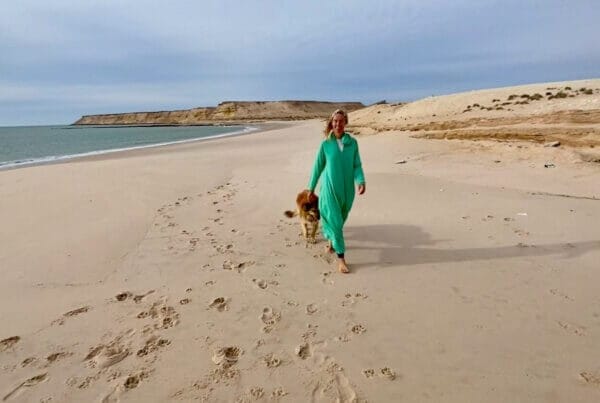
3 full winters I've spent in Fuerteventura. Mostly in my van exploring every corner. I've also hiked across the islands and sailed in and out a couple of times. I've driven around Fuerteventura so often that I may have been to literally every town. Slow travel style. To feel the vibe and explore what's around the corner. I've spent months in El Cotillo, Corralejo, Sotavento and in the more quiet corners. Many of you are asking me where to go, where to stay and what to do.
Here's a compilation of my Fuerteventura travel tips to help you make the most of your visit, for you and for the island. So you can actually live the place instead of ticking it off. The towns I'd send you to and the ones I'd skip. The surf, the kitesurf, the hike across the island, the inland beauty. When the wind is bearable and when it isn't. How to eat well, shop local and leave the place lighter than you found it. And if you're thinking of doing it with a van, a section on that too.
Prices, ferry times and camping rules in this guide were last checked in September 2026. If you find something that has changed, tell me in the comments and I'll update it.
Visiting Fuerteventura: the island at a glance
A mental map before the place names start.
| Region | What it's for | Towns |
|---|---|---|
| North | Surf, the slow towns, the boat to Lobos Island | Corralejo, El Cotillo, Lajares |
| East | Easier beaches, less swell, the resorts, a few quiet corners | Caleta de Fuste, Puerto del Rosario, Pozo Negro |
| Centre | Mountains, villages, the hiking heart | Betancuria, Pajara |
| South | Kitesurfing and windsurfing on the Sotavento lagoon, Cofete | Costa Calma, Morro Jable, El Puertito |
| West | Wild Atlantic, surf, cliffs, fewer people | Ajuy, La Pared |
Is Fuerteventura for you?
Fuerteventura is not for everyone. It's dry, it's windy, it's exposed and there's not much greenery. No lush forests, not much nightlife outside Corralejo if that's your thing. Rough, wild, sandy, salty. I love it partly because of all of that.
It's the second largest of the Canary Islands and the closest to Africa. The whole island has been a UNESCO biosphere reserve since 2009. Kilometre after kilometre of empty coastline. Volcanic landscapes, dry, the kind that look like nothing until you slow down and see what's actually there. You better love shades of blue, white, brown, and yellow. If that list made you smile, keep reading. If you want lush green and a different postcard around every corner, I'd send you to another island.
The weather is mild year-round, 18-28°C most of the year. December and January still reach 20°C+ on a normal day. You can be on a desert beach with no one in sight thirty minutes after leaving any town.
The surf, kite and hike trio is rare to find on one island. Watersports are why most people come. The north and west coasts get serious Atlantic swells October to March. The Sotavento lagoon is a world-class kitesurfing and windsurfing spot. There are 255 km of marked trails most people never walk.
And the rhythm is slow. The towns are smaller and less polished. There is space to actually slow down. If slow travel is what you're after, this island has the room for it.
One thing about the wind: it can be relentless. I'll come back to that in the When to go section.
When to go: wind, weather and the best months
Fuerteventura literally translates as strong wind. The wind decides the best times of the year to come. So why do most experienced travellers plan their trips around September to December? Because those are the least windy months.
Quick data (multi-year averages): July is the windiest month, average 27.4 km/h. The windy season runs early June to early September. October is the calmest at 19.3 km/h. September and October are the outliers. The trade winds often die for a while. Fishermen and surfers love it because the swell is suddenly clean and the noise is gone.
When is the best time to visit Fuerteventura?
| What you're after | Best months | What to expect |
|---|---|---|
| Winter sun and slow living | December to February | Calmer winds, 20°C and up most days, long quiet weeks. This is when most Northern Europeans come. |
| Surf | October to March | The north and west coasts light up. Water rarely below 19°C. |
| Kitesurfing and windsurfing | May to September | July and August are full power for advanced riders. May, June and September are the easier months. |
| Hiking | October to April | Before the summer heat. Cool mornings, long light, the trails to yourself. |
| The calm window | Late September to early October | My favourite. The wind dies, the water is still 22°C and the summer crowds have thinned. |
Even in the calm months, expect cool mornings (12-15°C in winter). Wind makes 22°C feel like 16°C. Bring layers, every month.
How many days do you need in Fuerteventura?
A week covers the highlights. Two weeks lets you check out the north and south. A month is when you really get to feel the place. Here's how I'd spend each.
One week
Split it between El Cotillo and somewhere south (probably Costa Calma or Ajuy). One Cofete day, one Lobos morning, one surf day, the Pajara to Betancuria drive, and slow mornings by the lagoons for the rest.
Two weeks
The same, slower. A full week in the north with cafe days in Lajares and a Majanicho surf mission, then the south for the lagoon and Cofete, with a night or two in Ajuy or Pozo Negro for the quiet. El Puertito in the far south is also worth a visit.
A month or more
Don't make an itinerary. Pick two or three bases and stay in each for a week or longer. That's when the island starts giving you the good stuff: the market people know you. You know which beach works for which wind and swell. You stop checking the map.
Where to stay in Fuerteventura: the best areas (and the ones I'd skip)
| If you want… | Go here | Stays |
|---|---|---|
| My kind of Fuerteventura | El Cotillo, slow fishing town | Browse stays |
| Surf + community | Lajares, village cafe life | Browse stays |
| First trip, everything walkable | Corralejo, the busy hub | Browse stays |
| A resort week near the airport | Caleta de Fuste | Browse stays |
| Off-grid feeling | Pozo Negro, two streets and no signal | Browse stays |
| Wild west coast | Ajuy, black sand and sea caves | Browse stays |
| Kitesurf | Costa Calma, resort zone by the lagoon | Browse stays |
| Cofete and the south | Morro Jable, southern port town | Browse stays |
Winter books out early here.
Corralejo is where most people base. Corralejo is fine. It is not my favourite. Here's how the towns feel after spending real time in them, ordered roughly north to south.
Drag the map to the area you fancy. It pulls live prices from Booking, Agoda, Hotels.com, Expedia and more into one view. Compare without opening ten tabs.
El Cotillo (northwest)
A small fishing village on the northwest coast. Slow. Old buildings, a little harbour, easy walking, and a small organic biofarmer market for fruit and veg that I do all my shopping at. The lagoons north of the village are calm and family-friendly. The beaches south are powerful and good for surf. This is my main winter base. I love this town. If I could only pick one, this would be it.
When friends or family come to visit, I've rented a little house here with them. Plenty of small holiday homes a short walk from either set of beaches. Have a look at what's available in El Cotillo if you're not in a van.
La Concha
Right on the beach, smaller and quieter than Corralejo. A good lower-key alternative if you want to be near the water without the crowd.
Lajares
Inland, central, café life. A surf hub with the kind of slow village rhythm that makes you stay longer than you planned. The downside: you need a car or van for everything. The upside: the community here is warm and chill. The casitas around the village book out in winter (see what's free in Lajares).
Corralejo (northeast)
Walkable, lots of restaurants and tapas bars, lots of options. Ferry to Lobos Island in the morning, ferry to Lanzarote in 25 minutes if you fancy a day trip. The family-friendly beaches along the sand dunes of Corralejo (Parque Natural de Corralejo) are some of the calmest on the island. Best for a first trip or a shorter stay where you want everything within reach. No need to rent a car. If you're staying a month, I'd pick El Cotillo or Lajares instead: Corralejo is built around visitors, El Cotillo still feels like a place where people live. What's on around Corralejo if you want a hotel base.
Hotels and apartments around Corralejo and the dunes, compared across booking sites.
Puerto del Rosario (east)
The capital. A working town, not a holiday town: the shops, the services, the main port. Most travellers only pass through, and that's mostly what I do too, errands and ferries. Fine for a night. You won't need a week.
Caleta de Fuste (east)
The purpose-built tourist resort ten minutes from Fuerteventura airport. Golf courses, all-inclusive hotels, holiday villas, a sheltered family beach. It's convenient, and for a resort week with small kids it does the job. But you won't feel much of the island here. Lots of Indian restaurants here though, and an Asian supermarket. Rare finds in my nomadic life in Spain. If a resort kind of holiday is what you're after, browse stays in Caleta de Fuste. Otherwise, keep exploring.
Pozo Negro (east)
Almost no phone signal. Special. I once stayed in waterfront accommodation here with my mum and we both slept better than we had in a year. There's one little lunch restaurant. If you want peace and quiet, this is my place on the island.
Ajuy (west)
The other side of the island. Quieter, less visited, black sand and the sea caves in the cliffs nearby. Worth a few days of contrast if you've been on the east-coast circuit too long. A few simple places to stay in Ajuy too. It's a pretty place.
Costa Calma (south)
Wide golden sandy beaches at the neck of the Jandia peninsula, with the Sotavento lagoon at its doorstep. It's a tourist zone, undeniably, with not much in the way of local feel. But the beaches are spectacular, the kite scene is the busiest on the island, and rates here are usually cheaper than Corralejo. Reasonable trade-off if the lagoon is what you came for. The wind is usually offshore. That makes beach time more pleasant. Also the colour of the water and lagoon is such a pretty turquoise blue.
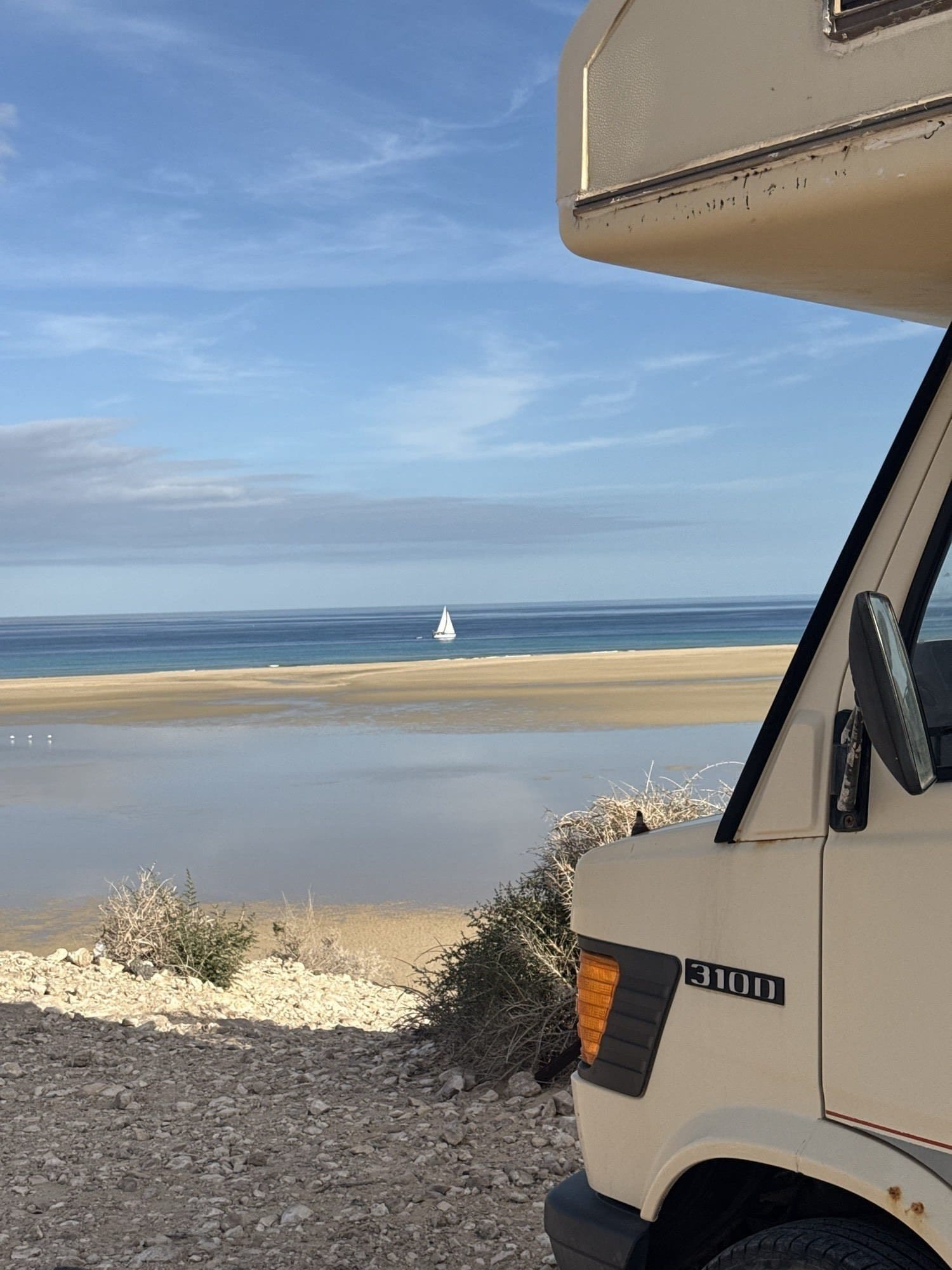
I've stayed in apartments here a few times with friends and family, when they wanted the beach within walking distance and didn't want a van. Plenty of options around Costa Calma if that's you.
Morro Jable (south)
The southern town. Mix of local and touristy, with the gateway to Cofete at its back. Stay here if you want easy access to the south of the island. Browse places in Morro Jable.
The south at a glance, from Costa Calma and the Sotavento lagoon down to Morro Jable and Jandia. Prices compared across the booking sites.
El Puertito (the southern tip)
El Puertito de la Cruz sits at the very tip of Fuerteventura, next to the Punta de Jandía lighthouse. A slow southern spot where I've spent a lot of van time. A small Atlantic hamlet that hasn't been remodelled for tourism. A very cool anchorage for sailing too. If you want to sleep at the end of the island, see what's listed around Punta de Jandía.
The inland route: Pajara to Betancuria
Don't miss this drive if you have at least a week. Inland Fuerteventura is mountains. Betancuria, founded in 1404, is the oldest town in the Canary Islands and the old capital. The old town is tiny. An hour is enough. The road from Pajara up over the central mountains and down to Betancuria is one of the most scenic drives on the island. What a road. Stop at the Mirador Morro Velosa viewpoint on the way down for the view over the whole north of the island.
The actual GPS pins of where I park, where I refill water and the lesser-known spots that don't make it into public posts are inside the Ocean Nomads community map. It's member-only and that is where the working list lives.
Things to do in Fuerteventura beyond the beach
The best things to do in Fuerteventura are outside: surf, kite, walk, one day trip to Cofete and one to Lobos Island. Here's how I'd explore the island.
Surfing
The North and West coasts light up from October to March when the Atlantic gets serious. Water rarely drops below 19°C. El Cotillo is the main town break, friendly if you're learning, on small days, fierce on a big swell. Majanicho is a 15-minute drive east, a friendly reef break with a long right-hander when the NW swell shows up. Mid-to-high tide only. The reef sits very shallow at low tide and a late take-off will hurt. La Pared on the west coast is intermediate to advanced.
Pop into any of the local shops in El Cotillo or Lajares for a paper surf map. They're around €5 and far better than anything online. Buy from the little shops, not the big ones. The maps and the people who sell them are how you actually learn the island.
If you want to book lessons, GetYourGuide has them across the island. The El Cotillo schools are the friendliest if you're new.

Kitesurfing and windsurfing
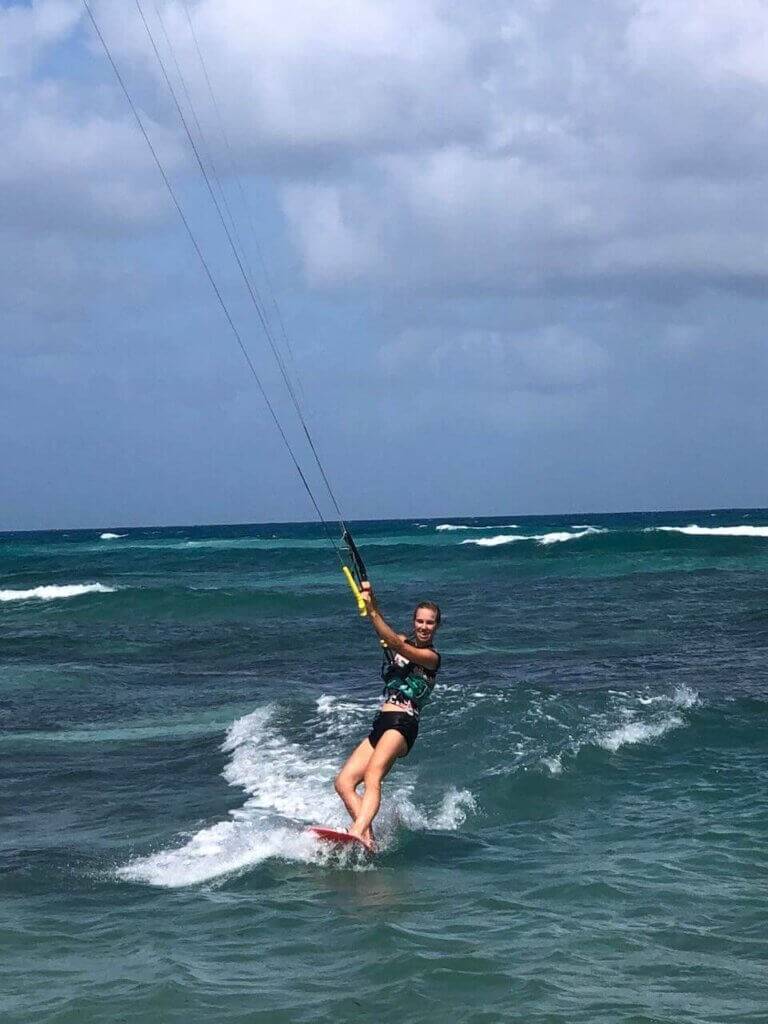
The Sotavento lagoon on the southeast coast is a world-class flat-water spot, for kitesurfing and windsurfing both. The world cup for both comes here every summer. On a full moon spring tide it's another planet. Best months May to September. If you're new, skip July and August. 25-35 knots is too much when you're learning. Go in May, June or September instead.
Hiking
Underrated, and barely covered in any travel guide I've read. Fuerteventura has 255 km of marked trails.
Pico de la Zarza is the highest peak (807m). 13-14 km return from Morro Jable, 4-5 hours, moderate. Mostly dirt and gravel, with some sandy slippery sections near the top. The wind on the summit is real, even on a 22°C day below. Bring a jacket.
On the top of La Zarza:

Calderón Hondo is the easy one. An extinct volcano crater just outside Lajares, 2.6 km loop, 30 minutes from the carpark to the rim. Lovely as a sunset walk for non-hikers.
The Lobos circuit is a half-day or full-day from Corralejo. The ferry takes 15 minutes. Then a loop around the islet taking in lagoons, salt marshes, the lighthouse and the Caldera summit. Visitor numbers are capped now. Book the ferry before you turn up.
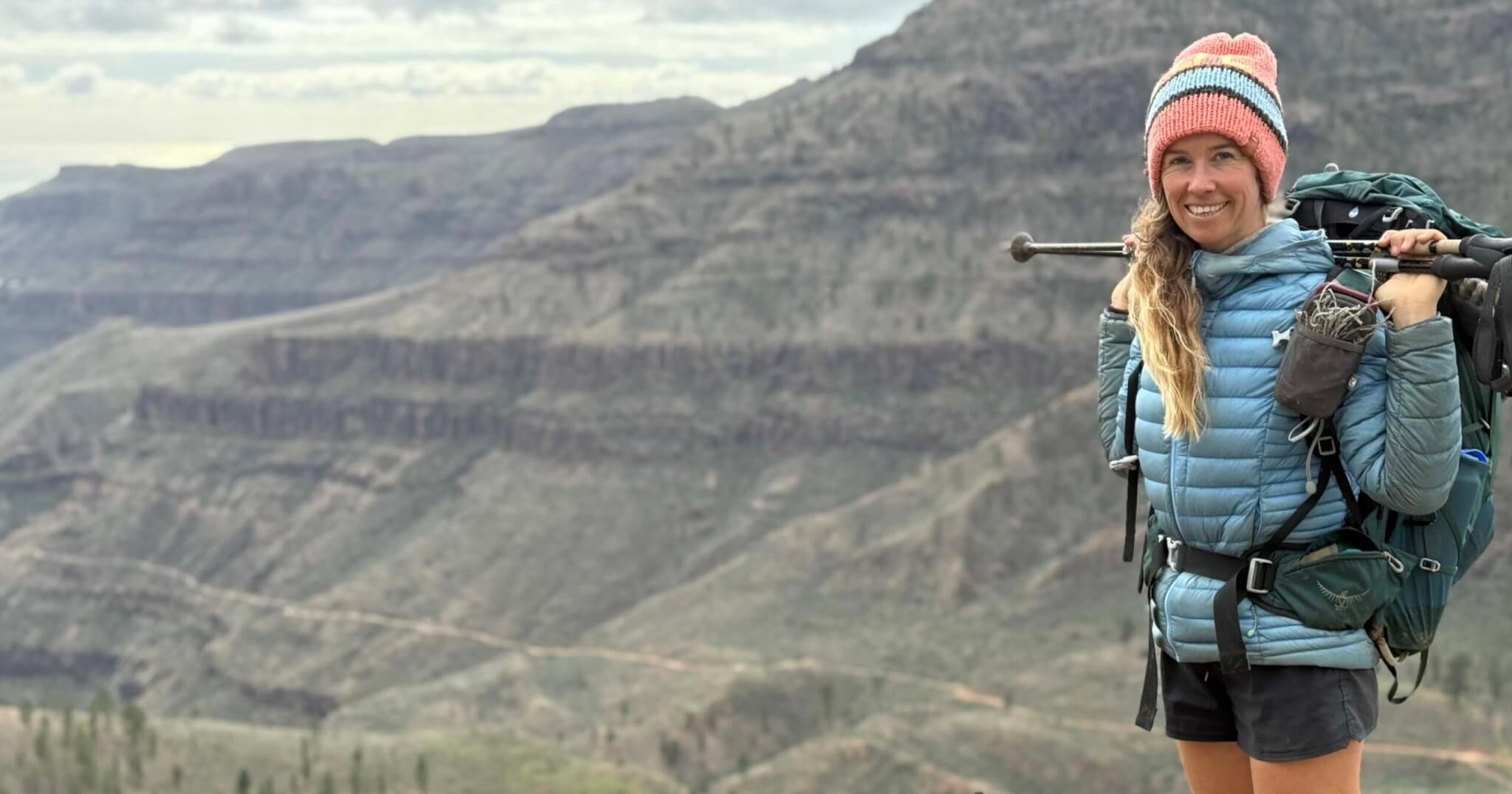
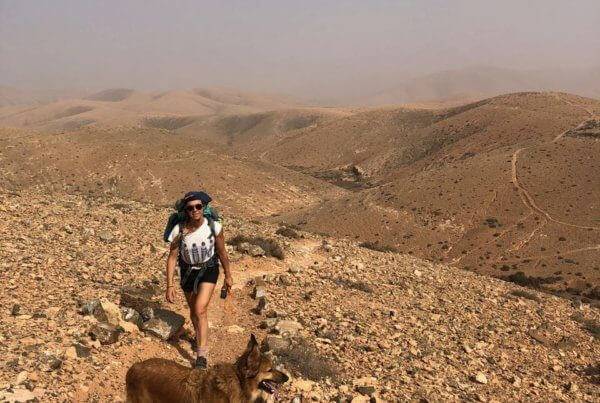
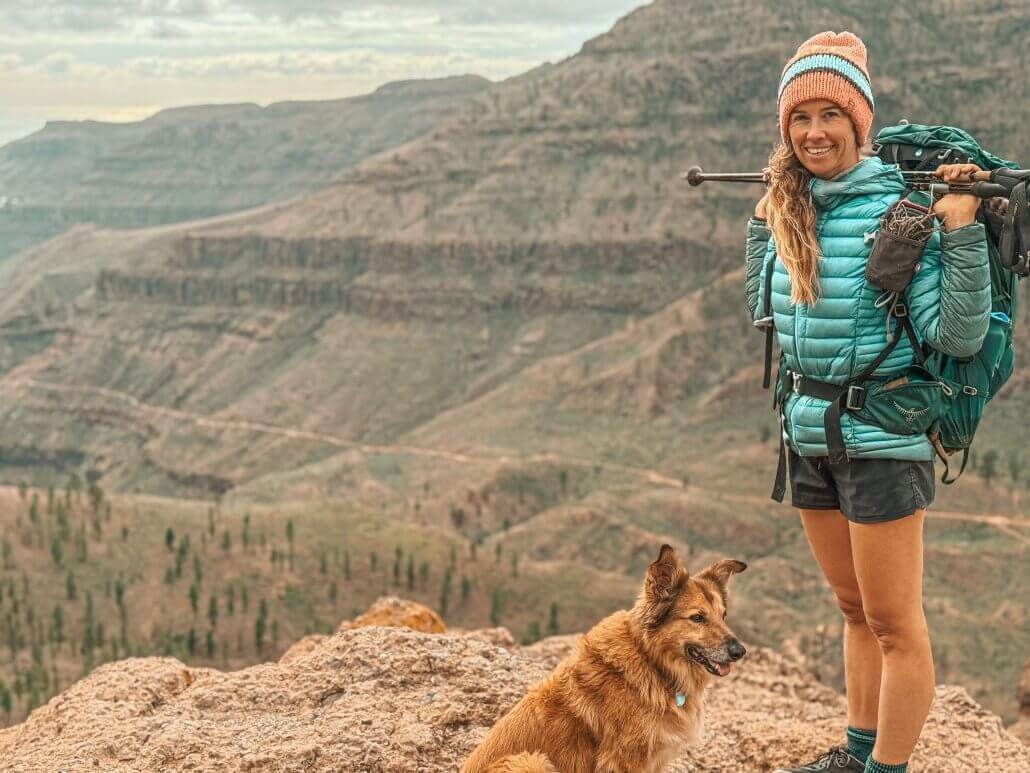
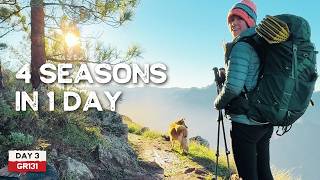
I've also walked the GR131 down Fuerteventura with Wingo, from Corralejo to La Pared, in a little week. It was my first long trail. 2022, a backpack, a tent, wild camps all the way, refilling water in the towns. Sweet, slow and simple. My favourite stretch was the mountain section around Betancuria. It wasn't all romantic either. Wingo got hurt when loose dogs went for him near La Pared. That ended our thru-hike. Keep your dog close around the farms. The trail isn't as famous as the Gran Canaria stretch but it's a beautiful way to see the island the way it ought to be seen. My GR131 Fuerteventura guide has the stages, where to stay and the map. For the whole island chain, start with my GR131 Canary Islands guide. For navigation and offline maps, my guide to the best hiking apps covers what I use on trail.

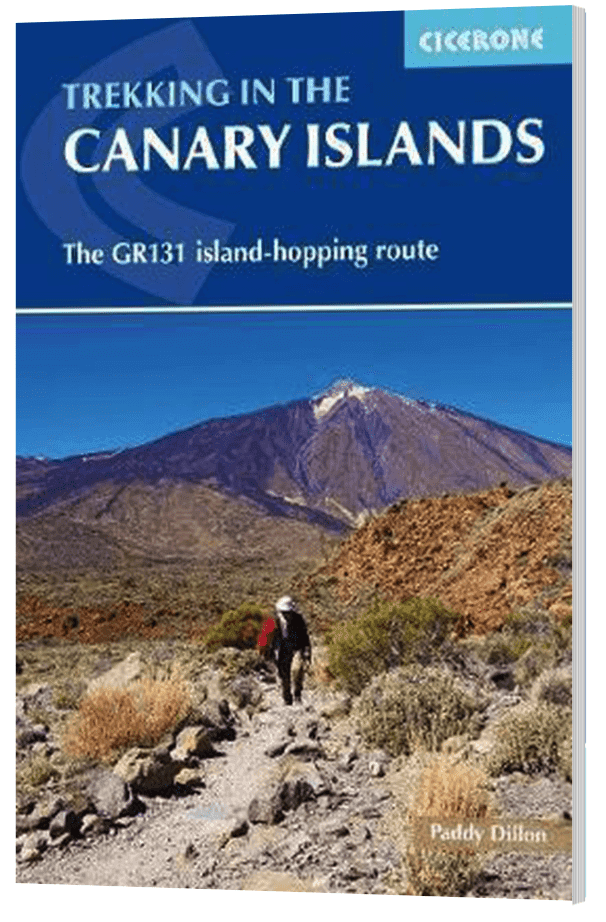
You may like reading: my guide to hiking the GR131 across Gran Canaria, the next island over. And if you want the route on paper, the Cicerone GR131 guidebook covers the island-hopping route across the archipelago.
Cofete day trip
The 20 km of dirt road from Morro Jable is the catch. Most rental car insurance won't cover off-tarmac driving. Check your policy. Sunnycars includes all insurance by default, and even there, read the off-road clause. You don't need a 4×4 when it's dry. Drive slowly and skip it in heavy rain. The alternative is Bus Line 111 from Morro Jable. It leaves twice a day (10:00 and 14:15 on the current timetable) and costs €8.70 each way, paid to the driver. Fills up fast in high season. Get there 10-15 minutes early.
You can also walk to Cofete from La Pared. I did that once and wow what a trail. The path runs high above the cliffs of the west coast. Super beautiful, raw and wild. Not for those with vertigo. Also it's quite a distance. Bring a tent or start really early and then take the bus back.
When you get there: walk far. Take everything you brought back with you. The dunes there are fragile and the wind moves litter for miles.
Cofete is as wild and unspoilt as a beach gets in Europe.

Boat trip to Lobos Island
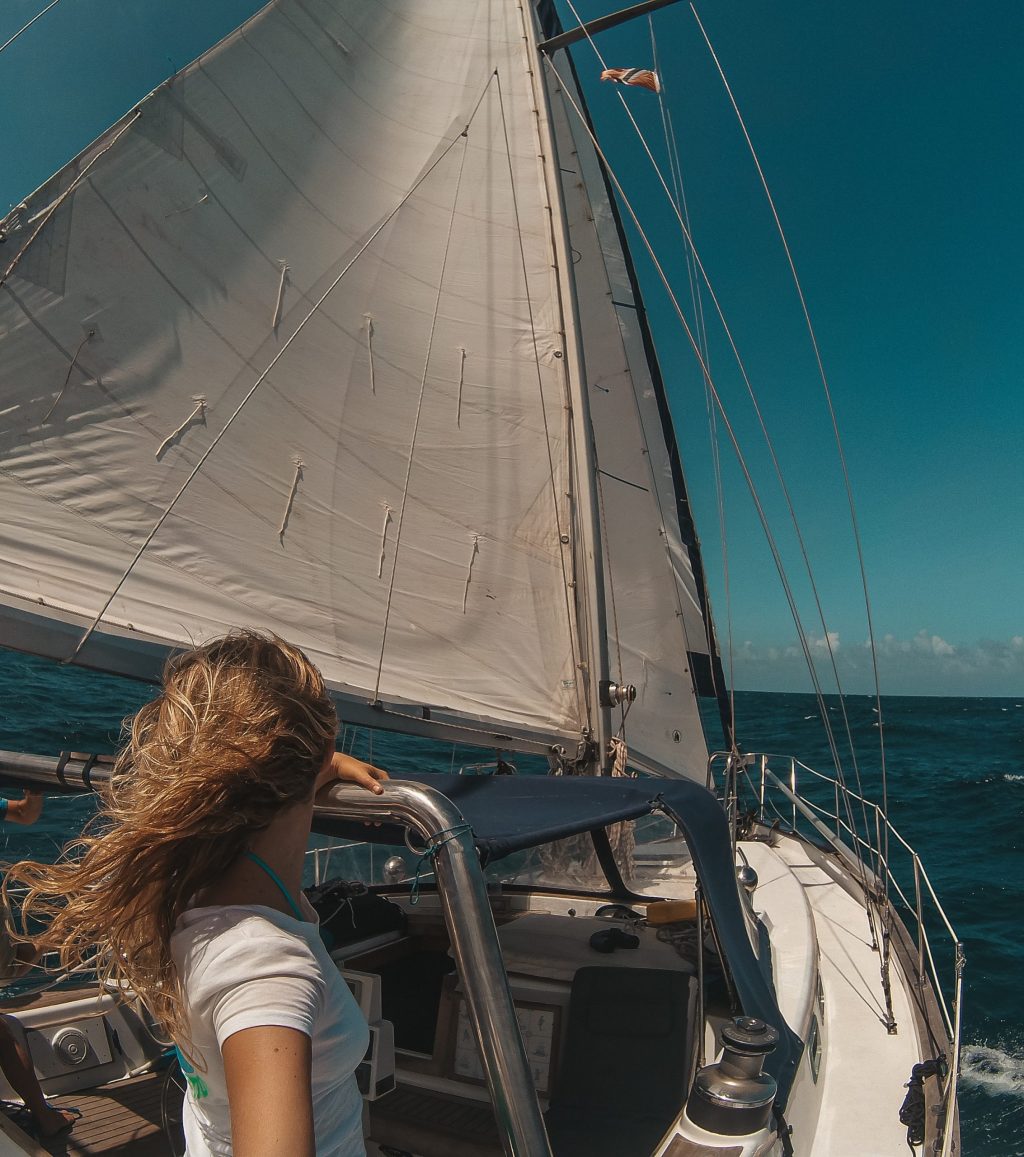
Isla de Lobos is 15 minutes from Corralejo by ferry, half a day or a full day. It has been a natural park since 1982 and visitor numbers are capped. Book ahead. Worth it for Playa de la Concha, a small white sand bay with calm clear water and the best snorkel on the north side, and for the lighthouse walk. There's a little village and one bar. I've sailed in and anchored off Lobos a couple of times. That is the best way to arrive.
If you only have a week, do this: one Cofete day, one El Cotillo surf day, one Lobos morning. The rest can wait for a longer trip.
Van life in Fuerteventura: if that's your thing
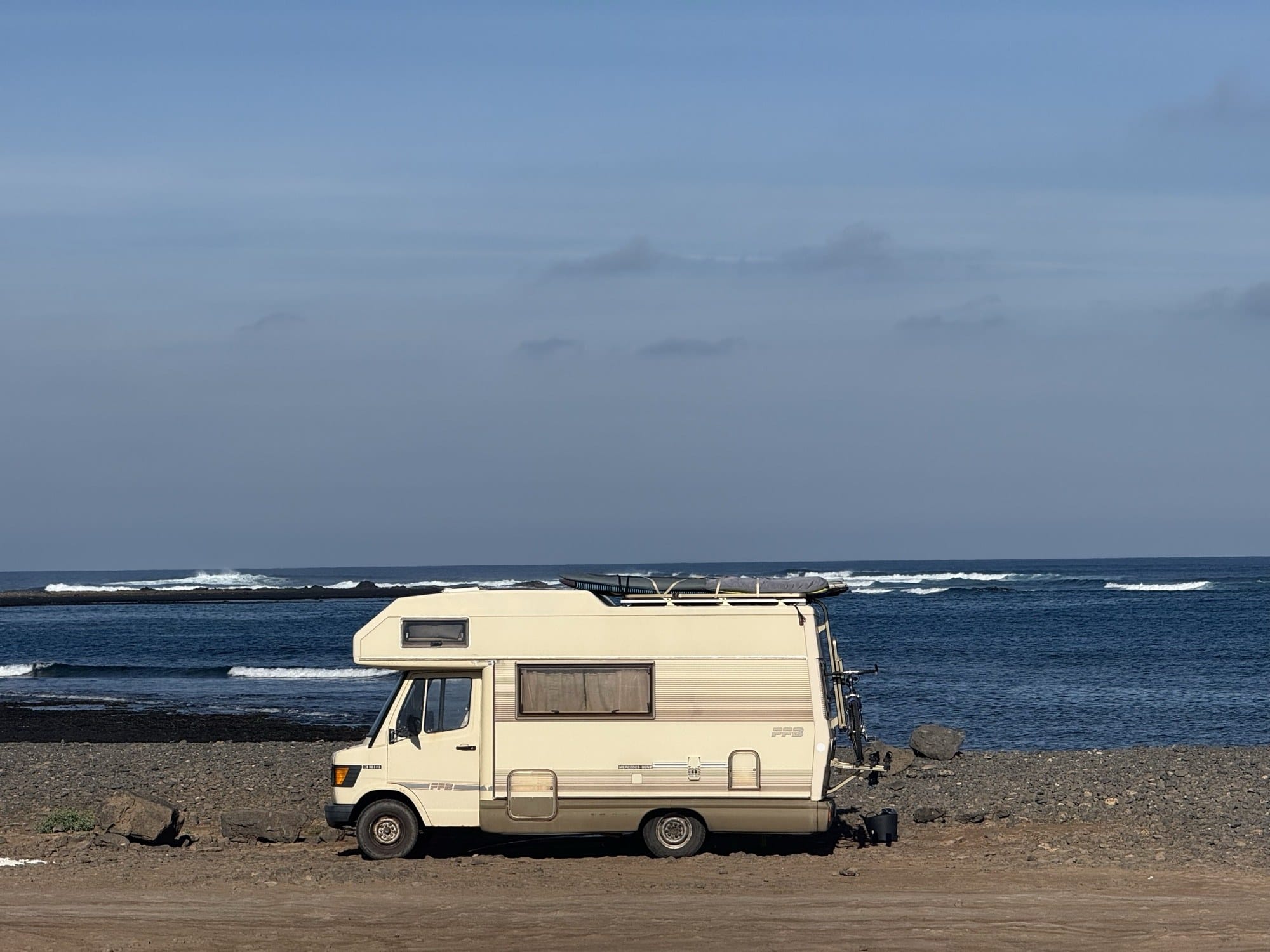
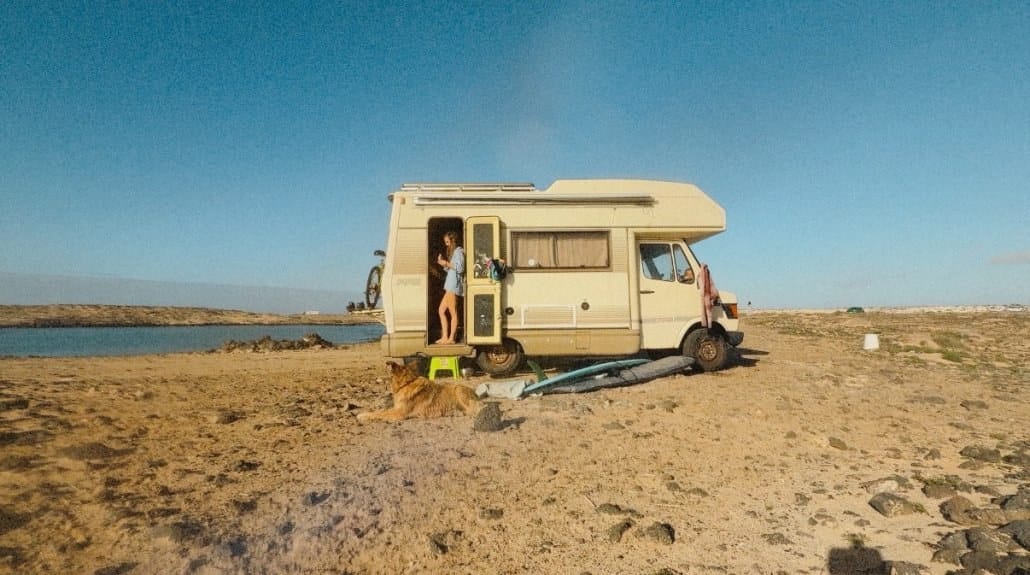
Lots of people come to Fuerteventura specifically to do it in a van. There's a real community here, a mix of holiday van travellers and people who've made the island home. There's a reason I spent 3 winters here in my van :)
Van life here is rough, wild, sandy and salty. Some nights the wind rocks the van like a boat at anchor.
You may like watching: island van days over on my YouTube.

Bring your own van or rent on the island?

You can bring your own van. The Canary Islands are reachable by ferry from mainland Spain, with a vehicle. If you stay the winter it often works out cheaper than renting once you do the maths.
A Cadiz to Las Palmas ferry with your own vehicle and one passenger costs roughly €450-700 one way.
Daily campervan rentals on the island usually run €50-100/day. At €70/day you pass the bring-your-own break-even point at roughly 30 days.
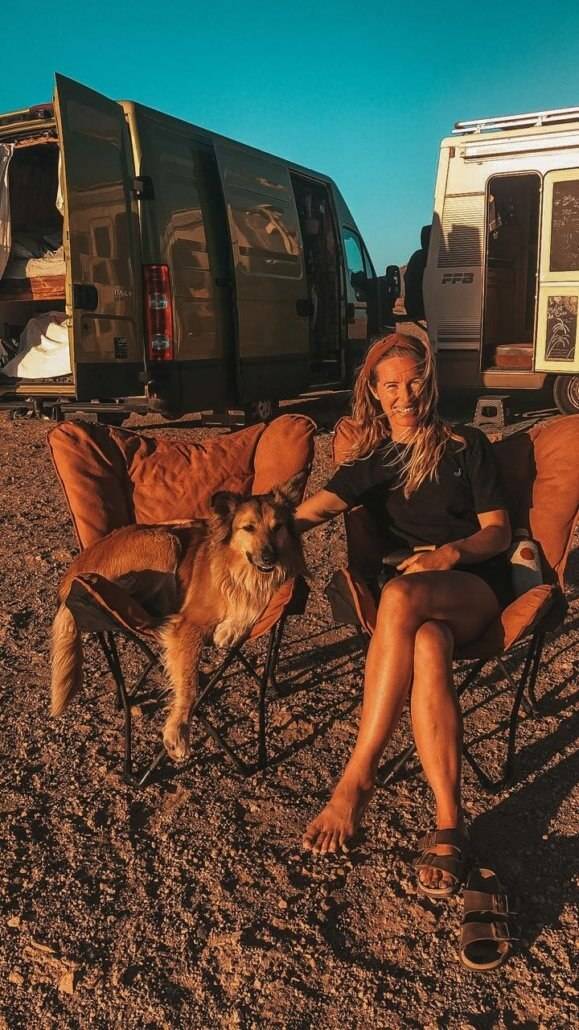
Bringing your own also means your own bed, your cooking setup, your gear, your dog and the two folding Bo Camp chairs that live in my boot for exactly the kind of sunsets you see in these photos.
Renting a campervan in Fuerteventura: hire, prices and pickup
If you're flying in for a few weeks, campervan hire on the island is the way to go. Most pickups are near Fuerteventura airport or Puerto del Rosario. The vans range from small converted vans to fully equipped motorhomes with everything you need to sleep, cook and shower on board.
Solid local operators to message directly:
- Treevangang
- Fuertecampervan
- Vans and Sands
- Caravamos
- Ventura Van
Ask around when you arrive, or compare across them in one place. The marketplace I use is Outdoorsy. It has a Puerto del Rosario page now.
The quickest way to see what's available is a price-comparison site that pulls in the local operators at once. Camperdays compares campervan and motorhome rentals across the Canary Islands. You can see what it costs to rent a campervan in Fuerteventura before you commit to one operator.
Reading this from the Netherlands? Goboony, the Dutch peer-to-peer platform where you rent campers from private owners, lists camper vans in the Canaries too.
A few things worth checking before you book. Winter is high season for vans too. December to February books out months ahead. Almost every rental contract excludes off-tarmac driving. That rules out the Cofete road (see above). If you travel with a dog, ask first, policies differ per operator. And compare a direct quote from a local operator against the marketplace price for the same van. Sometimes direct is cheaper, sometimes the platform insurance is worth the difference.
For the full breakdown of the mainland ferry, see my guide to reaching the Canary Islands without flying. If you're looping with Morocco, my Morocco van life guide covers that side. Tarifa, on the southern Spanish coast, is the natural mainland departure base if you want to combine: my Tarifa travel guide is here.
Where to sleep, and the new ordinance
In November 2024 the Cabildo de Fuerteventura passed the first formal camping ordinance in the Canary Islands. It marks 32 zones across the island and splits them into three types: camping zones, tourist campgrounds, and dedicated spaces for caravans, motorhomes, and campers. Three were approved straight away, no strings: Playa El Jablito, Playa del Matorral and Playa de Tarajalejo. The rest still need environmental assessments.
In practice, enforcement on van travellers is still rare. There's no real alternative yet. Wild camping is still the working answer. But the rules are tightening. Behave well, it affects all of us. The legal alternative is a private-land pitch through Campspace. Coverage on the islands is still thin. Check it anyway, it grows every season.
The best for dogs and vans

More nights like this on Instagram.
Water and filtering
Filter your water. Petrol stations have water taps next to the air pumps for around €2 a fill. There are free public taps in most towns. Bring a short hose with a universal fitting. Island tap water is heavily desalinated and tastes of it. I always filter.
In the van I run a gravity Maunawai filter. It turns petrol-station tap water into something that tastes like spring water by the time it reaches my mug. For hiking and lighter trips I carry a Katadyn BeFree, tiny and fast.
A filter also means no plastic bottles. The island has almost no way to recycle them. Full breakdown in my guide to the best travel water filters.
Diesel and petrol run €1.40-1.60 per litre, cheaper than mainland Europe because the Canary Islands have a separate tax regime (IGIC instead of VAT). Up to €0.30/L variation between stations on the same day. Worth comparing.
For the dry side of waste, my full guide to compost toilets for van life covers what I run and why I stopped fighting the cassette toilet.
For internet, Movistar has the widest coverage, Orange wins in the remote areas, Vodafone is fastest in the tourist hubs. A multi-network eSIM through Airalo auto-switches and saves you the first-day faff. If you work from the van and stay put for a while, Starlink covers the dead spots the local networks miss, worth it only if you really need to be online off-grid.

Eat local, shop local, travel lightly
The island is small and the supply chains long. A surprising amount of what's sold in the supermarket has been shipped from mainland Spain. The fruit you eat in the supermarket is sometimes worse than the fruit you buy at a small market five minutes away. Worth knowing.
The El Cotillo organic bio market is a small farmer-run stand for fruit, veg, eggs and bread, open most weekday mornings. I do most of my shopping here. Tomatoes, papayas, bananas, leafy greens, all grown on the island.
The Lajita Sunday market runs every Sunday 09:00-14:00 inside Oasis Park in La Lajita. Local fruit and veg, pottery, woodwork, traditional Canarian embroidery. Touristy in flavour but fun.
Fuerteventura is famous for its goat cheese. Buy it at the markets or from the small local shops instead of the supermarket.
For restaurants, pick the local family-run places over the chains near the resorts: tapas, papas arrugadas with mojo verde, fresh fish, simple plant-based options. Local food is cheaper and fresher. The money stays on the island.
Standard sunscreen contains chemicals (oxybenzone, octinoxate) that bleach corals and mess with hormones. The Canaries have no coral reefs but the rest of the marine life pays the price too. Reef-safe formulas (non-nano zinc oxide) are easy to find and far better. Or make your own. My picks are Suntribe (Spanish-made) and Badger. The same goes for hair products and soaps. Anything you wear into the sea ends up in the sea.
Bring the reusable basics: a water bottle, a spork, a coffee cup, a fabric bag. The island has no good recycling infrastructure for what tourists bring in. What you carry, you take home.
For souvenirs, skip the airport magnets. Buy something from the artisan stalls at the Sunday market or the small shops in El Cotillo and Lajares: pottery, woven baskets, local olive oil, aloe vera products, goat cheese to take home. Money stays in the community and the souvenir actually means something.
Leave the popcorn at Popcorn Beach
Leave the natural stuff where it is. No stones, no sand, no shells. Especially: do not take the “popcorn” from Popcorn Beach (Playa del Bajo de la Burra, on the north coast between Corralejo and El Cotillo). What looks like little popcorn pieces is rhodolith, a slow-growing calcareous algae. Each piece takes 50+ years to form. Tourists take roughly 1,000 kg of it home every month. That is exactly why the beach is disappearing. Spanish natural heritage law bans collection. Fines run €150 to €600 for small amounts, up to €3,000 if you're caught with a lot. Most get caught at airport security. Take a photo. Leave the rocks. Same goes for sand from the dunes and shells from the beaches.
If you want to dig into the wider framework, my full guide to conscious travel and the 7 R's lays out how I think about all of this on the road.
Combining Fuerteventura with the other Canary Islands
Lanzarote is 25 minutes away by ferry. Tenerife and Gran Canaria are a longer ferry but doable. All seven islands have a GR131 stage, and my GR131 Canary Islands guide compares them.
Lanzarote
The Corralejo to Playa Blanca ferry runs 20+ times daily, year-round, takes 25-35 minutes. €17 for foot passengers, €21 for a car, €23 with a camper van.
Gran Canaria
A larger ferry from Las Palmas. The thru-hike across Gran Canaria (GR131) is one of the most underrated trails in Europe. My guide to the GR131 across Gran Canaria is here.
Tenerife
Worth it especially for kitesurfers. El Medano is the spot. My El Medano Tenerife travel guide covers the kite scene. And the GR131 crosses Tenerife too: my GR131 Tenerife guide has the stages, where to stay and the map.
If I had one extra week, I'd add Lanzarote. If I had two extra, I'd add Gran Canaria for the GR131. Tenerife works as a kite-only side trip when the Sotavento lagoon isn't enough.
Frequently asked questions
What are the best things to do in Fuerteventura?
Surf in El Cotillo, kite or windsurf on the Sotavento lagoon, walk a stage of the GR131, drive the inland road to Betancuria, take the boat to Lobos Island and spend a day at Cofete. The things to do section has the detail on each.
El Cotillo or Corralejo?
Corralejo if it's your first trip, you want the restaurants in Corralejo within walking distance, and day trips to Lobos and Lanzarote. El Cotillo if you want quiet, surf, the lagoons and a town that still feels like itself. They're 20 minutes apart. Base in one and visit the other. I choose El Cotillo, three winters running. See what's free in El Cotillo and in Corralejo.
Corralejo or Caleta de Fuste?
Corralejo if you want town life, surf shops and the ferries to Lobos and Lanzarote. Caleta de Fuste if you want a quiet resort base near the airport with a sheltered family beach. They're different holidays. Corralejo is a town that happens to have tourists. Caleta was built for them. Compare stays in Corralejo and stays in Caleta de Fuste.
Should I stay in the north or the south of Fuerteventura?
North for surf, town life and the El Cotillo lagoons. South for kitesurfing, the huge Sotavento beaches and Cofete. For a first trip go north. For a kite trip go south. With a van or two weeks, do both. Browse beds in the north and beds in the south.
What are the best hotels in Fuerteventura?
I'm the wrong person to rank hotels, I sleep in my van. When family visits we rent a small holiday home in El Cotillo, Ajuy, or somewhere wild instead. If you want a hotel, pick your area first (the table in where to stay), then see what's live: the boutique places cluster in Corralejo and El Cotillo, the big all-inclusive resorts in Caleta de Fuste, Costa Calma and along the Jandia coast.
Is Fuerteventura nicer than Lanzarote?
They're different islands. Fuerteventura has the better beaches and more empty space. Lanzarote has the volcanic art-and-architecture side and feels more polished. For surf, kite and sand, I'd pick Fuerteventura. The ferry between them takes 25 minutes. You can do the two islands in one trip.
Is Fuerteventura safe for solo travel, and what should I be careful of?
Yes. I've spent whole winters here on my own with the dog and never felt unsafe. The wind and the ocean are the things to watch. My safety tips: the west coast beaches have serious currents. Swim where locals swim. The sun is stronger than the mild temperatures suggest. If you rent a car, check the off-tarmac insurance clause before driving to Cofete. And leave the popcorn at Popcorn Beach: taking it is banned and fined.
Where is the best place to stay in Fuerteventura?
El Cotillo for slow travellers and surfers (my base three winters running), Corralejo for a first trip with everything walkable, Costa Calma for kitesurfers by the Sotavento lagoon, Morro Jable for exploring the south. Book winter stays early: December to February fills up with Northern Europeans who want winter sun. The maps in the where to stay section compare live prices across Booking, Agoda and the rest. Or go straight to El Cotillo, Corralejo, Costa Calma or Morro Jable.
When is the best time to visit Fuerteventura?
Late September for the magic calm window when trade winds often die for two or three weeks, or January to March for winter sun without the strongest winds. Summer (June-August) is for kitesurfers willing to handle 25-35 knot trade winds. Spring (April-May) is also lovely.
Is Fuerteventura good for adventure travel?
Yes. Surf October to March, kitesurf May to September, hiking year-round, plus empty beaches everywhere and 255 km of marked trails. The island is small enough to cross in 2.5 hours by car and has enough going on to keep you busy for weeks.
Can a campervan handle the road to Cofete?
Physically yes. The dirt road is well maintained and you don't need a 4×4 when it's dry. But most rental insurance excludes off-tarmac driving. If you're in a rental, check your policy. If you're in your own van, drive slowly and skip it in heavy rain. Alternative: Bus Line 111 from Morro Jable, €8.70 each way, currently departing 10:00 and 14:15.
Is wild camping legal in Fuerteventura?
Strictly, no. A November 2024 ordinance designated 32 zones with three approved unconditionally (Jablito, Matorral, Tarajalejo). Enforcement varies and the rules are tightening. Park where others already park, move on after a night or two, never enter protected areas, and check the current local rules. The vanlife section has the detail.
Can I take my dog to Fuerteventura?
Yes, easily. Fuerteventura is broadly dog-friendly: many beaches, restaurants and rentals welcome dogs. If you're bringing your van and dog from mainland Spain, Fred Olsen and Naviera Armas allow dogs on the ferry, and Fred Olsen now offers a small number of dog-friendly cabins where your dog can stay with you overnight. My dog Wingo has done multiple winters here without issue.
Is Fuerteventura good for families with young kids?
Yes, if you pick the right coast. The lagoons north of El Cotillo are shallow, calm and sandy. The beaches around the Corralejo dunes are some of the calmest on the island. December to February gives winter sun without the summer wind. The west coast surf beaches are wild and not for little swimmers.
Is Fuerteventura good for older travellers?
Very. The seafront towns (Corralejo, Morro Jable, El Cotillo) are flat and walkable, winters are mild, drives are short, and there are easy walks like the 30-minute Calderón Hondo crater loop. You can have a full week here without ever needing a hiking boot.
When is the best time for surfing, kitesurfing and hiking?
Surf: October to March. Kitesurf: May to September, easier in May, June and September. Hiking: October to April, before the summer heat. The late September calm window is the all-rounder.
Where can I dump grey/black water in a van?
Disposal points cluster on the East Coast: Corralejo, near the airport, Tarajalejo. Plan a dump run every three to four days. See the vanlife section for details.
Is there reliable internet for remote work?
Yes in Corralejo, Caleta de Fuste, Morro Jable, and Puerto del Rosario. Movistar has the widest coverage, Orange the best in remote areas, Vodafone the fastest in tourist hubs. A multi-network eSIM (Airalo or similar) auto-switches to the strongest signal.
Three winters in and still in love with the place. If I had to give one piece of advice to a first-timer, it's this: don't try to do the whole island in a week. Pick two towns. Stay in each long enough that you start recognising people at the morning bakery. The rest you can come back for.
The GPS pins of my van spots, the water refills and the cafés that serve real coffee live on the Ocean Nomads community map, pinned by the community. It covers Fuerteventura and Tenerife so far.
If you'd rather travel with company, I run a few guided expeditions a year. Some pass through the Canaries.
Wild at heart? Let's be friends.
Join me on YouTube for slow travel adventures by van, sail and on foot.
Or get my new stories by email, every couple of weeks.
Ocean Nomads is the community I founded, for people who want to live a little wilder, explore a little further, and do it with good people.
For deeper trail stories and the behind-the-scenes, I write on Patreon.
Explore more
Read next
 El Médano Kitesurfing: Schools, Wind, Vanlife & Adventure Guide
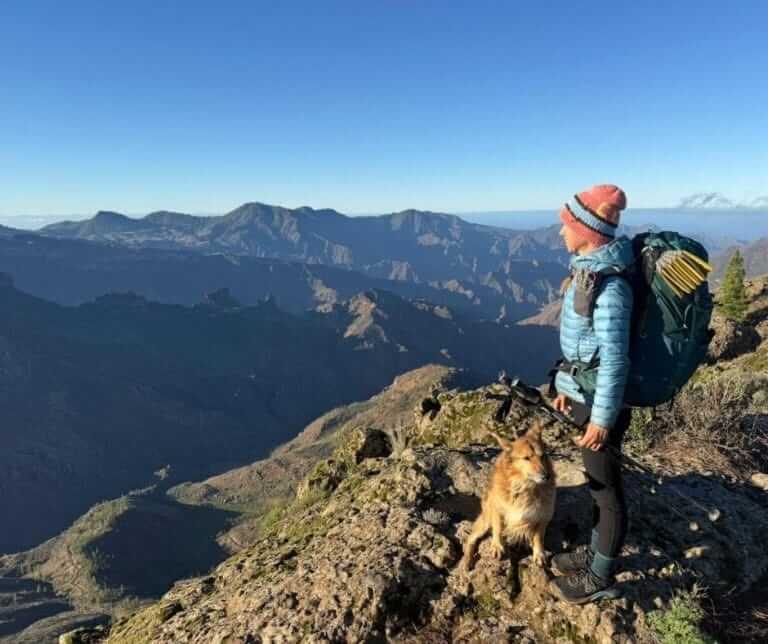 GR131 Gran Canaria guide: 5 stages, where to stay, map
 GR131 Tenerife guide: stages, where to stay, map
 All my Canary Islands posts
Watch on YouTube


Hope to see you out there. Travel light, leave it lighter.
Stay wild, Suzanne
About Suzanne
I'm Suzanne. For 15+ years I have lived on the move: years on sailboats, six years with my campervan as base camp, and these days mostly on foot. Three winters on Fuerteventura in my van. I walked the GR131 down the island with my dog Wingo. I buy my vegetables at the same El Cotillo market stall every week of the season. I share what a life closer to nature is really like, the practical side and the healthy side, the freedom and the hard parts of it. The day-to-day from the island is on Instagram and YouTube.
This post contains some affiliate links. If you book accommodation, an activity, an eSIM or a piece of gear through one of them, I get a small commission at no extra cost to you. It helps me keep writing posts like this one.