

Table of Contents
- Logistical basics: travelling into Morocco with your van
- Renting a campervan for Morocco
- Taking your dog to Morocco in a motorhome
- Smart things to pack, prepare and bring
- Wild camping in Morocco
- Is Morocco safe for vanlife?
- Vanlife Morocco costs: what to budget
- Connectivity and internet in Morocco
- Where to go in Morocco with your van
- Should you go to Western Sahara with your van?
- Frequently asked questions
- Explore more
- About Suzanne
Updated October 2026.
Vanlife Morocco at a glance
| Best season | October to May. Surf October to January, kite from February. |
| Ferry | One hour from southern Spain. Algeciras-Tanger Med or Algeciras-Ceuta. |
| Visa | Most passports get 3 months on arrival. Cars and dogs up to 6 months. |
| Dog logistics | Easy to get in, harder to get out. Start the rabies titre test at least 3 weeks before you go. |
| Renting in Morocco | You can rent through platforms that compare local operators. Renting in Spain? Check the contract allows the ferry to Morocco. |
| 2WD or 4×4 | Our old 2×2 camper got us from Tangier to the Mauritanian border. You don't need a 4×4. It opens up more remote spots. |
| Wild camping | It's tolerated in most places outside the tourist hotspots. Campsites cost 5 to 15 euro a night. |
| Connectivity | Inwi for unlimited data (in-store contract). Airalo eSIM for the first few days. |
How exciting to travel to another continent with your van and dog! Morocco is just an olive pit spit away from Spain, but what a different world to explore. The perk of having a nomadic tiny home on wheels: the freedom to change your frontyard in tune with nature. Like the birds go south with the season, so can we.
I've been living in my van for almost seven years now, five of them with my dog. A few winters we spent in the Canary Islands, and some other winters, I exchanged the van for travelling by sailboat. Last winter, we spent six months in Morocco and Western Sahara, and that was so good so this winter I'm spending in Morocco again.
It's quite special to cross into another continent with the van. Just an hour ferry from Spain you can find ourselves in a whole new place to discover. Lots of mint tea, hustling and bustling, so kind people, wildness, surf and spectacular sunsets. And just BEing. So much to learn from different cultures and discoveries. And it makes you feel alive. The kindness all around warms my heart. For me it feels safe and calm in Morocco. And there's so much beauty to be found in the shades of the desert, sky and sea.
Vanlife in Morocco and Western Sahara is a different thing than Europe. Things work differently here. And it's not for everyone. It's all just a little bit more wild, random and adventurous than vanlifing or overlanding in Europe. With a little bit of information and preparation before travelling to Morocco, you can make the most out of this roadtrip for your own peace of mind, as well as for the place you're visiting.
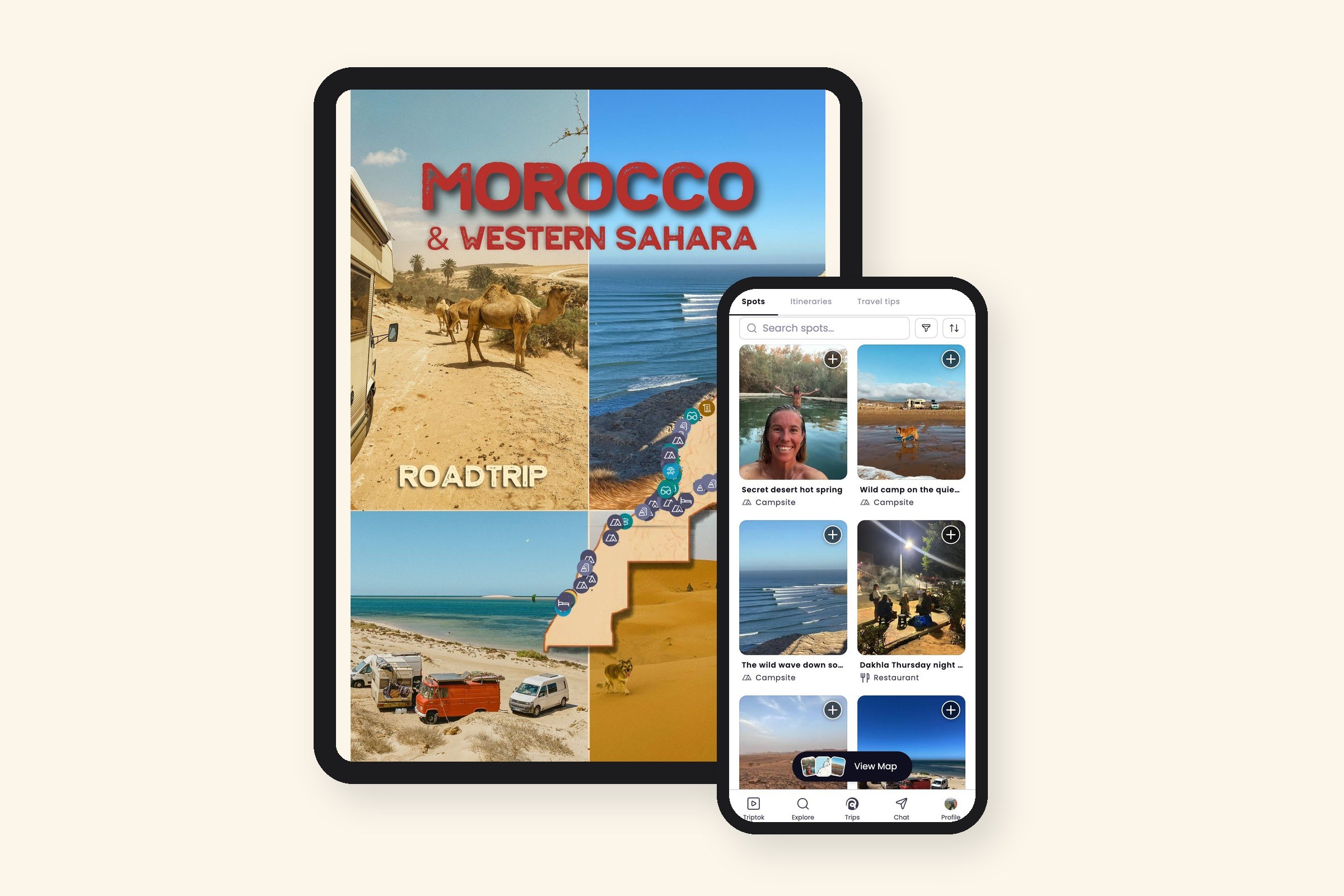
Roadtrip Morocco & Western Sahara
It's like having a friend on the seat next to you.
This post is the start. The guide goes much deeper, with everything I learned in two winters by van and 28 travel tips. From the ferry and the letter you need if the van isn't in your name, to the visa extension in Dakhla and the dog paperwork. And the culture: Ramadan, haggling, the hammam, cooking on the fire, the spices and Ayurveda on the road.
- 125+ spots I've been to, with 50+ epic wild places we slept
- Three routes, from four easy days to our loop all the way to Dakhla and back
- For vans and motorhomes, no 4×4 needed
Logistical basics: travelling into Morocco with your van
When to go, visa info and entry requirements
Best time to go vanlifing Morocco: October to May, away from the intense summer heat and the winter cold of Europe. For surf fanatics, October to January generally has less wind and better waves. Kitesurfers get more favourable conditions from February onwards.
You may like reading: Morocco in winter: where to go and how cold it gets
Entry requirements
- Most passports get a 3-month visa on arrival. Most cars get 6 months but check this on arrival. Last time we only got 1 month. At a local custom office you can extend (free and quick).
- Dogs and cars are allowed to stay 6 months.
- Passports need to be valid for at least 6 months after arrival.
- Car entry requirement: a print of your green card (though no one checked at the border).
- Visas can be extended in the country, though not everyone gets them granted (we did).
How long to go to Morocco? As long as you can. After 3 months of vanlife Morocco, we only scratched the surface. I've met many vanlifers who only went for one month. If you like driving, that works, but you really need more time to get to the essence of this magical country. We extended our visa (in Dakhla) and ended up staying 6 months.
Travel insurance for Morocco
Morocco isn't covered by EU health cards. I don't cross the border without travel insurance, especially with a dog and a van. SafetyWing Nomad Insurance is what I use because it's built for long-term travellers, you can buy it after you've already left home, and it covers the kind of countries that most policies exclude.

Booking your ferry ticket
There are several ferry companies running between Spain and Morocco. I usually find best prices with Armas. Carlos' travel agency Viajes Normandie in Algeciras also gives good deals.
Ferry companies to check
- Africa Morocco Line
- Balearia
- Intershipping / Armas
- FRS
Ferryhopper and Direct Ferries are easy tools to compare and lock in the best price.
We paid 147 euro for a one-way ticket with 2 persons, a campervan (5.6 meters), and a dog for the ferry from Spain to Morocco. It's smarter to book an open return.
Price estimation return Morocco to Spain (2 adults, 1 van and dog)
- Algeciras to Tanger Med: around 280 €
- Algeciras to Ceuta: around 200 €
Taking the ferry from Morocco back to Spain
Some practical tips:
- Leave the drone at home (they do ask).
- Take a pen on the ferry so you can fill out the customs form.
- Line up early for customs. When the ferry arrives you can also leave promptly.
- You can usually take a shower on the ferry. Bring a towel.
- When you arrive, expect about another 2 hours of lining up and checks. I recommend taking a morning ferry so you still have daylight to make your way to where you want to go.
Some cars have to go through a scanner. Some don't. They do ask if you have a drone. Leave it at home.
Want a hotel night in Tangier before or after the ferry? Browse Tangier accommodation.
Renting a campervan for Morocco
If you don't have your own van, you may get lucky and find a local rental. Goboony is the Dutch peer-to-peer camper rental I'd point at if you're starting from northern Europe. Real owners, real vans, the slow-travel feel, not a fleet of identical motorhomes. Sometimes there are campervans available in Morocco!
Taking your dog to Morocco in a motorhome
Yes, you can take your dog to Morocco in your van or motorhome. This is the section I get the most questions about. Bringing a dog into Morocco is the easy part. The harder part is making sure you can bring them back into Spain. The paperwork is doable. Start it weeks in advance.
Should you bring your dog?
Yes, you should travel with your dog to Morocco! It's great for them, at least it was for my dog. It's one big exploration zone and dogs are allowed everywhere. The stray dogs are supersweet and not to worry about. I wish I could take them all. And he gets along well with the dromedaries. As opposed to many places in Europe, here are no strict rules and regulations. Perfect for long, wild, lovely dog walks without a leash. Some people love dogs. Some people are afraid. There are lots of cats in Morocco, which my dog likes to chase. The cats are not shy, either. They may jump on your dog. When strolling towns and Medina's it's wise to put the leash for everyone's peace of mind:)
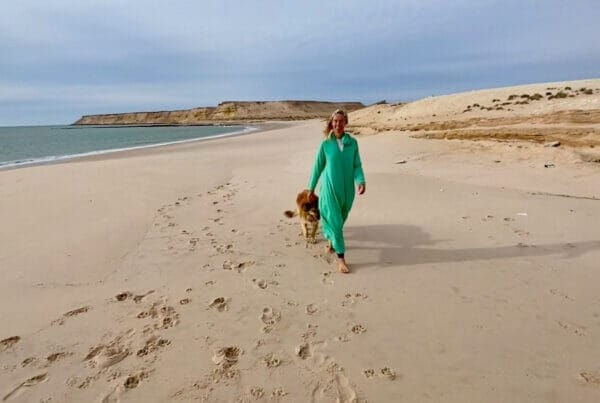
What about the stray dogs in Morocco? Most stray dogs we meet are super sweet. We haven't had any problems. My partner also just went running the beaches with our dog. Simple, wild and free, that's how we like to be:)
Are stray dogs in Morocco dangerous?
This question comes up a lot. After 6+ months on the road there: most stray dogs we met were sweet or wary, almost none aggressive. Wingo ran the beaches without a leash for months without an incident. Some street dogs follow you for a while looking for food, some keep their distance.
That said, rabies does exist in Morocco, which is exactly why the rabies titre test is mandatory for re-entry to the EU. Keep your dog vaccinated, keep an eye out, and don't let your dog run up to unknown street dogs. Treat them the way you'd want a tourist's dog to treat yours.
Entry requirements for the dog
Entering with a dog is easy. What's more important is being prepared to re-enter Spain (or France) with the right paperwork. Before I adopted my dog, he was actually held in Morocco for months because he didn't have the right paperwork and wasn't allowed entry back into Spain. This happens. You do not want this to happen to your dog.
What you need
To enter Morocco:
- An Animal Export Certificate which you get from PIF (office close to the ferry terminal in Algeciras).
To return to Spain (or any EU country):
- Your pet must be microchipped and registered to you.
- Your pet needs an EU pet passport.
- Your pet's rabies vaccination must be up to date and recorded in the EU passport by an EU vet.
- Your pet must have a rabies antibody titre test, done by an EU vet and tested in an EU-approved lab. The results must be written into the EU pet passport by the vet who took the sample.
Step-by-step process for bringing your dog into (and out of) Morocco
- If you don't have the antibody test yet, you need to get this done (only once if you keep up with the yearly vaccination). Go to a vet more than 3 weeks before you go to Morocco to get the result of the antibody test back in time. Bring the original test document. Cost is around 100 to 150 euro. They take a blood sample and send it to a lab in Germany. My dog didn't have any pain with this as far as we could tell. The whole appointment took about 45 minutes. We did not anticipate this 3 weeks in advance and got the results sent over by email. On the way back they never checked, but you don't want to gamble on that.
- Your dog needs a health check 24 hours before departure by a vet. Then you, or the vet, make an appointment with PIF in Algeciras, where you'll get the official export document that they may ask for at the Moroccan border (they didn't ask us). Cost is around 106 euro.
On the ferry we could just take our dog on deck and inside.
We paid more for the dog logistics than the ferry itself. That said, you only need to do this once if you keep up with vaccinations. The following winter we did not need to redo the bloodtest.
Smart things to pack, prepare and bring
For the van
We travelled Morocco and Western Sahara with a Mercedes camper from '93. A car you see driving quite a lot in Morocco, making us blend in a little easier. We haven't made specific adjustments or preparations to the van for this trip beyond how I travelled in Europe with it. With a simple 2WD van or car, you can create a great road trip. The road from the north to the Mauritanian border has been in superb condition. Many dirt roads also allowed access with our 2WD. Of course, a 4×4 will get you to more places.
My tips on preparing your van for Morocco
Make sure to have a water filter so you can top up water at any place and don't need to buy bottled water. There are so many problems with bottled water, with the environment and your own health. Be prepared.
If there's only one thing you invest in as a nomad, let it be a water filter. With non-drinkable tap water and the only alternative being bottled water in most countries, we're better off prepared. I haven't bought water for years. My go-to filter is Maunawai. It doesn't just purify the water, it brings minerals back into it. They have a good one for hiking, and a good portable one as a jar (review here). After using just the jug (Maunawai Kini) for years in my van, I have now a fixed filter just after the water tank. The taste is great, and if you can afford it, bring a water filter or two on your travels to gift. It can change someone's life. And the oceans.
I have not bought a single plastic water bottle in Morocco. We just filled up at water points which are fairly easy to find next to roads.
Be prepared with zero waste travel reusables: bags, straws, bottles. Show up with them when doing your groceries. You may inspire or create a sprinkle of awareness around you when travelling through Morocco.

Make your van fly-proof. In some places, flies can take over the house if you're not careful. At one point after a sunset surf session, we literally had thousands of flies in the van. Disgusting. These magnet fly curtains are the best.
A small compost bucket for food scraps.
A compost toilet. Compared to the chemical toilets that most campervan people still use, a compost toilet is sustainable, practical, and a real upgrade. Why we should all consider one:
- Eco-friendly: no water, no chemicals, no electricity. Turning waste into compost and giving back to nature.
- Cost-effective: no expensive plumbing or sewage issues.
- Convenient, portable, and easy to install. Perfect for camping, vanlife or sailing.
- Easy to maintain: empty it every week or two.
- Freedom: no attachment to sewage systems and no need to drive to the poo stations.
I have a simple Kildwick compost toilet (see review).
You may also like: Best compost toilets compared for vanlife.
A shovel for composting food scraps and other scraps. Surprisingly hard to find in Morocco.
A solar panel. The sun is your friend here.
A sun cover. Hard to find shade.
A paper map of Morocco. Impossible to find in Morocco itself, and good to have a paper map when offline.
A Garmin InReach Mini if you're heading into Western Sahara or remote desert sections. Two-way satellite messaging works where there's no phone signal, which is most of the south.


Surf and kite gear
We travelled with 2 longboards, 1 funboard, and kite sizes 8m, 10m, and 12m. Quite often the waves were mellow and small, and the longboard made us able to surf often.
For the dog
Basic dry dog food can be found in most towns in Morocco, sometimes in specific pet shops or in slightly bigger supermarkets. If your dog has specific food needs, it's good to bring it.
For food items
Moroccan food is amazing and affordable. That said, some foods you may love and thrive on are impossible to find locally. I loved that I brought:
- Coconut oil
- Nutritional yeast
- Organic staple foods
- Dried mushrooms
- Organic coffee
- Supplements
- Cheese

Wild camping in Morocco
Wild camping is one of the reasons people fall in love with vanlife Morocco. The freedom to park near a remote beach, in the dunes, by an oasis, or up a mountain track is real here in a way it isn't in most of Europe anymore.
Is it legal? Technically, wild camping is not officially permitted in Morocco. In practice, it's widely tolerated, especially outside of tourist hotspots. We wild-camped most nights for six months and were never asked to move on. The unwritten rule: be respectful, leave no trace, don't park right outside someone's property without asking, and read the room. If a local seems uncomfortable with you being there, move on.
If you want a legal alternative (or just a friendlier overnight than the side of a road), browse Campspace in Morocco. Small farms, gardens, off-grid pitches hosted by locals. Coverage is thinner than Europe but growing, and a single night with a friendly host can be one of the best memories of the trip.
How to find spots
- Park4Night and iOverlander are the two apps every vanlifer in Morocco uses. Coverage is solid along the coast, thinner inland.
- Google satellite view is your secret weapon. The coolest places I found were not on any app. Train your eye to spot dirt tracks heading away from the road towards the coast or up wadis.
- Campspace for legal private pitches (gardens, farms, off-grid spots) hosted by locals. The reliable alternative when you want a host, a shower, and the trail magic on purpose.
- Ask other vanlifers. The vanlife community in Morocco is generous with information. Beach parking spots travel by word of mouth.
- My own map. I've been adding my favourite Morocco wild camp spots, hot springs and off-the-beaten-path towns to my Roadtrip Morocco & Western Sahara guide. More on that below.
Safety: I never felt unsafe wild camping in Morocco. Petty theft can happen near tourist spots, so don't leave gear out overnight in busy areas. In the south and Western Sahara, you're often the only van for kilometres around. Bring everything inside, lock up, and sleep well.
What does a campsite cost in Morocco?
We mostly wild-camped but stayed at campsites occasionally for water top-up and a shower. Some campsites are quite legendary. Most though feel like jails to me, if you ask me. Pricing is affordable, between 5 and 15 euro for a night.
The spots I won't share publicly
Some of my favourite Morocco wild camp spots, hot springs and off-the-beaten-path corners I keep off public apps to protect them.
The full set, with photos and access notes, is in my Roadtrip Morocco & Western Sahara guide. It's all on one map you can use offline on the road.
Is Morocco safe for vanlife?
For me it feels safe and calm. I feel safer leaving the van here than in Europe. Across two winters of wild camping we were never moved on and never threatened, and I did part of a winter solo with Wingo. What I came away with was the kindness: people bringing tea, helping with the car, offering a hot shower.
What to be sensible about: there is some petty theft near the tourist spots, so don't leave gear out overnight there. The police checkpoints in the south are friendly once you hand over your fiches (little info cards with your details). Stray dogs are mostly sweet, just keep your own dog vaccinated. The roads are fine, it's the old vans that struggle, so keep a buffer for the mechanic.
Solo women: I did part of the winter on my own with Wingo. Dress modestly, leash up in town, and you'll meet the same kindness I did. If you need to know where you're sleeping every night, this might not be your trip. If you can flip a coin at a junction and see what happens, you'll love it. I wrote more about my two months alone in the van in is Morocco safe for solo female travellers?
Vanlife Morocco costs: what to budget
Vanlife in Morocco is one of the most affordable ways to travel long-term in the world. After 6 months on the road there, here's what shaped our spending.
Fuel: Diesel is significantly cheaper than in most of western Europe. Distances can be long, especially heading south to Western Sahara, so budget for it.
Food: Eating like a local (markets, vegetable souks, bakeries, street food) is incredibly cheap. Imported speciality food (organic, vegan-specific products) costs more or isn't available, which is why I bring some staples from Europe.
Campsites: When we used them, they were mid-range affordable. Wild camping is free.
Connectivity: Inwi unlimited data is mid-range affordable for what you get (see Connectivity section below for the contract details).
Visa extension: Free at a local custom office.
Roughly what things cost, as we found them on the road. Prices move, so treat these as a ballpark:
- A campsite for the van: about 5 to 15 euro a night. Wild camping is free.
- A bowl of bissara or harira soup in the street: around 10 dirham.
- Inwi unlimited data: about 249 dirham a month.
- A local hammam: about 15 dirham, 50 more for a proper scrub.
- A barber: around 20 dirham.
- A second-hand jallaba: about 20 dirham.
- Visa extension: free.
The big upfront costs are the dog logistics and the ferry. See those sections above. The dog logistics, you only pay once if you keep up with vaccinations.
What I didn't expect to spend on: hammam visits (worth every dirham), unexpected mechanic stops (the roads are mostly fine but Morocco is hard on tyres), and the urge to bring home rugs and ceramics. Budget some buffer.
Connectivity and internet in Morocco
On arrival at the ferry, people sell SIM cards. We got ours at a petrol station a little further along.
For the first few days I get an eSIM via Airalo. Then at a local Inwi office I get unlimited data.
There are 3 main telecom services: Orange, Maroc Telecom and Inwi.
The only provider offering unlimited data in Morocco for travellers without fixed residency is Inwi. You can purchase this plan in Inwi stores in the bigger towns.
Unlimited data Inwi (2026): 249 Dirham per month. You sign a contract and need to cancel it 1 month before departing. You can pay your monthly bill in cash exchange places or at an Inwi office.
You can make a hotspot with Inwi. Inwi has been good enough for streaming a film now and then and for work, but at times it has been slow too. Update: I renewed this plan now in 2026 and it seems to work way better than last year.
Best coverage: Maroc Telecom (around 15 GB for 15 euro).
SIM cards (and credit top-ups) can be found in the streets, in small shops, petrol stations, and the phone shops themselves.
If your phone allows, you can also get an eSIM and get data sorted before you arrive, at least for the first couple of days.
Morocco does not have Starlink at the time of writing (2026). Embrace it. Being in wild places without connectivity is an increasingly rare but magical experience.
Get 1 month of Starlink for free via this link.
Where to go in Morocco with your van
We travelled the full coastline in Morocco and Western Sahara. For the way back up north we travelled inland Morocco for two months. I can recommend all of it. So much diversity to be found road tripping through Morocco. We avoided the big cities like Marrakesh and Casablanca and mostly stayed and explored the smaller towns. More peace of mind, and lots of authentic Medina's to be found all around. If you're heading into the Rif mountains from the north, my Tarifa to Chefchaouen post covers the crossing and one of the smaller mountain towns most travellers love. My best tip: simply go and figure it out along the way.
The surf is really good. The well-known spots are Taghazout, Imsouane and Sidi Ifni, with quieter ones in between. Places like Taghazout and Sidi Kaouki get very busy, and it stops feeling very Moroccan. Essaouira is windy most of the year, and the bay is popular with kiters.
Inland, the Atlas and Anti-Atlas are spring and autumn country. There's Todra Gorge, the palm oasis of Ait Mansour, the pink granite around Tafraoute and the volcanic Jebel Saghro. And the hot springs are a whole reason to come.
You can find out about places to stay by simply asking your vanlife neighbours and checking vanlife apps like Park4Night, IOverlander, or, best, advance your Google satellite exploring skills. The coolest places I found were not on the map.
As of December '25 I've been pinpointing my best Morocco discoveries (hot springs, parking, off the beaten path towns) on one map. You can explore my treasures in my Roadtrip Morocco & Western Sahara guide.
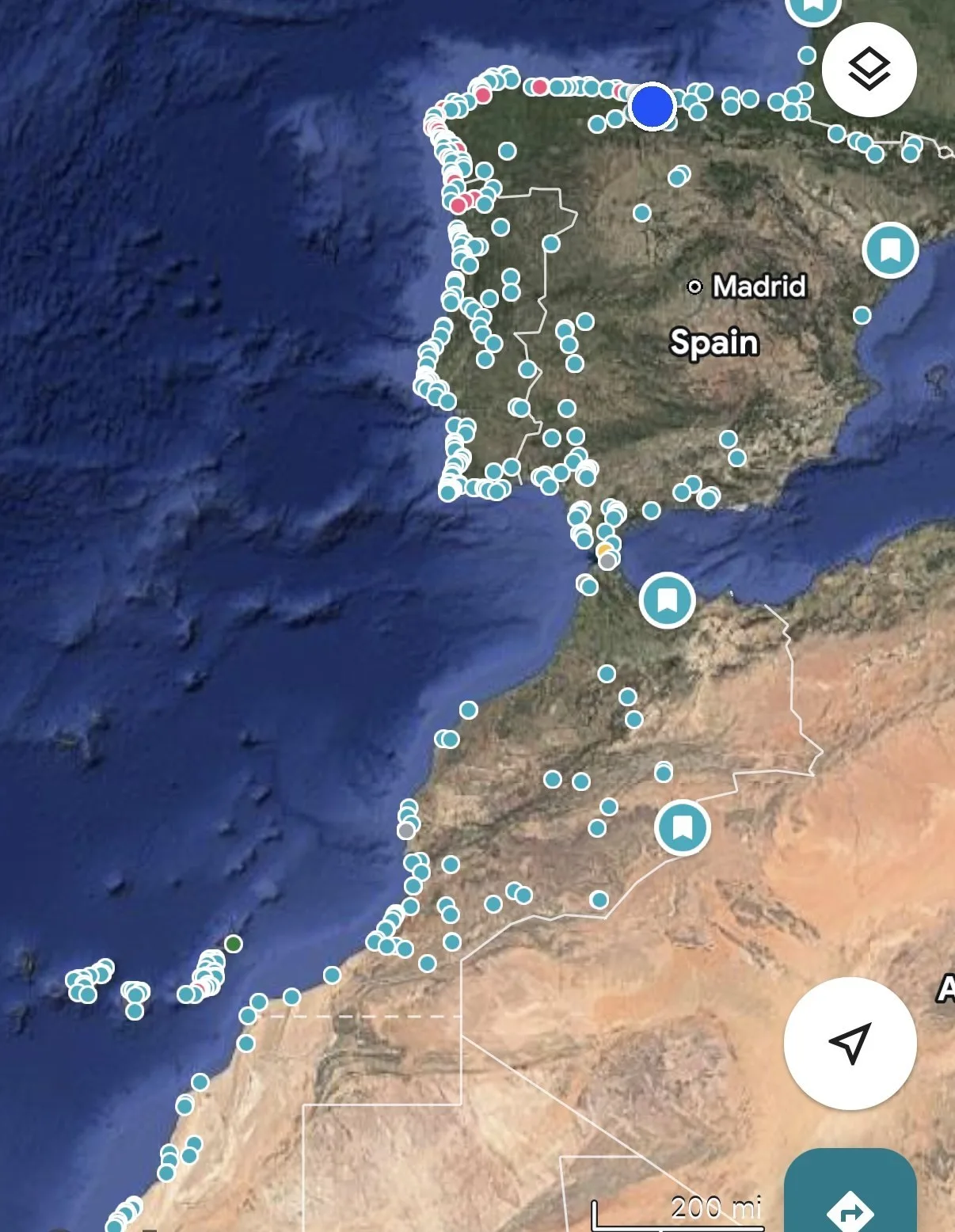
All my Morocco spots on one map
Wild camps, surf, desert hot springs and slow routes. They're all in my Roadtrip Morocco & Western Sahara guide.
Start your road trip
Local experiences worth booking
Most of vanlife is about going slow and finding things by accident. But a few experiences in Morocco are worth booking ahead, either because they're hard to organise on the spot or because the operators with the right setup get booked out. The ones I'd consider: Food tours and cooking classes in the bigger Medinas. The best way to actually understand what you're eating.
I usually use GetYourGuide when I want to lock something in: free cancellation up to 24 hours before most experiences, and the reviews tend to be more reliable than the operator's own website.
Should you go to Western Sahara with your van?
I recommend it! It all just gets more wild the further south you go and there is so much beauty to be found in the desert. Watch Roadtrip Western Sahara made by the one and only Johnny Mango to get an idea what it's like and why people travel to the Western Sahara.
A note on safety: Western Sahara is a politically sensitive region. The road south is heavily monitored with frequent police checkpoints. Have your fiches ready (printed sheets with your passport and vehicle details, in French). Bring 20 to 30 copies. Police are friendly if you're respectful. Don't take photos of military installations. Don't engage with political conversations.
If you're heading to remote Western Sahara, take a Garmin InReach Mini or equivalent satellite communicator. Mobile coverage drops out for long stretches and you want a way to call for help if something goes wrong.
Frequently asked questions
Is Morocco campervan friendly?
Yes. For me it feels safe and calm. I feel safer leaving the van here than in Europe. Across two winters of wild camping we were never moved on and never threatened. When you want water and a shower, a campsite costs about 5 to 15 euro a night.
Can I take my dog to Morocco in a motorhome?
Yes. Bringing a dog into Morocco is straightforward (you need an Animal Export Certificate from PIF in Algeciras). What's harder is bringing them back into Spain or the EU. You need an EU pet passport, microchip, up-to-date rabies vaccination, and a rabies antibody titre test from an EU-approved lab, plus a vet health check 24 hours before departure. Start the titre test at least 3 weeks before your trip.
Is Morocco dog-friendly?
Yes, for vanlife it is. Dogs are allowed on the beaches, out in nature and at most campsites. The cities are different. In some medinas and traditional towns dogs are seen as unclean. Keep your dog on a leash there and be mindful. Outside the cities your dog will have the time of its life.
Do I need a 4×4 for Morocco?
No. We did the entire trip from Tangier to the Mauritanian border in a 1993 2WD Mercedes camper. The main roads are in great condition. Many beach access tracks and dirt roads are also doable in a 2WD if you're sensible. A 4×4 opens up more remote spots, especially in the Atlas Mountains and deeper desert, but it's not essential.
How long can I stay in Morocco with my van?
Most passports get a 3-month tourist visa on arrival. Vehicles and dogs are admitted for 6 months. You can extend your visa once you're in the country at a local custom office (free and quick), though not everyone gets it granted. We extended ours in Dakhla and stayed six months.
I can highly recommend exploring Morocco with your campervan.
Which questions do you have for your trip through Morocco? Drop them below and I'll try to answer.
Enjoy your road trip to Morocco. And perhaps see you there.
For the day-to-day from the road, find me on Instagram and YouTube.
Stay wild,
Suzanne
Wild at heart? Let's be friends.
Join me on YouTube for slow travel adventures by van, sail and on foot.
Or get my new stories by email, every couple of weeks.
Ocean Nomads is the community I founded, for people who want to live a little wilder, explore a little further, and do it with good people.
For deeper trail stories and the behind-the-scenes, I write on Patreon.
Explore more
Read next
 Van life gifts: what lives in my van after six years
 Best composting toilets for vanlife, campers and boats (2026)
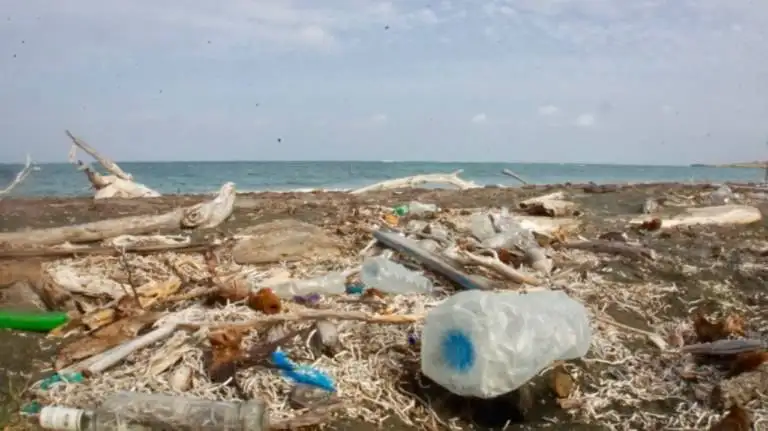 Best water filter for boat and campervan life (2026 tested)
 All my vanlife stories
Watch on YouTube

About Suzanne
I'm Suzanne. For 15+ years I have lived on the move between sail, van and trail. My van has been my main base camp for almost seven years. I've spent two winters (nine months in total) road-tripping Morocco and Western Sahara with my dog Wingo, mostly along the Atlantic coast and inland. This guide is what I learned by being there. The day-to-day from the road is on Instagram and YouTube.
Some links in this post are affiliate links. I only recommend tools and partners I actually use.



Hi Suxanne, what a great blog! Thanks for sharing. Came across you searching for information on vanlife in Morocco, eith dogs. especially curious about securing 6 months visa instead of just 90 days. Finding difficult to learn how and where it can be done. Many thanks
I am from Denmark. And goin Morrocco in my van from September and ? Like your blog.
Do you got a map on you route. So I can get inspired
All the best Jorgen Krogh