

Table of Contents
- El Médano: a sense of place
- Kitesurfing in El Médano
- Kite schools in El Médano
- Wind seasons in El Médano: when to go
- What to expect on the water
- Surf in El Médano
- Vanlife in El Médano: where to park
- Sailing into El Médano
- Hike Montaña Roja and beyond
- Other things to do in El Médano
- Where to stay in El Médano
- Eat, drink and the local vibe
- Local food of the Canary Islands
- How to get to El Médano (without flying)
- Beyond El Médano
- Useful kitesurf resources
- FAQ: Kitesurfing in El Médano
I'm writing this from the van, parked under Montaña Roja, the 171-metre volcanic landmark that gives El Médano its weather, its skyline and a good chunk of its character. Southern Tenerife gets written off by a lot of adventure travellers because of the big resort developments further down the coast. Don't let that put you off the southeast. Costa del Silencio is the quieter side, and the old fishing town of El Médano (literally “the sand dune”) is the kite and windsurf town of Tenerife. It's where the European summer keeps going through autumn, where the wind funnels off the volcano and where Ocean Nomads sailboats roll in on their way to (or back from) the Atlantic crossing season.
This is a kitesurf and adventure travel guide to El Médano: where to ride, where to learn, when to come, where to park the van, where to surf when the wind drops, where to hike, where to eat and where the bay opens up to anchored boats and Atlantic crossings. I've been coming back here since 2015. The last time was this winter (2025/26), van, dog and partner in tow.
El Médano: a sense of place
La Montaña Roja is the landmark. A 171-metre volcanic red mountain, protected natural reserve, with climbing, hiking and cycling all on its flanks. The area around the mountain is the playground for the waterlusted adventure seekers. El Médano itself is a chilled, laid-back town that hasn't been swallowed by northern European beach tourism the way Los Cristianos or Las Américas have. The Spanish vibe is properly present here. Fishermen are catching the tapa of the day. Elderly people are chitchatting on the boulevard benches. Locals and adventure seekers are having una caña (a small draft beer) somewhere on the plaza or wooden boardwalk in the no-traffic zone. It's one of those sticky places where you could end up hanging out wayyy longer than planned.
It has changed since I first showed up here. More vanlifers, more remote workers, more cafés with oat milk. But the bones are still there: the locals, the wind, the volcanic coast, the sailboats anchored in the bay. A good mix of people who came for the wind and ended up staying.

Kitesurfing in El Médano
El Médano is the kitesurf and windsurf spot on Tenerife. The volcanic landscape funnels the northeast trade winds across the south coast and accelerates them through the bay, which is why this little town ended up as a windsurf world cup spot. While the rest of Europe is squeezing into 5mm wetsuits in November, El Médano is still rideable in board shorts (not for shivery types like me, a 2mm shorty is a better year-round bet).
Wind direction is side onshore from the northeast. Speed sits between 15 and 30 knots on most rideable days, with Calima days (strong, hot, dusty Sahara wind) pushing it up to 35 or more. The wind is gusty close to the beach and steadies up the further out you ride. Bring a 9m kite as your baseline and have a 7m and an 11-12m for the edges. The wind usually picks up around noon and often lasts long enough for sweet sunset sessions.
Three main spots, all in walking distance from town:
- Playa los Balos: flat water or little swell, side onshore. Beginner friendly. This is where most schools run their first lessons.
- Playa El Cabezo: a bit further upwind, sideshore waves, for intermediate-to-advanced riders. The wave-and-strapless crowd lives here.
- Tejita Playa: on the other side of Montaña Roja, only really kiteable when the wind swings west, which is rare. Worth knowing for those days.
If you've kited Tarifa, you'll find El Médano less wind-windy and more chill. August in Tarifa is a zoo. August in El Médano is busy but not chaos. If you're chasing wind past September, El Médano keeps delivering when most of Europe has packed it in.

Kite schools in El Médano
There are several IKO-certified schools clustered around the El Cabezo and Balos beaches. They all run beginner courses, intermediate clinics, gear rental and (most of them) radio-helmet teaching. Pick based on availability and language, the quality of teaching is solid across the four below.
- Duotone Pro Center Tenerife (DPC): the big operation in town. IKO-affiliated, latest Duotone kites, max two students per instructor, radio helmets. Beginner courses run in five 2-hour sessions. They also do windsurf, wing foil and SUP.
- Tenerife Kitesurf: smaller school, IKO-certified, runs out of the Cabezo area. Good for private and semi-private lessons.
- Sunset Kitecenter: also IKO, multilingual (English, Spanish, German, French, Italian). Group and private lessons.
- Kite Hub Tenerife (formerly PKS): IKO school with a long-standing reputation in town. Worth asking around for, as their bookings tend to fill in peak season.
Reality check: book ahead in July, August and September. The wind is most reliable, the school slots are most booked. October through April is more relaxed for last-minute lessons.
Wind seasons in El Médano: when to go
Short answer: all year. Longer answer:
- July, August, September: peak wind season. Most rideable days, strongest winds (often 25-35 knots), highest chance of Calima. Also the busiest in town and on the water. Book lessons and accommodation in advance.
- October, November: still windy, fewer crowds. The European wind season everywhere else is winding down. This is when El Médano starts to feel like a secret. Wind drops to 15-25 knots on average, still very rideable. Wetsuit weather starting.
- December through February: low season for kite, but the wind still shows up. Days off the water you can hike, surf, sail, soak in saltwater pools. A 2mm shorty wetsuit is your friend.
- March, April, May, June: the shoulder months. Wind is more variable, but when it blows it's still good. Cheaper accommodation, quieter town.
If you're coming specifically to learn, July or September gives you the best ratio of wind days to school availability without August's full chaos.
What to expect on the water
- Waves and tide: at low tide (bajamar) the bay is almost flat, which is why Balos works for beginner lessons. At high tide the waves at Cabezo can pick up to 1.5-3 metres. Stronger winds (25+ knots) also build the swell.
- Hazards: there are rocks both on the right of the launch zone (near the Bunker) and on the left near the Harbour Wall. Keep your distance. The middle of the bay is sand. Local instructors will brief you on the lines, but it's worth knowing before you launch.
- Wetsuit: 2mm shorty year-round is the safe default. Some people ride board shorts in August/September. Add a long-sleeve thermal under in December/January if you run cold.
- Gear baseline: 9m kite for average conditions. 7m for windy days. 11-12m for the shoulder season. Bring a board you trust, schools rent if you want to travel light.
- Launching: sandy beach, no obstacles, dedicated kite zone on the right side of Balos. Left side is for swimmers. Don't be that person who launches in the swimming zone.
Surf in El Médano
When we were there this winter, we got some really nice surf days too. The Atlantic swell wraps around the southern point and picks up at El Cabezo and at the eastern side of Playa La Tejita. It's not a world-class surf destination, but on a no-wind day with a clean swell, it does the job. The crowd is mixed: kiters who keep a surfboard for windless mornings, locals, and a handful of travellers who came specifically for it.
Vanlife in El Médano: where to park
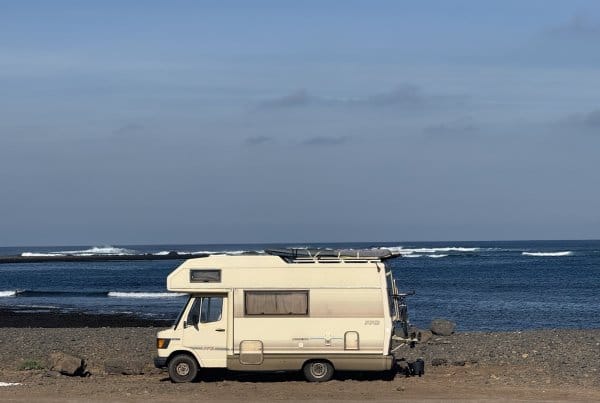
I rolled in here this winter with the van and the dog. El Médano isn't a big vanlife hub like Famara or Sotavento, but it works if you know where to go.
- In town: there are a few quiet streets and small lots near the eastern end of the bay where vans park. Spots are limited, and they fill up fast in peak season. Members of the Ocean Nomads community share a map of vetted spots, which is where I'd point you first.
- The big parking next to Montaña Roja: at the south end of Playa La Tejita, the official parking area is the easiest, most spacious option. Free, sandy, walking distance to the beach and to town along the coastal path. Also the bay where sailboats anchor, which makes the whole vibe more village-of-the-wild than tourist car park.
- The eco-houses area east of town: the Casas Bioclimáticas wind-power neighbourhood (the ITER complex) has wider, quieter streets and is a useful base if you want to be 100% in nature, although you're a bus or bike ride from the bars.
A few practical notes from this winter: the local police do occasional checks for overnighters in town, less so at the Tejita lot. Be tidy, no awning circus, no chairs out, no grey water on the ground. Keep it discreet and the spots stay open for the next van.
Sailing into El Médano
The bay south of Montaña Roja, Playa La Tejita, is a working sailboat anchorage. Boats stop here on the way to and from the Atlantic crossing season, on the route between mainland Spain or Morocco and the rest of the Canary Islands. Several Ocean Nomads boats roll through every season. If you're sailing in, the anchorage is exposed to north and east, so it works best in the prevailing northeast trades. Watch the swell forecast.
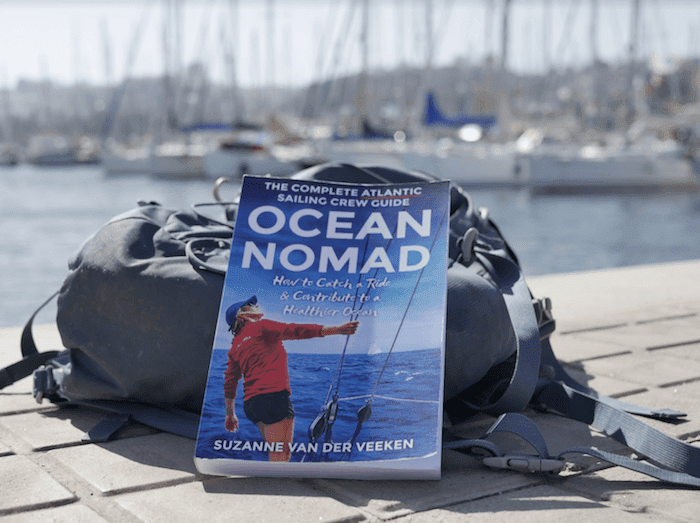
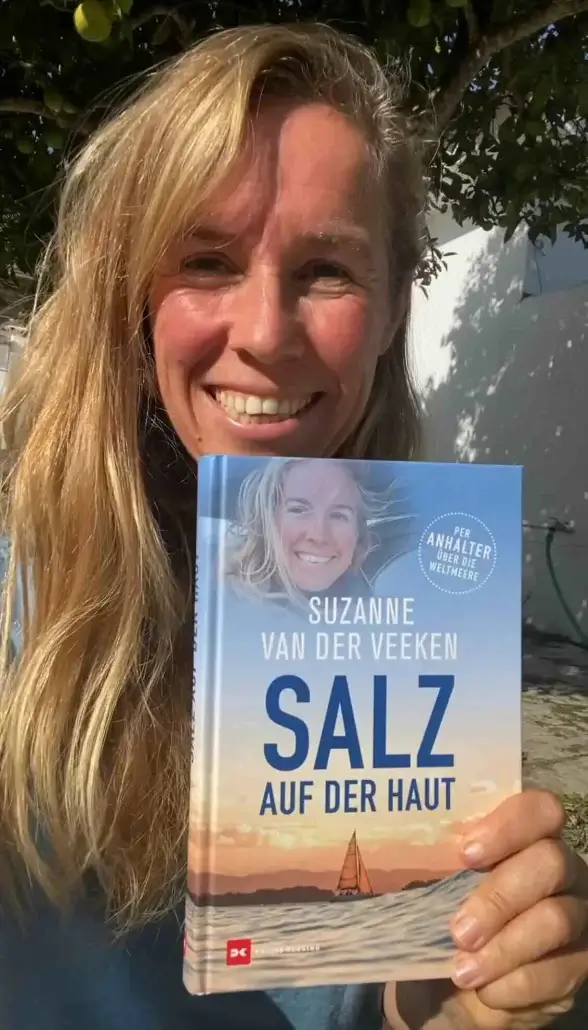
If sailing across an ocean is on your list and you want to know how to do it without owning a boat, I wrote a whole book about it (you can read more on the Ocean Nomads site) and there's a free Zero to Ocean Nomad intro for people thinking about it.
Hike Montaña Roja and beyond
The hike up Montaña Roja takes about 30-40 minutes one way. The path is steep in places, loose volcanic gravel, no shade. Bring water and shoes with grip. The views from the top run the whole south coast: La Tejita bay, the eco-houses, El Médano town, and on a clear day across to La Gomera.
The whole mountain is a protected nature reserve with sand- and mud-based ecosystems and more than 100 bird species, including the endangered Kentish plover. Stay on the marked path, don't pick anything, don't move stones into towers (the Canary Islands authorities have been asking visitors to stop building cairns since they confuse the wildlife).
Bigger trail energy: the GR131 hikes across all the Canary Islands. I walked the Fuerteventura and Tenerife sections in 2022 and it takes 5-6 days to cross Tenerife on the GR131. Tenerife also has the highest peak in Spain, El Teide, if you want to go up rather than across.
Other things to do in El Médano
Cycle the Costa del Silencio
The coastal trail from El Médano to San Miguel runs along the volcanic coast through some properly stunning erosion landscapes. Most beaches along the way have small info points about the local ecosystem. It's an easy ride, no climbing. Inland there's harder road and mountain-biking if that's your thing. Rent a decent mountain bike at Bikepoint Tenerife, or pick up a 2€/day budget bicycle from the hostel.
Birdwatching at Montaña Roja
Over 100 species use the reserve. The Kentish plover is the headline endangered bird. Best at dawn or dusk, quiet, with binoculars and patience.
Snorkel and chill at La Tejita
La Tejita is a Blue Flag beach, with a beach bar at one end and beachwear-optional sections at the other. Picnic, sunset, soft swim, the works.
Salt water pools
Natural saltwater pools sit along the coast of the Montaña Roja reserve. High tide fills and filters them through the volcanic rock. Dip when the bigger ocean swell isn't your friend.
The spa at the end of the bay
The big resort hotel at the eastern end of Playa La Tejita runs a spa with day passes. Not the cheapest treat, but on the right tired-after-kiting kind of evening it's worth the spend. Hot tubs, sauna, the lot. Ask at reception for current rates.
Where to stay in El Médano
Use the map below to compare options (and price). It pulls from Booking, hostels and apartments across town. My short list of names worth searching:
Budget
- Los Amigos Backpackers Hostel (around 15€/night): a few kilometres outside El Médano. Backpackers running it for backpackers. 2€/day bicycle rental. Cereal/bread/fruit breakfast and towels included. Multinational crowd, daily group excursions, no Spanish-village ambience. Fine if you want a backpacker base, less ideal if you specifically came to kite.
- Casa Grande Surfhostel (around 15€/night): budget surf vibe in the centre of town, shared rooms only.
- Hostal Carel (around 45€/night for a room): budget-friendly, top location, walking distance to a kite school.
Midrange
- Hotel Playa Sur Tenerife: right on the kitesurf spot in El Médano. You can't get closer to the water.
- Casas Bioclimáticas ITER: eco houses powered by wind, a few kilometres east of El Médano. 100% in nature. You'd want to rent a car if you stay here.
Eat, drink and the local vibe
- Café con leche in the morning or una caña after kiting: Veinte 04 Surf Café, on the square.
- Tapas: Vetusta Bar (lovely staff, good wifi, proper tapas) and Bar Playa Chica (5 tapas for 10€), both on the Paseo Marítimo.
- Right on the beach: Flashpoint. Best view of the bay.
- Catch of the day: head one town over to Los Abrigos, where the fishing boats actually land.
- Cocktails: Calima Café.
- In the small alleys on the eastern side of the bay you'll find more coffee bars, wifi cafés, an eco food shop and a small spot or two for late-night dancing.
Local food of the Canary Islands
Forget about your usual food. A few things to try:
- Papas arrugadas: Canary Island salty potatoes that come with mojo rojo (red) and mojo verde (green) sauces. I cannot get enough of the mojo.
- Rancho Canario: a chickpea soup. Properly nourishing.
- Queso Rojo: the local red-rind cheese.
- Gofio: roasted-grain flour, used in everything from soups to breakfasts.
- Mangoes, papayas, kakis (persimmons) when in season, by the crate.
How to get to El Médano (without flying)
I don't fly anymore, so this section is the one I research most:
- By ferry: you can reach the Canary Islands by ferry from mainland Spain (Huelva or Cádiz). From there, an inter-island ferry to Santa Cruz de Tenerife. Then bus or hire car down to El Médano.
- By sailboat: hitch-sail across from Europe or Morocco. The Atlantic crossing season runs roughly October through January and most boats stop in the Canary Islands. The bay south of Montaña Roja is one of the working anchorages.
- By van: drive down from northern Europe via mainland Spain, then ferry over from Huelva or Cádiz with the van on board. A 36-48 hour crossing depending on the route.
- Inside Tenerife: El Médano is 15 minutes from Tenerife South airport. Taxi is around 10€. The TITSA bus 470 runs through town towards Playa de las Américas. There are also buses from Santa Cruz.
- Wheels on the island: rent a car for around 35€/day if you want to do more Tenerife exploration. Anaga and the Taganana coast are worth the drive.
Beyond El Médano
There's more to Tenerife than kiting in El Médano. Climb, hike or cycle El Teide, the highest peak in Spain. Drive the Anaga coast at the northeast end, where the green old-growth forests fall straight into the Atlantic. Taganana is one of those places that feels nothing like the southern beach resorts.
If time allows, take the ferry across to La Gomera, a green and quiet hiking and biking island south of Tenerife. One hour by ferry, or sail across if you can. Don't go for just a day. And if you're chasing more wind, Cape Verde in winter is the next move south for extending the European kite season into the Atlantic crossing route.
Useful kitesurf resources
- Mucho Viento: wind forecasts for the Canary Islands
- Windfinder El Médano wind statistics: month-by-month wind averages
- El Médano webcam (D'Light)
- El Médano webcam (Canarias24)
FAQ: Kitesurfing in El Médano
Where is El Médano?
South coast of Tenerife, the largest of the Canary Islands. 15 minutes by car from Tenerife South airport, in the Costa del Silencio region.
Can beginners learn to kitesurf in El Médano?
Yes. The flat-water section at Playa los Balos is well suited to first lessons, and there are several IKO-certified schools running beginner courses. The wind can be gusty close to the beach, so beginners should always learn under instructor supervision, not solo.
Are kitesurf lessons available year-round?
Yes, the main schools run lessons all year. Peak availability is July to September, with the most reliable wind. Off-peak (December-February) you can usually get a lesson with shorter notice.
Why is El Médano known for kitesurfing?
The volcanic landscape funnels the northeast trade winds across the bay, accelerating them and making the wind exceptionally consistent. That, plus a sandy launch beach, a separate flat-water and wave area, and a town built around the sport, made El Médano one of the windsurf and kitesurf capitals of Europe.
Can I rent kitesurf equipment in El Médano?
Yes. All four schools listed above rent kites, boards, harnesses and safety gear. Rentals usually require you to show a kitesurf level certification (IKO or equivalent) before they let you take gear out solo.
What's the best kite size for El Médano?
9m as a baseline. Add a 7m for the windier summer days (25-35 knots) and an 11-12m for the shoulder months when the wind is lighter. Wetsuit: a 2mm shorty works year-round.
Can you sleep in a van in El Médano?
Yes, with discretion. There's a free parking area at the south end of Playa La Tejita near the foot of Montaña Roja, and a few smaller spots around the eastern edge of town. The local police do occasional checks for overnighters in town. Keep gear inside, no chairs out, no awnings, no grey water on the ground.
Disclaimer: All recommendations in this El Médano kitesurf and adventure travel guide are my own. Some links are affiliate links, some are not. If you book through my site, I get a few pesetas to put into the adventure fund. Thanks. If you've got questions about this corner of Tenerife, drop them below.
Stay wild,
Suzanne







Hi Suzanne, great review, thank you! I’m training to run a few marathons in the desert & would like to try & practise running up some sane dunes. Is it possible to run in/up/across the sand dunes?
This is such a detailed travel guide. I love what this amazing place has to offer. I’ve looked at the Canary Islands as a place to honeymoon several times, never realized how amazing it was.