

Updated September 2026
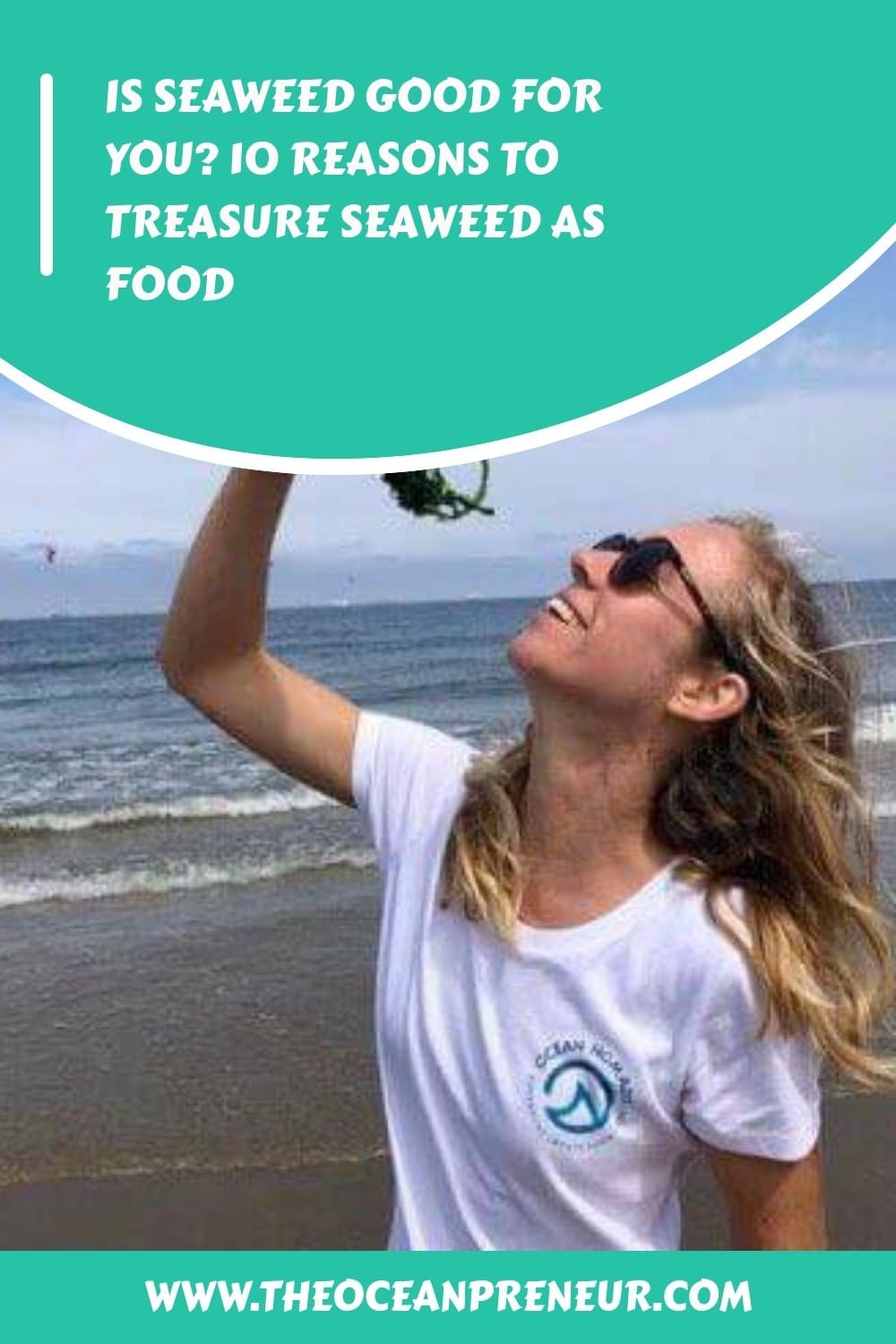
Is seaweed good for you? Seaweed as food! I'm a fan! And in this blog, I'll tell you why. There are many reasons to treasure the greens of the ocean, for you, and a healthy sea.
The short answer: yes. Seaweed is packed with minerals, iodine and omega-3, it grows without any farmland or fresh water, and you can even forage it yourself. A few grams of dried seaweed a day is plenty. Here are ten reasons to eat more of it.
Table of Contents
- Is seaweed a vegetable?
- 1. Seaweed is globally available in abundance and variety
- 2. Seaweed is a nutritional powerhouse
- 3. Seaweed can be free
- 4. Sea farming is low-resource farming
- 5. Seaweed is the best replacement for fish
- 6. Seaweed is versatile and can be eaten many ways
- 7. Seaweed is a relatively safe food choice
- 8. Seaweed skips the microplastic problem
- 9. Seaweed is easy to store, keep and travel
- 10. Seaweed brings the ocean into your house
- Can you eat seaweed straight from the sea?
- How much seaweed should you eat per day?
- Where to buy seaweed
Over the years I've been exploring, harvesting, and testing plants of the sea as food. Driven by curiosity. I came across so much of it during freediving, beach walks, and even during sailing passages. I was wondering which seaweed you can eat, how to eat seaweed, how healthy eating seaweed actually is, and if it can replace fish with the nutritional content.
The benefits of seaweed are nothing new. It's an ancient wisdom that we in the western world have forgotten a bit about. Especially in eastern cultures like Japan, Korea, and China seaweed has been harvested for thousands of years for food or medicine.
I'm nowhere near an expert on seaweed. But I explore, try, experience, question, read, research, study, and repeat. I've since studied nutrition, natural medicine and Ayurveda, and I keep getting more interested in the superpowers that nature has to offer. With what I've learned so far, I hope to make you as excited about seaweed as a source of food.
Is seaweed a vegetable?
What is actually seaweed? Is seaweed a vegetable? As the name says, seaweed is a weed of the sea. “Seaweed” is the common name for countless species of marine plants and algae that grow in the ocean as well as in rivers, lakes, and other water bodies. Some seaweeds are microscopic small, such as the phytoplankton. Some are big, like kelp that grow in abundant “forests.” Most seaweeds are somewhere in between (NOAA). On a menu you'll often see it called a sea vegetable, and that's exactly how I treat it in the galley.
Here are 10 reasons to be excited about seaweed and why seaweed is good for you!
1. Seaweed is globally available in abundance and variety
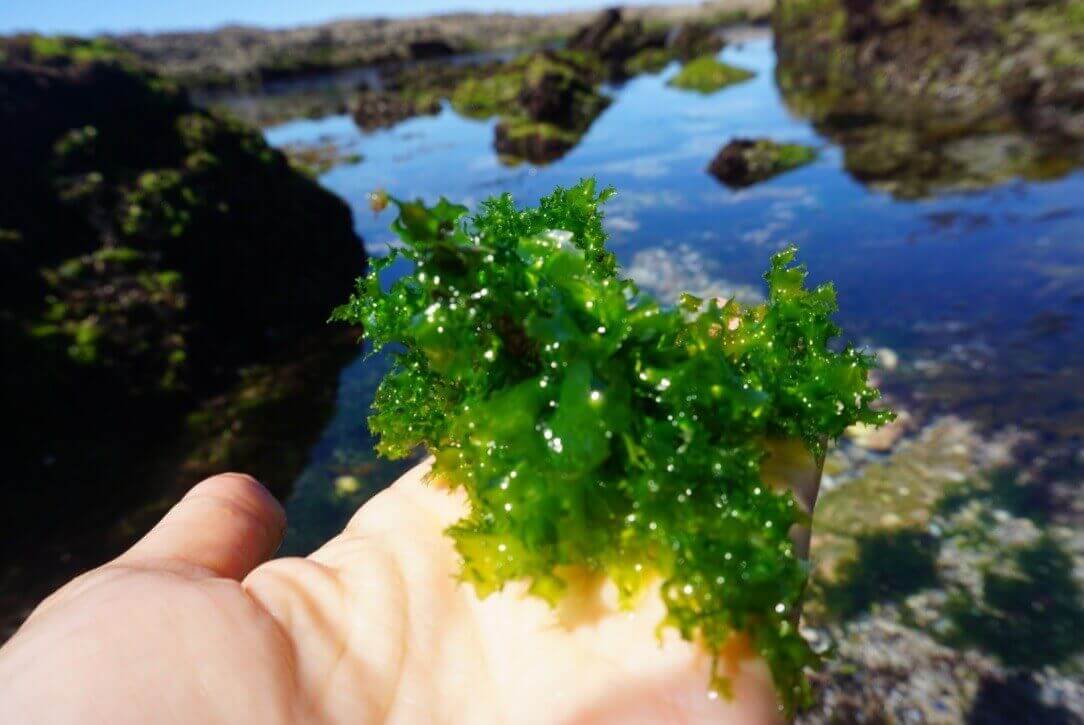
Seaweed grows pretty much everywhere in our oceans. It just needs sun, currents, and a rock. It washes up ashore, can be found between the rocks, and on the shorelines pretty much everywhere in the world.
2. Seaweed is a nutritional powerhouse
Seaweed's superpowers have been known since way back. The Romans used them to treat wounds, burns, and rashes. In Japan seaweed is attributed to ageing vitally old. Though seaweed covers a lot of territories and each species has a different nutritional profile, some generalisations can be made.
Edible seaweeds are a rich and sustainable source of macro and micronutrients. Seaweed has many essential nutrients such as omega-3 fatty acids, amino acids, vitamins such as A, C, E, K, and B vitamins, minerals such as folate, zinc, sodium, calcium, magnesium, and iron, and antioxidants. Seaweeds contain anti-inflammatory and anti-microbial properties. And it's a powerful source of iodine, which helps support your thyroid gland (but be careful eating too much of it). The mineral content of seaweeds is ten times higher than in plants grown in soil. Perhaps that has something to do with our more and more depleted soils? By eating seaweed it will be tough to create any mineral deficiencies! (Cherry et al, 2019; Mahadevan, 2015; USDA SR-21, 2018)
What makes seaweed most interesting is the omega-3, an essential fat our bodies need for good health. We do not create omega-3 in our bodies so we need to eat it. Where many of us think it's fish where we have to source this from, it's algae, including seaweed, where the fish get their omegas from in the first place. A big reason why seaweed is good for you.

3. Seaweed can be free
Where there's the sea, there's weed! Seaweed can be found in rivers, oceans, shorelines all around the world. It only needs a bit of sunlight and current to grow and can be foraged. Only take what you need. You can also find seaweed in more and more supermarkets, Asian stores, and from small foragers and creators on Etsy.
You may like reading: my tips on foraging for food.

4. Sea farming is low-resource farming
Plant, wait, harvest and that's pretty much it! Seaweeds do not need fertilising, weeding, or watering. Pests or diseases are hardly happening. Seaweed gets all it needs from its surroundings, and if it really thrives it can grow up to 15 centimetres, PER DAY!

5. Seaweed is the best replacement for fish
Not only for your health, for the health of the ocean seaweed is a better choice. There's not much fish left and it's increasingly toxic. In one-third of fish, microplastic is found. And in every sample of water I took across the Atlantic, plastic was found!
The recommended intake of omega-3 fatty acids is 500 mg a day. It's the EPA and DHA oils that need to cover this amount. Fish get theirs from algae. You can go straight to the source.
6. Seaweed is versatile and can be eaten many ways
There are thousands of kinds of seaweed. Seaweed is mostly red (over 7200 species), brown (about 2000 species), or green (more than 1800 species) (Seaweed.ie). There are many types of seaweeds and most of them are edible. Common types of seaweed include nori, kelp, wakame, Irish moss, kombu, dulse, and blue-green algae, like chlorella and spirulina.
You can eat seaweed raw, cooked, fried, and fresh. Sprinkle it in your soup, salad or pasta, or mix it in your smoothie. Put it in your pastries, bread, wraps, or around it. You can simply snack it. Use it as a salt replacer.
7. Seaweed is a relatively safe food choice
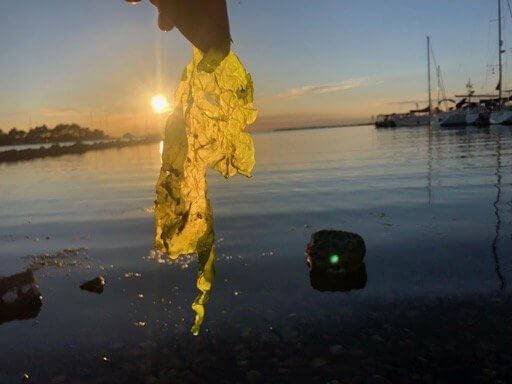
Considering the large number of seaweed species we eat, and that eating seaweed is an ancient practice, there are only a handful of cases where seaweed caused a harmful effect.
8. Seaweed skips the microplastic problem
Fish, beer, honey often contain microplastics these days, which in turn attract heavy metals like a sponge. Microplastics have even been found in the placenta of unborn babies. Seaweed sits at the very bottom of the food chain, so it doesn't build plastic up the way fish do. Give it a good rinse. Seaweed is even becoming the new ‘plastic': it's increasingly used in the packaging industry as a more environmentally friendly wrapper.
9. Seaweed is easy to store, keep and travel
If you find seaweed free in the wild you can simply dry it and store it in a jar or bag. Or you can buy dried seaweed. It's light so also easy to carry in the backpack. It lasts a long time and makes for great survival and emergency food. If I can only choose one supplement to travel with, it would be seaweed.

10. Seaweed brings the ocean into your house
Do you know the nori that's wrapped around sushi rolls? This is seaweed. Yummy isn't it? Seaweed tastes like the ocean. It smells like the ocean. It can have a bit of a funny texture. Sometimes it's crunchy, sometimes it's soaky. Sometimes it's chewy. Seaweed gives dishes an extra touch of salt and a special finishing touch.
Can you eat seaweed straight from the sea?
Mostly, yes. Most seaweeds are edible, and the ones that aren't will sooner taste terrible than hurt you. A few things I've learned along the way: harvest from clean water, away from harbours, outflows and busy anchorages. Cut from living, attached plants rather than the rotting piles on the tideline. Take a little from many plants instead of a lot from one. Rinse well, dry in the sun, done. If you're unsure about a species, check an identification guide first, or go with someone who knows. We once went foraging with The SeaWeedman on an Ocean Nomads adventure and I learned more in an afternoon than in years of picking on my own. That's the kind of thing that happens in the community.
How much seaweed should you eat per day?
It is recommended to only eat a few grams of dried seaweed per day. Be careful with eating too much seaweed because it can contain a lot of iodine (especially kelp). Too much iodine can cause thyroid problems. I once overdosed myself with Irish moss and it wasn't pleasant. A sprinkle a day is the sweet spot.
Where to buy seaweed
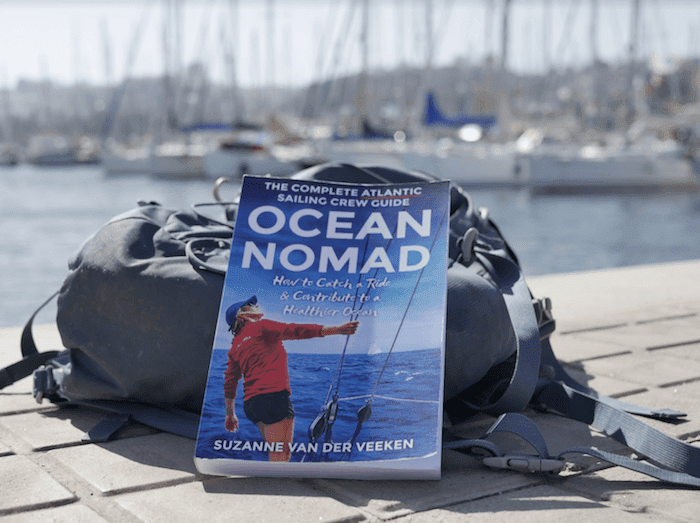
Foraging is the fun way, but not everyone lives near a clean coast. Look for dried seaweed in organic shops and Asian supermarkets, or order from small-scale seaweed foragers on Etsy. And if you want to get cooking with it properly, the book Ocean Greens by Lisette Kreischer (also on Amazon) is full of sea vegetable recipes.
Lots of reasons why seaweed is good for you.
Which reason makes you most excited to incorporate more seaweed into your diet?
Leave any questions you have about seaweed in the comments and I can base my next blogposts on that.

Read more on why seaweed is good for you
Blog: How are we emptying the oceans? Overfishing explained.
American Scientist. The Science of Seaweed. November-December 2013, Volume 101, Number 6, page 458. DOI: 10.1511/2013.105.458
Cheney, D. Chapter 13, Toxic and Harmful Seaweeds. Editors: Joël Fleurence, Ira Levine. Seaweed in Health and Disease Prevention, Academic Press, 2016, pages 407-421. ISBN 9780128027721, https://doi.org/10.1016/B978-0-12-802772-1.00013-0
Paul Cherry, Cathal O'Hara, Pamela J Magee, Emeir M McSorley, Philip J Allsopp. Risks and benefits of consuming edible seaweeds. Nutrition Reviews, Volume 77, Issue 5, May 2019, pages 307-329. https://doi.org/10.1093/nutrit/nuy066
Wells, M. L., Potin, P., Craigie, J. S., Raven, J. A., Merchant, S. S., Helliwell, K. E., Smith, A. G., Camire, M. E., & Brawley, S. H. (2017). Algae as nutritional and functional food sources: revisiting our understanding. Journal of Applied Phycology, 29(2), 949-982. https://doi.org/10.1007/s10811-016-0974-5
Are you oceanpreneuring in seaweed and would like to team up? Let me hear from you!

Related Posts