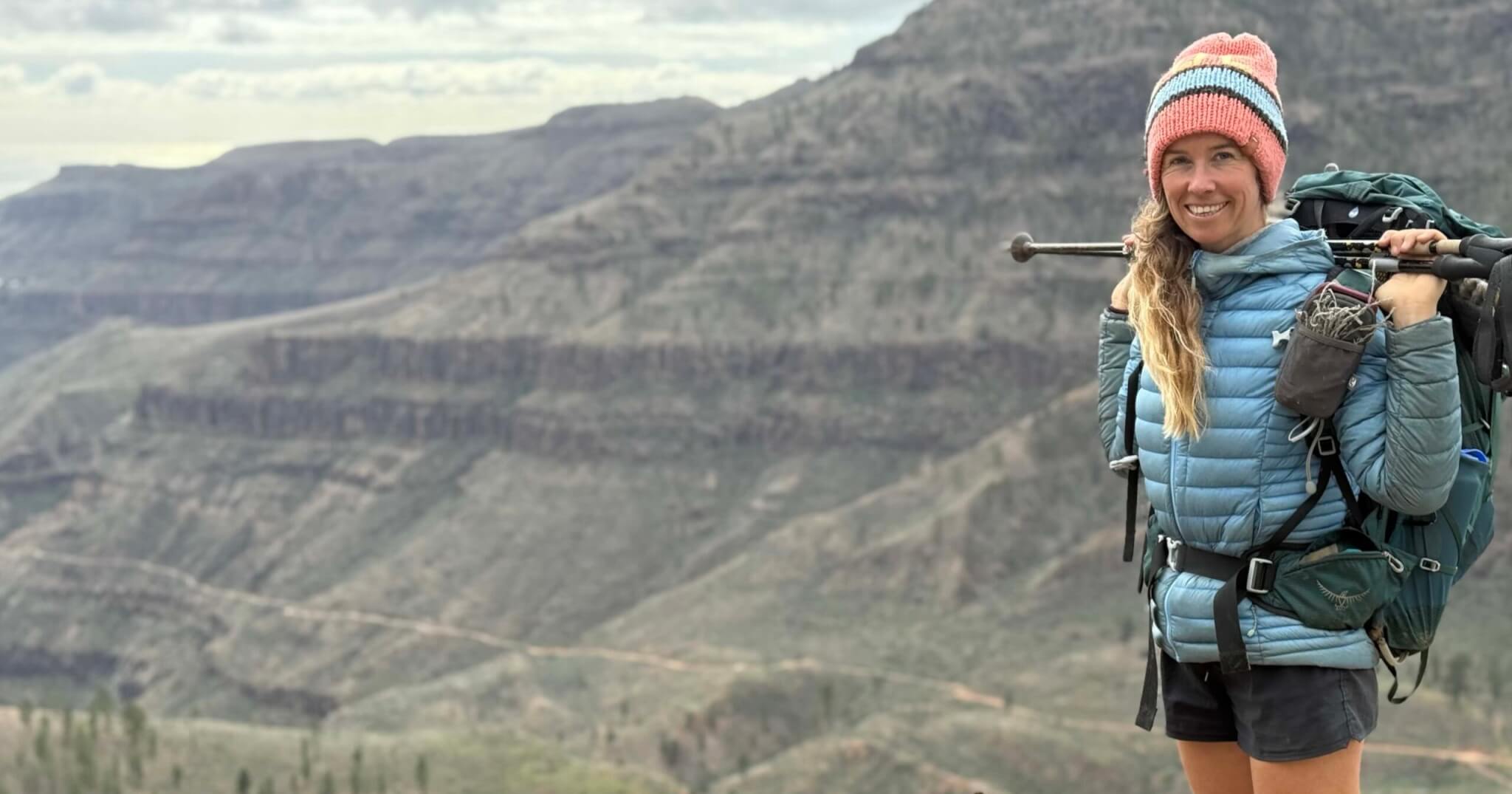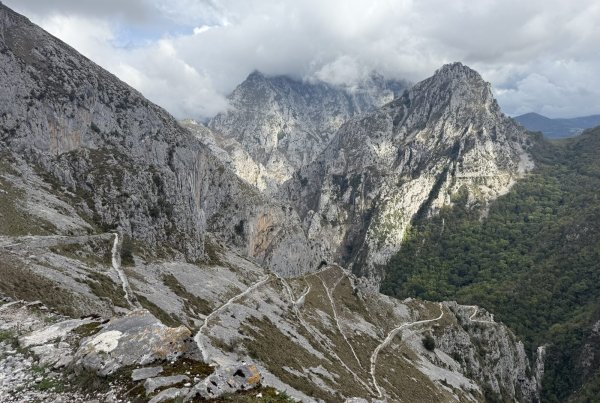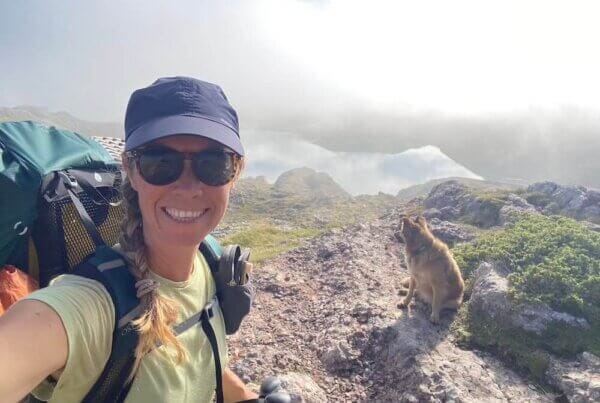

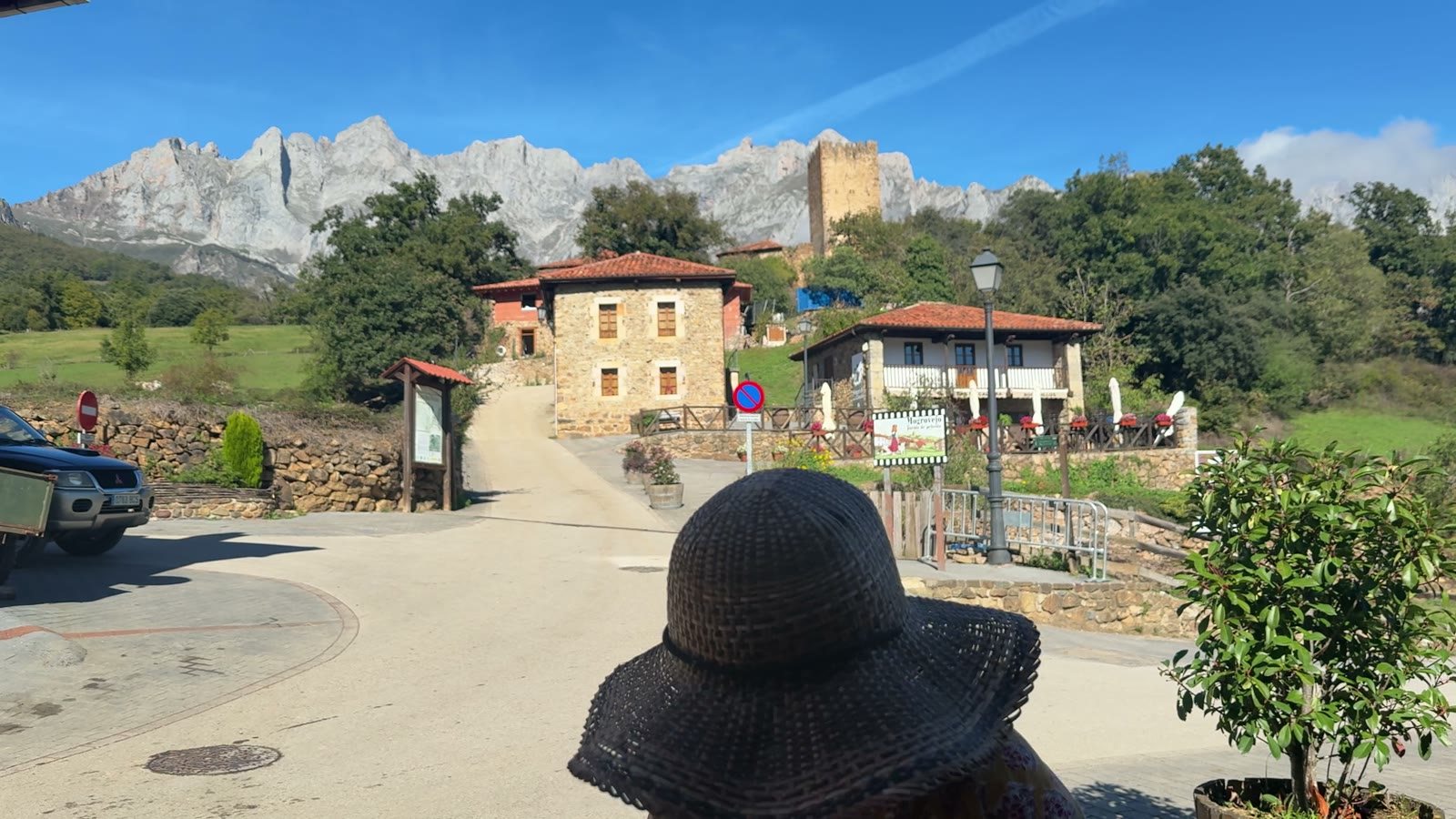
I hiked across the Picos de Europa on the GR-202, the Ruta de la Reconquista. It made such an impression that I'm back now, to explore a little bit deeper. Wilder, and more corners. I'm driving around the Picos with my van right now, and I did many day hikes in September and October. I also met some local hiking guides who gave me their insider tips.
You may like reading: GR-202 Ruta de la Reconquista: hiking across the Picos de Europa
This is my discovery so far. I'll keep updating it as I explore more corners.
I think it's really nice to base yourself in different places. If you have the time, drive around. You can reach different hikes from wherever you're based. If you can only have one base, I would go to Posada de Valdeón. Bear in mind it's quite a drive to get there. Potes is fairly easy to reach, and from there you can reach all sorts of day hikes.
I would definitely not go in high season, in July and August. It's very busy and very hot. If you can, also avoid the weekends and the puentes, the long Spanish holiday weekends.
Updated October 2026.
My Northern Spain guide is coming
It covers Green Spain by van: the Picos de Europa, Asturias, Cantabria and Galicia. Leave your email and I'll let you know when it's ready.
The best bases in the Picos de Europa
| Base | Where | Why I like it | Book |
|---|---|---|---|
| Posada de Valdeón and Caín | León, in the heart of the Picos | My pick if you can only have one base. Bear in mind it's quite a drive to get there. | Stays in Posada de Valdeón |
| Potes | Cantabria, the south-east | A charming town with a Monday market and lots of bars and restaurants. It's fairly easy to reach, and also very busy. | Stays in Potes |
| Arenas de Cabrales | Asturias, the north | There's a bakery, restaurants and rivers passing through. In season a bus goes up to Poncebos, so you don't even need a car. | Stays in Arenas de Cabrales |
| Oseja and Soto de Sajambre | León, the west | Central and calm, a little bit harder to reach. Soto de Sajambre is the start for the Vegabaño refugio. | Stays in Soto de Sajambre |
| Espinama | Cantabria, the south | A little hamlet below Fuente Dé. Calm and pretty, a little bit harder to reach. | Stays in Espinama |
| Cangas de Onís | Asturias, the north-west | The gateway to the Covadonga lakes. | Stays in Cangas de Onís |
| Panes | Asturias, the north-east | A little bit closer to the coast. It can be a good base, but you need to drive a little bit to the hikes. | Stays in Panes |
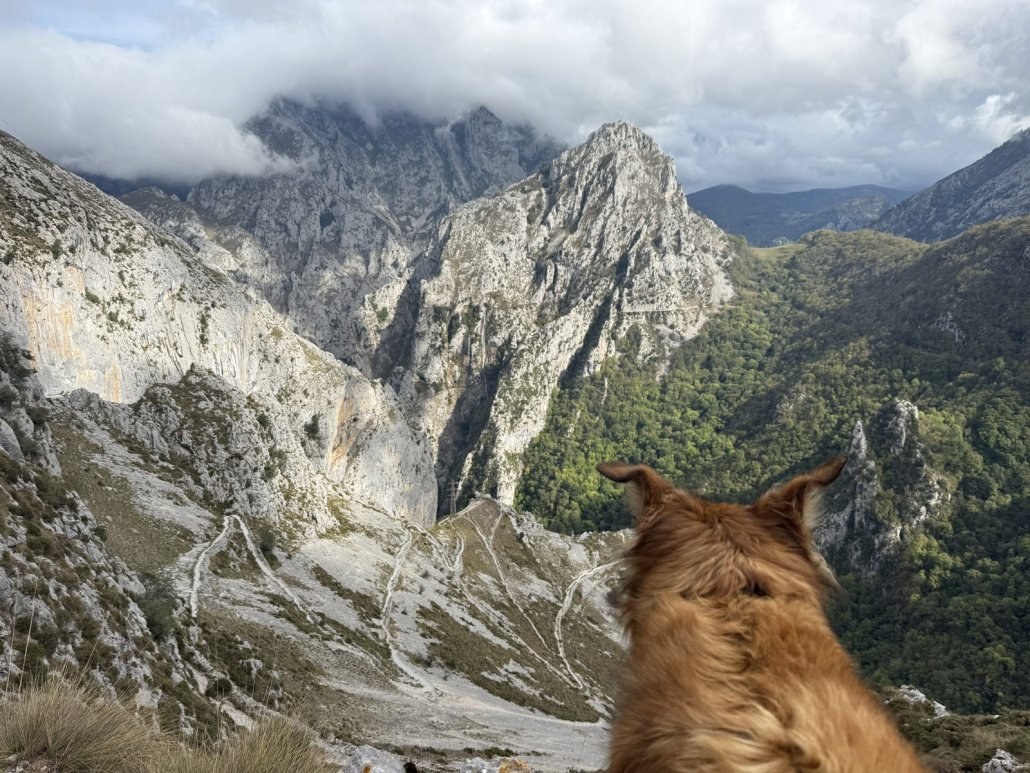
The Picos de Europa are in northern Spain. They lie across three regions: Asturias in the north, Cantabria in the east and León in the south. The roads between the valleys are slow and winding. That's why it pays to split your stay. The map below shows accommodation all around the Picos, with prices.
Posada de Valdeón and Caín
If you really want to be in the Picos, this is it. Posada de Valdeón lies right in the middle of the mountains, on the León side. If you can only have one base, I would go here. Bear in mind it's quite a drive to get there.
From here you can walk the Ruta del Cares through the Cares gorge from the south. The full route, PR-PNPE 3, runs 21 km from Posada de Valdeón through Caín to Poncebos. The stretch from Caín to Poncebos takes about 3 hours one way. The park rates it medium.
Santa Marina de Valdeón, at 1,156 m, is the highest village inside the national park. The valley has 80 protected hórreos, the old raised granaries on stone pillars.
Caín has its own mountain story. Gregorio Pérez, known as El Cainejo, came from Caín. In 1904 he made the first ascent of the Naranjo de Bulnes with Pedro Pidal. The first woman to reach the top was also from Caín.
The park's Valdeón visitor centre is in Posada de Valdeón as well. See places to stay in Posada de Valdeón.
Potes and the Liébana valley
Potes is a very charming town. It's not too small and not too big. It's very gastronomic, with lots of bars and restaurants. On Mondays there's a market. It's also very busy. But there's a good ambiente. The villages and hamlets around it are really pretty, and calm.
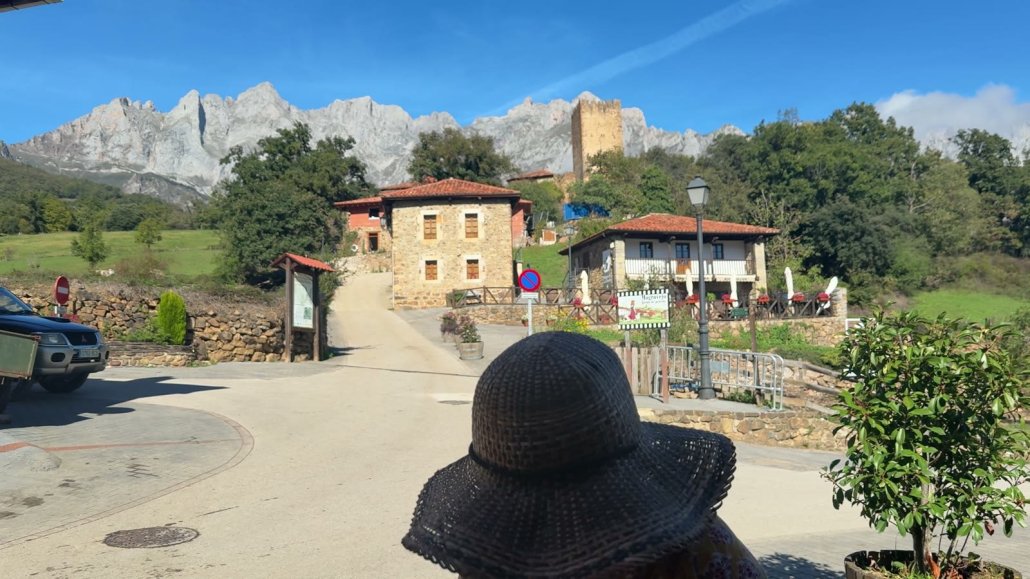
Potes is fairly easy to reach. From there you can reach all sorts of day hikes. The monastery of Santo Toribio de Liébana is just outside town. The Sotama visitor centre is just down the road in Tama.
Fuente Dé and Espinama
Up the valley is Fuente Dé. The Fuente Dé cable car takes you up into the central massif of the Picos. The Parador de Fuente Dé stands right at the bottom of the cable car. That's handy if you want to be early in the queue. Espinama is a little hamlet just below. It's calm and pretty. See places to stay in Espinama.
PR30: from Urdón up to Tresviso
A day hike I really liked was the PR30, from Urdón up to Tresviso. It's just steep. It goes up and then down again. I went after the rain and the waterfalls were just spectacular. I also enjoyed that not so many people hike it. The Cares is super mega popular, so it's very busy. I found the PR30 just as pretty.
The loop is 13.6 km, with 830 m of climbing, and takes about 5 hours. The park rates it hard. It starts at the small car park by the Urdón power station, on the road through the La Hermida gorge. The path was built for the zinc mines up at Tresviso.
PR28: the Ándara massif
The PR28 is very pretty too. It starts in Bejes and climbs to the Casetón de Ándara. It's 25 km, with 1,110 m of climbing, and takes about 7.5 hours. On the way you pass the old Dobrillo kilns, where the miners roasted the zinc ore. Up there was once a real lake, Lago de Ándara. Mining drained it between 1920 and 1924.
Arenas de Cabrales and Poncebos
Arenas de Cabrales, or Las Arenas, is nice. There's a bakery, restaurants and some rivers passing through. I really enjoyed staying there with the van for a while. There's even a bus from Arenas up to Poncebos. So you don't necessarily need a car if you're there.
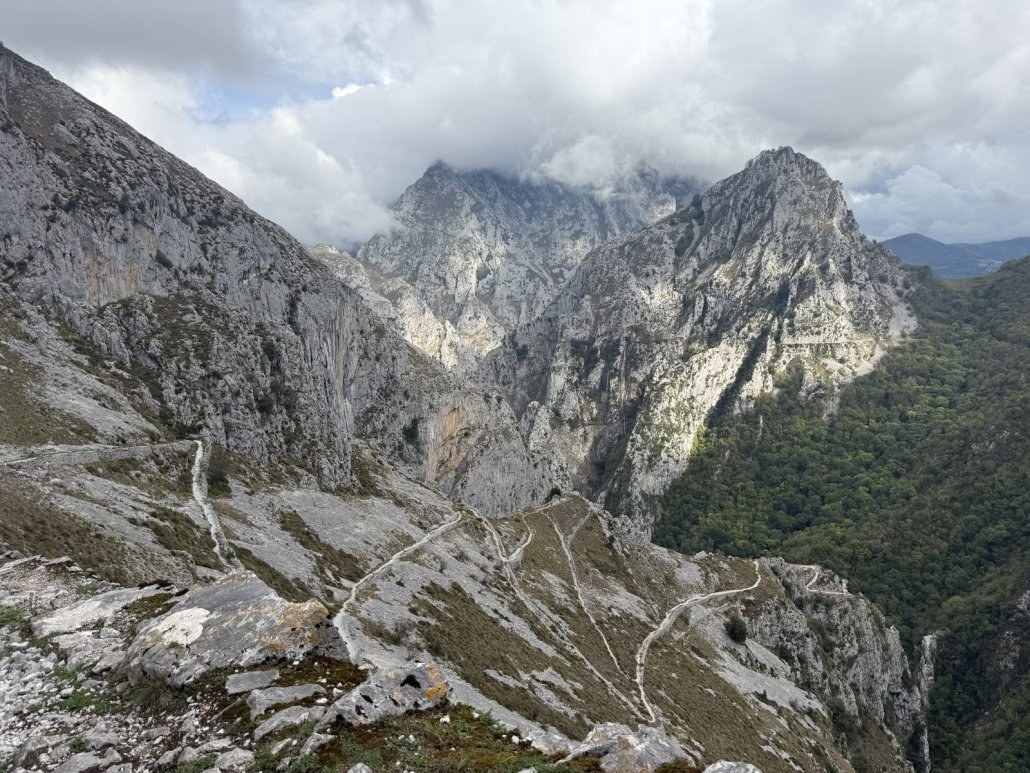
From Poncebos you can hike the Cares. You can also hike up to Bulnes, a mountain village without a road, on the Canal del Texu trail. Or you take the funicular. From Bulnes it's nice to hike on to Sotres. Or you go higher up to the refugios of Urriellu or Cabrones, below the Naranjo de Bulnes.
The classic way up to the Urriellu refugio is the PR-PNPE 21 via the Pandébano pass. It's 8.6 km and 1,070 m of climbing, about 4.5 hours up. The park rates it hard.
This is Cabrales cheese country. They make a lot of cheese here.
My parents stayed at Hostal El Molino, just outside Las Arenas, and I was there too. It's very simple and very affordable. It's quiet, next to the river. There's parking, and you can just walk to the village.
With many places to stay here, be mindful about the road. Some are right on the busy road. At night it will be quiet.
Oseja and Soto de Sajambre
Sajambre is the quiet valley on the western side, in León, with Oseja de Sajambre and Soto de Sajambre. It's central, and a little bit harder to reach. From Soto de Sajambre you can hike up to the Vegabaño refugio. I highly recommend it. It's a nice refugio. The PR-PNPE 9 loop is 9.8 km, with 391 m of climbing, and takes about 3 hours.
The GR-201, the Senda del Arcediano, also comes through here. See places to stay in Soto de Sajambre.
Cangas de Onís and the Covadonga lakes
Cangas de Onís is the gateway to the Lagos de Covadonga, the Covadonga lakes. On the way up you pass the Covadonga sanctuary, with the basilica of Santa María la Real, and higher up the Mirador de la Reina viewpoint. The lakes walk, PR-PNPE 2, is an easy loop of about 5 km. In high season you can't drive up to the lakes yourself, so you take the bus. Motorhomes and vehicles over 5 m can't use the lakes road while access is regulated.
The Pedro Pidal visitor centre is up at the lakes. Casa Dago, the park's reception centre, is in Cangas. See places to stay in Cangas de Onís.
Panes
Panes is a little bit closer to the coast. It can also be a good base. But you probably need to drive a little bit to the hikes. It sits at the northern end of the La Hermida gorge, on the way to Urdón and Potes. See places to stay in Panes.
Cangas de Onís or Potes?
They're on different sides of the Picos, and each side has its own feel. So pick by what you want to see.
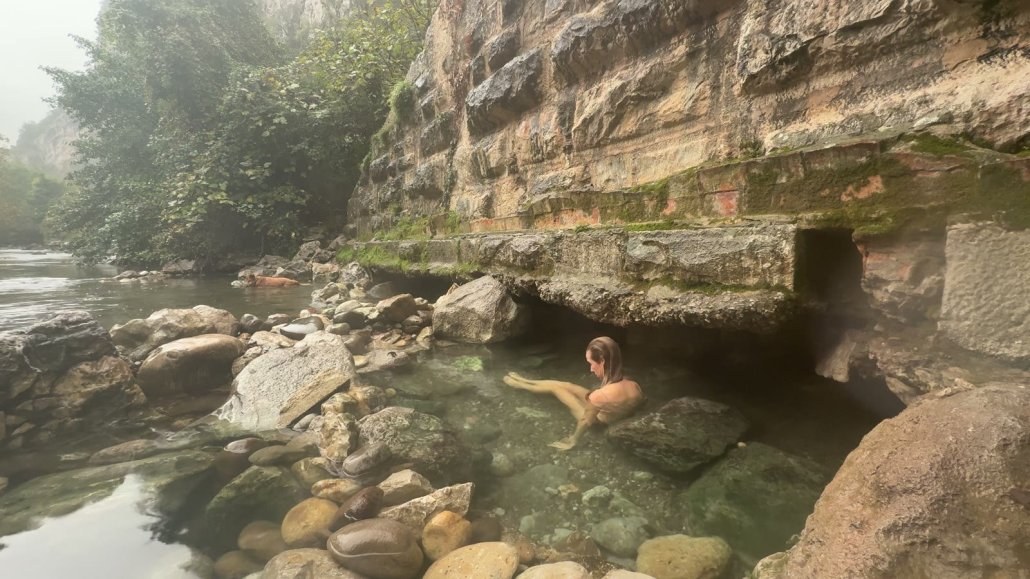
Cangas de Onís is on the north-western side. From there you go up to the Covadonga lakes. They're two glacial lakes in green high pastures, with cows and limestone peaks around them. It's the greenest and gentlest corner, and also the busiest.
Potes lies in the Liébana valley, on the south-eastern side. The valley is green and mild, with vineyards and orchards. From Potes you go up to Fuente Dé. There a cable car lifts you into the rocky heart of the Picos, a world of grey limestone, scree and big peaks. The PR30 is on this side too. It climbs from the La Hermida gorge to the mountain village of Tresviso.
The three massifs
The Picos are three massifs. The western massif is the one around the Covadonga lakes, with green pastures between the peaks. The central massif is the highest and most rugged. That's where the Naranjo de Bulnes stands. You reach it from Arenas and Poncebos, from Sotres or from Fuente Dé. The eastern massif, around Ándara, is the smallest and quietest, with the old zinc mines.
How many days do you need in the Picos de Europa?
As many as possible, I would say. If you have the time, it's nice to have different bases from which you can explore. Or go for longer hikes.
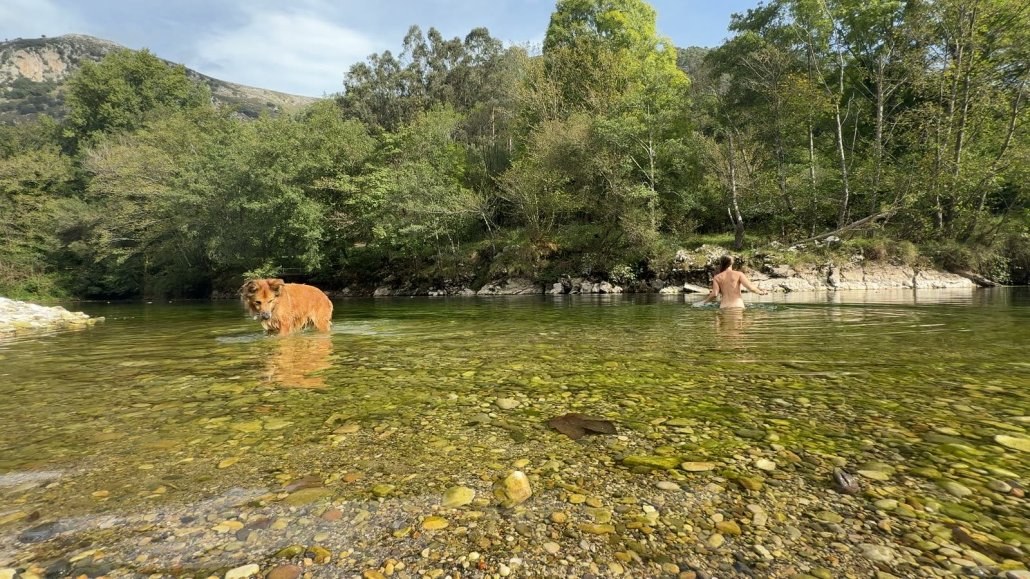
It's really nice to drive around and explore the Picos. Book a hotel rural or a casa rural in each base. These are the splits I would make.
Two or three days
Pick one base. Potes is the easiest to reach. Arenas de Cabrales works even without a car. Stays in Potes or stays in Arenas.
Four or five days
Split your stay. Two nights in Arenas de Cabrales for the Cares and Bulnes (stays). Then two or three nights in Potes or Espinama for Fuente Dé and the PR30 (stays in Potes, in Espinama).
A week or more
Drive around. Two nights in Arenas de Cabrales (stays). Two nights in Potes or Espinama (stays). Two nights in Posada de Valdeón (stays). One night in Soto de Sajambre (stays) or Cangas de Onís (stays).
Visit a visitor centre first
I can recommend a visit to the visitor centre. I went to Sotama, near Potes. It's a great start before you head into the mountains. I learned so much there. Here are some of the things that stayed with me.
- Spain has 90% of all vultures in Europe. There are around 34,000 pairs of griffon vultures, but only 133 pairs of the bearded vulture.
- The Picos are white limestone, shaped by water, frost and time. The mountain limestone is about 310 million years old.
- Rain and snowmelt sink into the limestone and come out again as springs. The rivers cut the deep gorges, like the Cares.
- People mined copper here in the Bronze Age. Manganese was mined near Lake Ercina until 1979.
- Around a dozen traditional cheeses are made in the Picos. No wonder there's so much cheese everywhere!
- Herders spent the winter in the valley villages and the summer up in the high pastures, the majadas.
- Liébana has its own little Mediterranean climate, with holm oak, cork oak and even vineyards.
- At Santa María de Lebeña an olive tree grows next to a yew. The legend says a Christian man planted the olive for the Muslim woman he ran away with, because she missed her homeland.
- The Romanesque churches face east, so the first sunlight falls on the altar.
- The rare Pyrenean aster grows in the Cantabrian Mountains in only one place: Collada de Pandébano.
The park has four visitor centres: Sotama in Tama near Potes, Pedro Pidal at the Covadonga lakes, Casa Dago in Cangas de Onís and Valdeón in Posada de Valdeón. Opening hours change with the season, so check before you go.
Long-distance hikes and refugios in the Picos
It's super nice if you want to do longer trekkings. I can highly recommend the GR-202, but it's not for everybody. The GR-202, the Ruta de la Reconquista, runs about 60 km from Covadonga past Poncebos, Bulnes and the Áliva pastures down to Cosgaya. The park rates it hard. Five days is a comfortable pace.
There are only two GR routes in the park. The other one is the GR-201, the Senda del Arcediano, in the west.
The Anillo de Picos circuits
Then there's the famous Anillo de Picos. It's a set of circuits that link the staffed refugios, so you sleep in a hut every night. It's high mountain, with very difficult sections. Snow can last well into summer up there. There are three anillos:
- Anillo Vindio: the western massif in 4 stages, about 63 km with 3,900 m of climbing. It loops from Posada de Valdeón to Vega de Ario, Vegarredonda and Vegabaño, and back to Valdeón. Medium difficulty, and the best one to start with.
- Anillo Extrem: the western and central massifs in 7 stages, about 82 km with 7,000 m of climbing.
- Anillo 3 Macizos: all three massifs in 9 stages, about 110 km with more than 9,000 m of climbing. Very hard.
The official season runs from 1 June to 15 October, when the refugios are staffed. You can start at any refugio, and every stage ends at a refugio or a partner place to stay. The distances change a bit with where you start. From Posada de Valdeón the Anillo Vindio is shorter than from Poncebos.
A fun detail: you can buy an Anillo passport at any of the refugios, and get it stamped at each one along the way. The stages are on the Anillo website. On the Anillo Extrem you can't sleep at Cabaña Verónica. It only has a few places, so you pass it to get your stamp.
I have 15 refugios on my list. Some are open and some are not, depending on the time of year. It's very cool if you can stay in one of those. These are some of the main ones.
| Refugio | Massif | Altitude | Places |
|---|---|---|---|
| Vegarredonda | Western | 1,470 m | 58 |
| Vega de Ario | Western | 1,630 m | 40 |
| Vegabaño | Western (León) | 1,432 m | 35 |
| Vega de Urriellu | Central | 1,960 m | 96 |
| Jou de los Cabrones | Central | 2,100 m | 24 |
| Collado Jermoso | Central | 2,067 m | 27 |
| Cabaña Verónica | Central | 2,325 m | 5 |
| La Terenosa | Central | 1,300 m | 30 |
| Casetón de Ándara | Eastern | 1,725 m | 20 |
Check the season and book on the refugio's own site or on reservarefugios.com. It also depends per refugio if they allow dogs or not. It's all different.
Where can you bivouac in the Picos?
Bivouacs are only allowed above 1,800 m. That's what they've been telling me here locally. The visitor centres still publish 1,600 m. The new park plan of 2026 moved it up. You put your tent up at the earliest one hour before sunset, and take it down within one hour after sunrise. Wild camping lower down is not allowed.
Is this your first multi-day hike? Hut to hut or with a tent, the planning is the same. Your First Hike is the guide I wish I had when I started out. It covers how to pick a trail, pack light, sleep outside and come home tired, not broken.
One email when it is ready, with the launch price. You can unsubscribe at any time.
What to bring for hiking in the Picos de Europa
You need good hiking shoes for the Picos de Europa. The paths are rocky and steep, with lots of limestone. These are a few of my favourites that I hike with.
- Shoes: I hike in Altra trail runners.
- Backpack: my Osprey Eja 48 carried me across the Pyrenees.
- Rain jacket: the weather changes fast up here. Mine is the Patagonia 3L.
- Water filter: there are many springs, but not every fountain is drinkable. I carry the Katadyn BeFree.
- Satellite messenger: there's no phone signal in many valleys. I carry the Garmin inReach Mini.
You may like reading: my full 7 kg ultralight gear list.
Can you sleep in a campervan in the Picos de Europa?
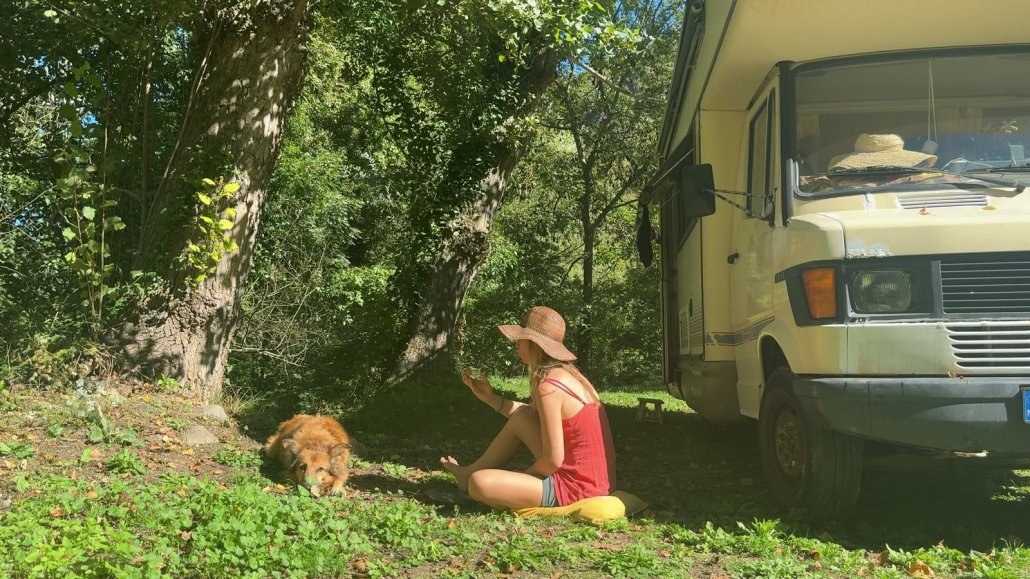
I'm exploring the Picos with my van right now, and it's a beautiful way to see it. You can drive around and hike in and out from different bases. Inside the national park, sleeping in your van is only allowed in the official places. That means the motorhome areas in Cangas de Onís, Potes and Posada de Valdeón, and the campsites.
You may like reading: Is van life worth it? What seven years in my van taught me
- Campsites: Camping El Cares in Poncebos, La Viorna in Potes and La Isla near Cangas de Onís.
- The road up to the Covadonga lakes is closed to motorhomes and vehicles over 5 m while access is regulated.
Renting a campervan or a car for the Picos
No van of your own? You can rent one. A small campervan is the easiest here. The roads are narrow and winding, and the lakes road is closed to vehicles over 5 m. You can compare campervans across Spain on Camperdays.
Or rent a car and sleep in the bases. Most people fly into Santander or Oviedo and pick up a car at the airport. You can compare car hire here.
Can you visit the Picos de Europa without a car?
Yes, from the right base. If you don't have your own car, Arenas is a nice base. From there you can take a bus up, and there are a few trails you can do. The same goes for Potes, and for Covadonga, I guess.
Santander and Oviedo are the nearest airports, and buses run from there to Potes and Cangas de Onís. From Arenas de Cabrales a shuttle bus goes up to Poncebos in season: at Easter, on weekends in May and from June to mid-October (in 2026 until 12 October). It runs about every hour and costs €1.55 each way. From Poncebos you can walk the Cares or take the funicular up to Bulnes. In high season a bus takes you up to the Covadonga lakes from Cangas de Onís. Check the timetables before you go, because they change with the season. For the full loop, renting a car or a campervan is much easier.
Hiking in the Picos de Europa with a dog
It was fairly easy to walk with Wingo. They allow it, they tolerated it. You just have to be very mindful of the cows. The other dogs we came across have been very sweet.
Inside the national park your dog has to be on a lead. On the Ruta del Cares the lead can be at most 1.20 m. In the refugios it depends per refugio if they allow dogs or not.
Are there bears in the Picos de Europa?
Yes. I've seen bears in the Pyrenees, on the GR11. In the Picos I didn't. The park's own leaflet says there are bears in the national park, but the chance of meeting one is minimal. About 370 brown bears live in the whole Cantabrian Mountains, and their number is slowly growing.
Wolves live in the Picos too. The park counts about eight packs, more than 50 wolves. Like the bears, they keep away from people, so you are very unlikely to see one.
The official advice if you meet a bear:
- Never approach a bear, not even for a photo.
- If it hasn't seen you, back away slowly and quietly.
- Never get between a mother and her cubs.
- If it has seen you, talk calmly without shouting and back away. Don't run.
- Stay on the paths and keep your dog on a lead.
When is the best time to visit the Picos de Europa?
I think the very best time is mid-September to mid-October. That's exactly when I'm here now. It's amazing if you have some flexibility with the weather. The weather determines everything.
Up to November it can also be very nice, if you're flexible with the weather. And I guess spring would be very nice here as well. April, May and June must be very nice. Up high, snow can last into early summer, so check before a high route.
If you want to do it well, I would just not go in summer. Even in mid-September there was quite some traffic already. I hiked the Ruta del Cares during the week, and still many cars were going up there. I also went on a Saturday to hike up to Bulnes. It was already full with cars and parking. I would really go during the week, and early.
Also avoid the puentes, the long Spanish holiday weekends. In autumn the beech and birch woods turn red and ochre.
Is the Picos de Europa worth visiting?
Absolutely. I also hiked across the Pyrenees. You cannot compare the two. But the Picos is a relatively smaller area, and also super super spectacular.
I'm making a slow travel guide about this whole area. It will have all my favourite places in the Picos, Cantabria and Asturias.
Useful resources for the Picos de Europa
- The national park's own website, with the rules, the visitor centres and the news.
- The park's maps and GPS tracks of all the waymarked routes, free to download.
- Observatorio Picos de Europa, with the long routes, GPX tracks and safety tips.
- Reservarefugios, to book the staffed refugios.
- El Anillo de Picos, for the refugio circuits.
- ALSA for the buses in Asturias, and Transporte de Cantabria for the Potes side.
- In an emergency, call 112. It works with any network and sends your location.
FAQ
Which town is the best base in the Picos de Europa?
If you can only have one base, Posada de Valdeón, in the heart of the Picos. Bear in mind it's quite a drive to get there. Potes is the easiest to reach, and Arenas de Cabrales works without a car.
How many days do you need in the Picos de Europa?
Two or three days from one base is a good taste. With four or five days, split your stay between Arenas de Cabrales and Potes. With a week, drive around and add Posada de Valdeón.
Can you wild camp in the Picos de Europa?
No. Wild camping is not allowed in the national park. Bivouacs are only allowed above 1,800 m, from one hour before sunset to one hour after sunrise.
Are dogs allowed in the Picos de Europa?
Yes, on a lead. On the Ruta del Cares the lead can be at most 1.20 m. Be mindful of the cows. Whether dogs can stay in a refugio depends per refugio.
When is the best time to visit the Picos de Europa?
Mid-September to mid-October. November and spring (April to June) can be lovely too, if you are flexible with the weather. Avoid July and August, the weekends and the puentes, because it gets very busy and hot. Go during the week and start early. Keep some flexibility, because the weather determines everything.
Where do you fly into for the Picos de Europa?
Santander and Oviedo are the nearest airports. Buses run from there to Potes and Cangas de Onís.
How difficult is hiking in the Picos de Europa?
It ranges from easy to very hard. The Covadonga lakes walk is an easy 5 km loop. The PR30 and the climb to the Urriellu refugio are rated hard, with 800 to 1,100 m of climbing. The park rates every waymarked route, so pick by the rating.
Are there wolves in the Picos de Europa?
Yes. The park counts about eight packs, more than 50 wolves. They keep away from people, so you are very unlikely to see one.
Do you need a car for the Picos de Europa?
Not if you base yourself in Arenas de Cabrales. A bus goes up to Poncebos for the Cares and Bulnes. For the full loop a car or van is much easier.
Stay wild.
With love, Suzanne
Wild at heart? Let's be friends.
Join me on YouTube for slow travel adventures by van, sail and on foot.
Ocean Nomads is the community I founded, for people who want to live a little wilder, explore a little further, and do it with good people.
For deeper trail stories and the behind-the-scenes, I write on Patreon.
Explore more
Read next
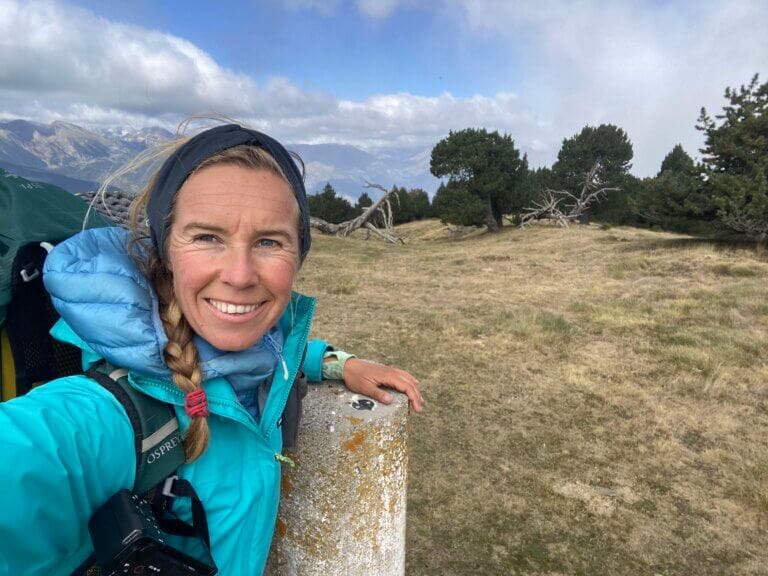 Why thru-hike? What 850 km across the Pyrenees taught me
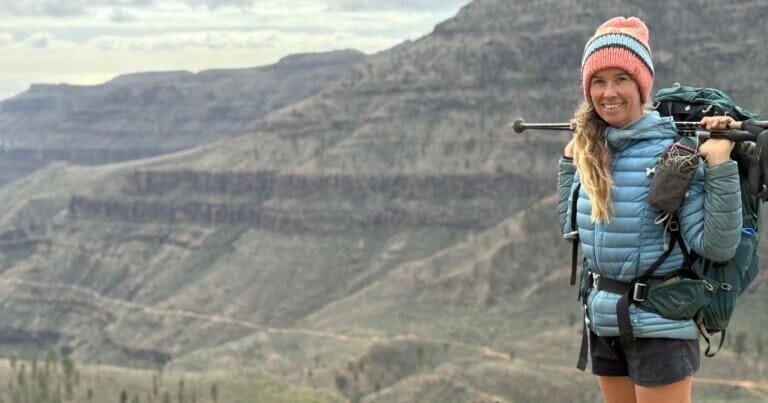 My 7 kg ultralight gear list, for hiking with a dog
 Best hiking apps: the 4 I use
Watch on YouTube

About Suzanne
I'm Suzanne. I've lived on the move between sail, van and trail for many years. I've hiked more than 2,500 km on long-distance trails, including 850 km across the Pyrenees on the GR11. I hiked across the Picos de Europa on the GR-202. In autumn 2026 I came back with my van and my dog Wingo, to explore it deeper.
Some links are affiliate links. At no extra cost to you, they give me a tiny piece of the pie. That raises the adventure fund and helps me keep exploring and creating. I only recommend things I truly love and use myself. Huge thanks if you buy through this website (but try to find it second-hand or locally first!).