

Updated September 2026.
So, how do you actually pack your backpack for a multi-day hike, or your first backpacking trip? I get this question a lot, so I filmed myself packing for the GR11, 850 km across the Pyrenees from the Atlantic to the Mediterranean, with my dog Wingo. Here is exactly what goes in the bag, and in what order, so it carries well and I can reach what I need when I need it.
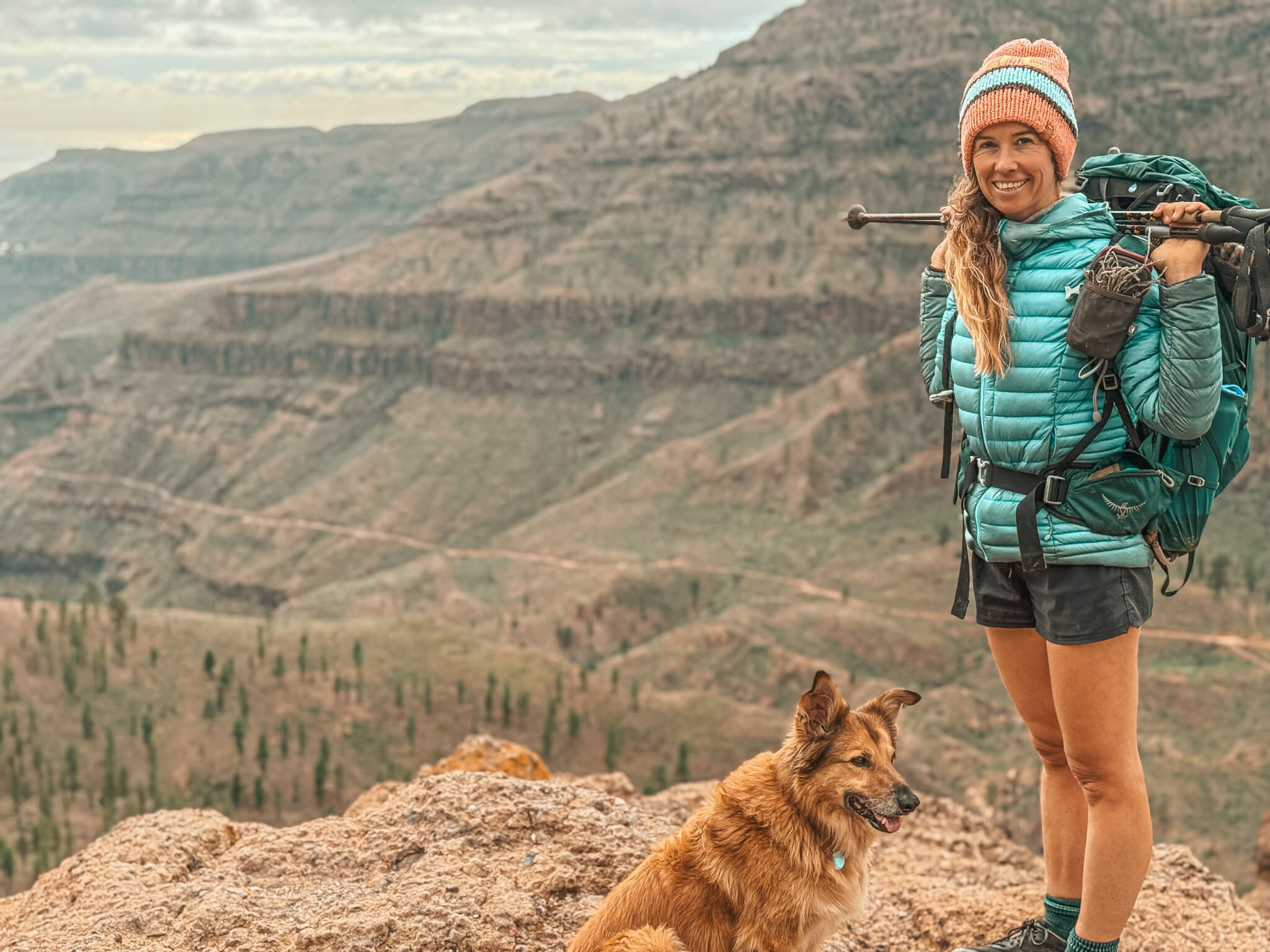
I carry everything I need to sleep, eat and drink out there: tent, sleeping kit, food, and a filter for river water, on my own with Wingo. It comes to six or seven kilos before food and water. Want every item instead of the packing order? That is in my full GR11 gear list.
The backpack
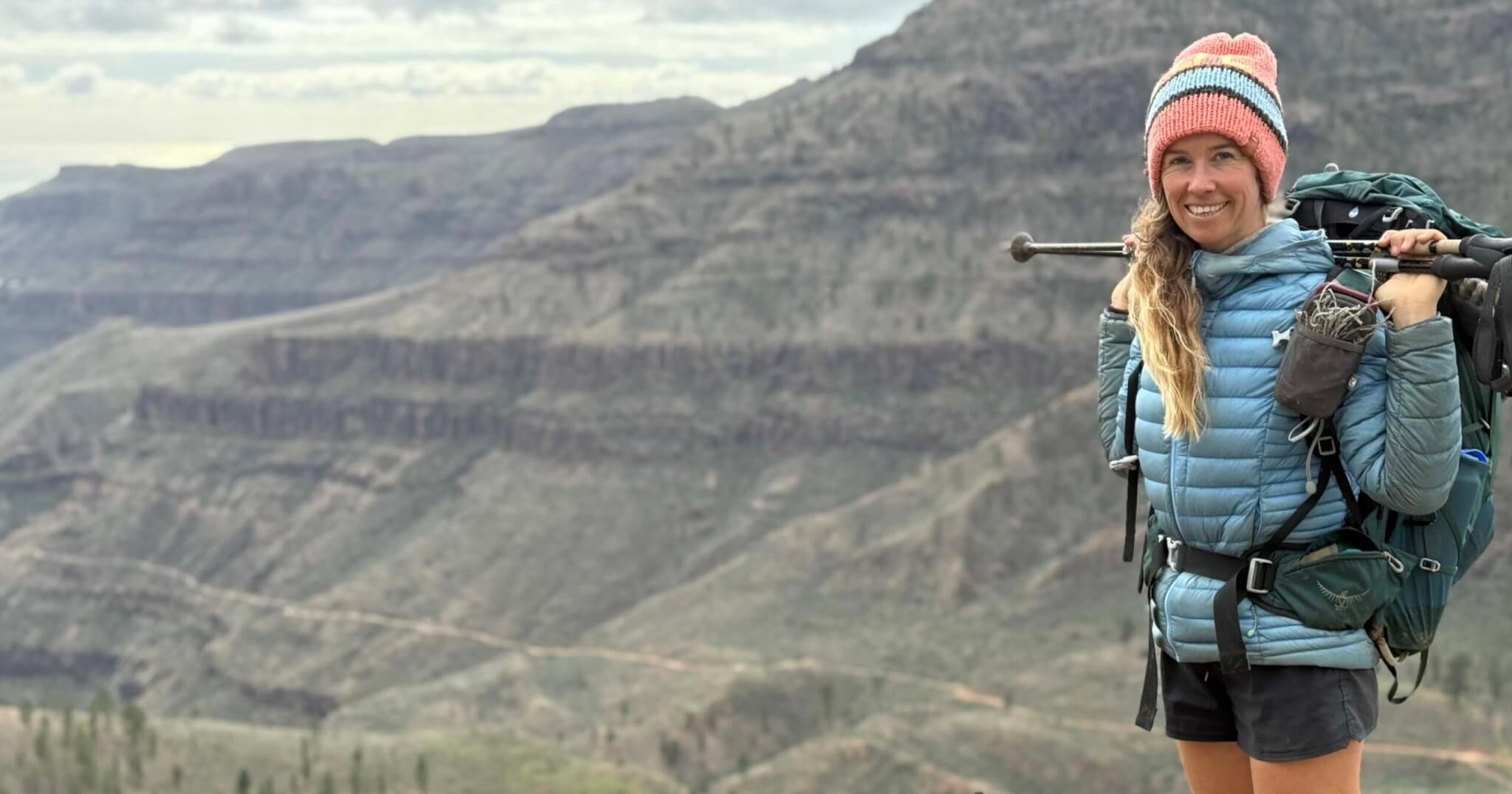
I carry the Osprey Eja. I love it. It's light and it's framed, which makes a real difference when you are carrying for days. I removed the lid to save a little weight, and it also stops me stuffing the bag with things I don't need. If you want the long version, I wrote a full Osprey Eja review after 850 km on it.
Start at the bottom: tent, sleeping bag, mat
I start with the tent. When it's dry it's light, so it goes straight in the bottom. If it's wet, it goes in its own bag first so it doesn't soak everything else.
Then a waterproof bag, so my sleeping bag stays dry at all times. Almost always. My sleeping bag goes in there, without its cover to save space. Next to it, my mat. I use the Therm-a-Rest NeoAir. It's very lightweight and it insulates really well. I have the small size, which is exactly my length, so there is less to blow up and less to carry.
The dry layer: warm clothes in a waterproof bag
On top of the sleeping kit go the clothes I need to keep dry. A down jacket for when it gets cold, so light that I sometimes sleep in it. A rain and wind jacket. My pillow, also very light. A fleece, because I get cold quickly. And a thermal legging and thermal shirt so I do not get cold at night. Then I close the waterproof bag. That's everything that has to stay dry.
Quick-access pockets: rain gear, cap, sunglasses, dog kit
Rain trousers go where I can grab them, because it will most likely rain a lot on this trail. My cap clips on the outside, and some days I wear the cap, some days a headband. Sunglasses go in the front so I can reach them easily. Wingo's ball and lead go in a little side pocket. That's Wingo's pocket.
Electronics, toiletries and the water filter
I keep the electronics in one pouch: a battery and phone cable, head torch, headphones and their cables, a small microphone and a tiny tripod so I can film with decent sound, plus a wall plug and a lighter. My ID, some cash and my cards go in there too, all inside a plastic bag so it stays dry. My phone lives in a little pouch on the front. The Garmin inReach Mini clips to the front of the bag so my mum always knows where I am, and so I can send a message when there's no phone signal.
My water filter goes somewhere I can reach it fast, because I source water from rivers as I go. For more options, here are the portable water filters I have used.
In the toiletry bag: toothpaste I made myself, a toothbrush, a tongue scraper, some spirulina and electrolytes, sunscreen I made myself, a menstrual cup, a little face moisturiser, and a repair kit for the mat in case I get a hole. Small things, but the ones you really miss if you forget them. More on that in my guide to staying clean on trail.
The kitchen
A pot, one gas canister (just one), and my stove. Then a food bag with snacks and whatever I need for the days ahead, my coconut spoon, a little jar for overnight oats, and a cup for tea. I bring chai I made and some rooibos. On a cold, wet morning, that jar of oats and a hot tea is everything.
On the outside: water, poles and a mat for Wingo
Two water bottles, one on each side. The tent poles go on the outside too, tucked under a little rope so they sit tight. I also carry a small mat, partly for Wingo, partly to sit on or do some yoga. Then my hiking poles, and that is it. About six to seven kilos, ready to go.
How heavy should your backpack be?
Mine comes to roughly six to seven kilos before food and water, packed for a self-sufficient multi-day hike with a dog. You do not need to hit an exact number. The weight comes down on its own once you stop packing for every “what if” and trust that you can resupply and source water along the way. Packing in order, heaviest and least-needed at the bottom, quick things on top and in the pockets, is half of what keeps a pack comfortable.
A few things I have learned about packing light
- Keep everything that must stay dry in one waterproof bag, sleeping bag, warm layers, thermals. Wet down is useless.
- Pack in the order you will need things. Sleep kit at the bottom, kitchen and quick-access on top.
- Give the small, easily-lost things a fixed home. Sunglasses in the front, dog kit in the side pocket, ID and cash in a plastic bag.
- One gas canister, not two. You almost always come back with fuel to spare.
- Buy the size that fits you. My mat is the small size, exactly my length, so there is less to carry and less to blow up.
Want the full kit list? You can download my packing list, every item I carry, including the camping gear, so you can pack your own bag without forgetting anything.
If you are gearing up for your first long-distance hike, or just want to lighten your load, I hope this helped. And remember, you don't need perfect gear to start. Just get out there. The trail will teach you.
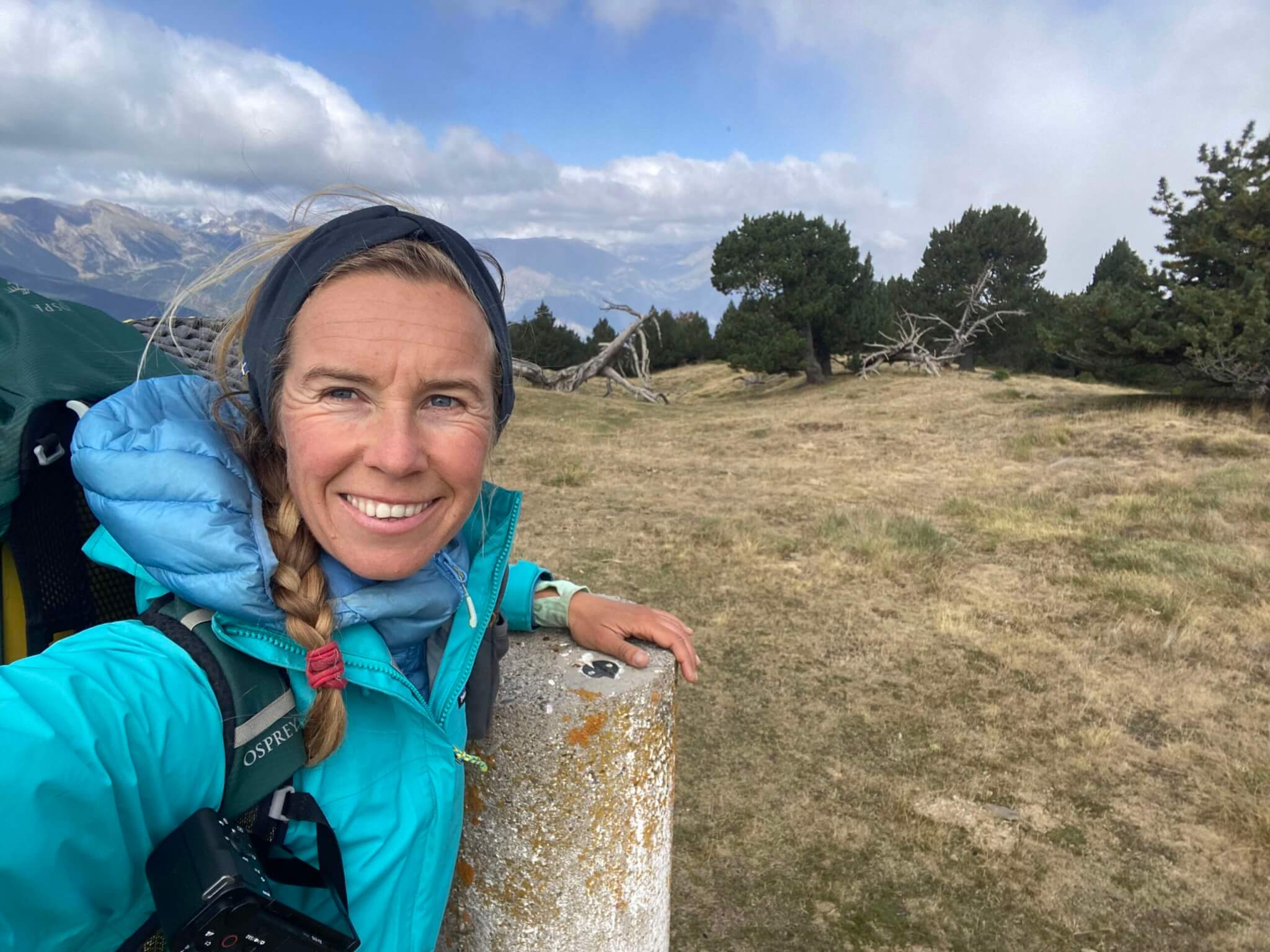
I'm Suzanne van der Veeken. I have hiked 11 long-distance trails, more than 2,000 km on foot, including the 850 km GR11 across the Pyrenees solo with my dog Wingo. I pack light, cook plant-based, and try to leave the trail as I found it. More trail notes on YouTube and in the newsletter.
If this resonates
I share more trail tips, stories and slow-travel reflections on YouTube, and I send slow letters from the road through the newsletter. For deeper trail reflections and behind-the-scenes, there is Patreon. Everything I use and recommend for trail life is on my travel resources page.
Frequently asked questions
How do you pack a backpack for multi-day hiking?
Pack in the order you will need things. Tent, sleeping bag and mat at the bottom, warm layers kept together in a waterproof bag, kitchen and food higher up, and the small quick-access items (rain gear, sunglasses, snacks, phone) in the top and side pockets. Give each small thing a fixed home so you're not unpacking the whole bag to find it.
How heavy should a multi-day hiking backpack be?
Mine is around six to seven kilos before food and water, for a self-sufficient hike with a tent, sleeping kit and water filter. There's no magic number, but the less you pack for every “what if”, the lighter and more comfortable it gets.
What goes in the bottom of a hiking backpack?
The things you only need at camp: your tent, then your sleeping bag and mat, ideally inside a waterproof bag. They're bulky and not needed during the day, so they sit at the bottom and give the pack a stable base.
How do you keep gear dry in a backpack?
Keep everything that must stay dry, sleeping bag, down jacket, thermals, in one waterproof bag inside the pack, and put electronics and documents in a plastic bag. A wet sleeping bag or wet down is a cold night, so it's the one place I never cut corners.
Stay wild, Suzanne