

Hey wild one. You're about to set off on a sailing charter or a van life adventure with friends. You want clean drinking water without a trunkload of plastic bottles. You don't fully trust the tap water at the marina, and boat water tanks are a mystery at best. What's the move?
From experience comes awareness. From caring comes action.
Updated September 2026.
I've tested portable water filters on chartered sailboats, in my campervan, and with Ocean Nomads crews across the Atlantic, the Caribbean, and the Mediterranean. This is my field guide to the best group-friendly travel water filters for sailors, vanlifers, and anyone who's done buying piles of bottled water.
Why trust this review. I've sailed across the Atlantic five times, hosted dozens of Ocean Nomads charter crews, and lived in my campervan across Spain and Portugal for years. Each filter in this guide has been tested on actual trips with 3-8 people on board. No scientific A/B lab tests (yet) but real conditions, real crews, real water tanks.
What this guide is not: none of these filters turn seawater into drinking water, and no portable filter can fix every water source. This guide covers practical options for tank water, marina taps, village taps, and other questionable but non-saltwater sources.
Some links in this guide are affiliate links. I only include filters I've actually used or closely tested.
Here's the quick version if you want a recommendation. My favourite for charter boats and vans is the Maunawai Kini water pitcher (5% off with code OP2020, 10% for Ocean Nomads members). Simple, handmade in Germany, no pumping. If you have good tap pressure at the marina or hookup, a countertop ceramic filter is fast and hands-off. And for long-term heavy-duty use, the Katadyn Pocket has a metal body, 20-year warranty, and 50,000 litres per filter.
One important thing before we go further. Most portable filters in this guide remove bacteria and protozoa but not viruses. If you're travelling to regions where waterborne viruses are more common, combine filtration with a UV purifier like the Steripen, or choose a dedicated purifier built for that.
What I was looking for in a portable water filter
I set clear criteria before testing any of these systems. Each filter in this guide had to:
- Make tank water, dock water, and questionable tap water potable
- Fit into hand luggage (travel-friendly, lightweight, not bulky)
- Cater for a group of 3-8 people
- Produce drinkable water reasonably fast (waiting 30 minutes per glass kills it)
- Be budget-friendly (under €250)
I still haven't come across a single charter company that provides a proper water filtration system on their rental boats. Buying bottled water remains the default. Meanwhile, private cruisers increasingly install full water purification systems, but those are bulky, expensive, and require permanent installation. Not practical when you're renting a boat for a week or living in a van.
If you're a charter company or know one who wants to install proper onboard water filtration for your fleet, reach out to me. I'm working on this topic. For everyone else renting and travelling, the 5 portable options below are what actually works.
Portable water filter comparison
| Filter | Best Water Source | Removes | Weight | |
|---|---|---|---|---|
| Maunawai Kini pitcher | Tap + tank water (daily) | Bacteria, protozoa, heavy metals, taste | ~1 kg | check near you |
| Countertop ceramic | Tap + tank water (good pressure) | Bacteria, protozoa, sediment | ~1 kg | check near you |
| Katadyn Vario pump | Dirtier freshwater sources | Bacteria, protozoa, chemicals, taste | ~425 g | check near you |
| Katadyn Pocket | Freshwater, long-term use | Bacteria, protozoa, sediment | ~550 g | check near you |
| Steripen UV | Clear water only | Bacteria, protozoa, viruses | ~140 g | check near you |
Why travel with a portable water filter in the first place?
Water is life. It's a basic human need. Around 2.2 billion people (roughly 1 in 4 globally) still lack safe drinking water at home, and collecting drinking water is a daily priority for millions. At home, you may have the luxury to drink from the tap. On sailing boats and in many countries, buying plastic bottled water has become the accepted norm.
We buy bottled water because it's cheap, available, and we assume it's clean. Or because we don't know what else to do. Somewhere along the way, water went from a free natural resource to one of the most profitable commercial products of the last century. That doesn't sit right with me.

The real cost of bottled water
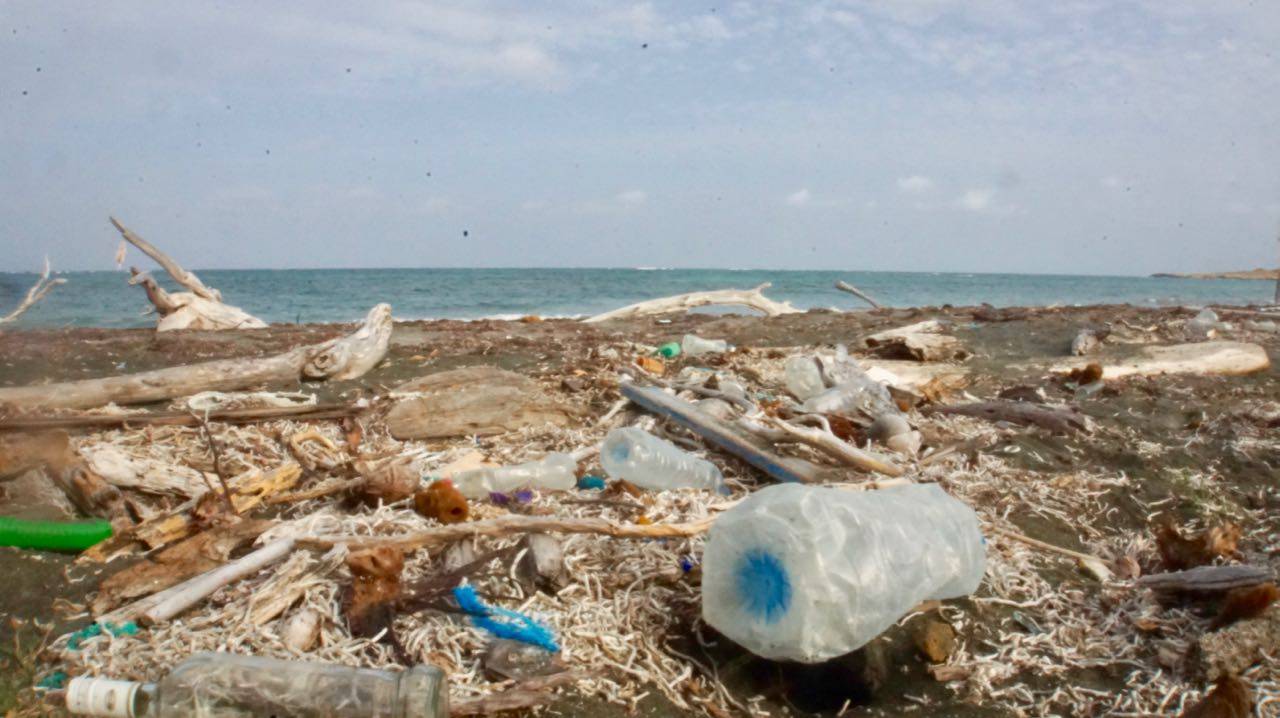
- Every year, an estimated 19 to 23 million tonnes of plastic waste leak into aquatic ecosystems. UNEP compares this to 2,000 garbage trucks of plastic dumped into oceans, rivers, and lakes every single day.
- Only a small fraction of global plastic ever gets recycled. The rest ends up in landfills, incinerators, or leaking into the environment.
- The amount of water used to make a single plastic bottle can be six to seven times what's inside it.
- Tiny plastic particles have been found in over 90% of the world's most popular bottled water brands, often at higher concentrations than tap water.
- Only 55% of bottled water brands are actually spring water. The other 45% are sold as bottled water but are really just treated tap water.
- When plastic bottles sit in heat (think: deck of a boat in the Caribbean), chemicals can leach into the water, some linked to hormone disruption.
I've personally seen plastic bottles floating in the middle of the Atlantic Ocean. Every bottle ever made still exists somewhere. That's what made me stop. Now, between the ocean impact, the questionable quality, and the cost, I don't buy bottled water when I can avoid it.
The 5 best water filters for boats and campervans
1. Maunawai Kini Water Pitcher (my personal favourite)

When I started researching water pitchers, I found thousands of options. Most are simple mass-produced charcoal filters that need replacing every few weeks. After digging further, I came across the Maunawai Kini. What caught my attention: the multi-stage filtration (including a mineral stone layer) changes the taste and mineral profile of the water in a way I personally prefer for daily drinking.
How it works: add water on top, wait a few minutes, pour from the spout. It's handmade in Germany, not mass-produced in a factory. Founder Daniel started the company in 1996 after a family member had chronic skin health issues and they couldn't find a water filter they were happy with. There's a real story behind it.
I've been using the Kini on my campervan and on charter boats for years now. It's my current go-to. Read my full Maunawai Kini review for a deeper look.
Pros
- Easy to use, no pumping, no batteries
- Simple design, good price point
- Handmade in Europe, small-scale
- Multi-stage filter that changes taste and mineral profile
- No plastic bits to break or replace
Cons
- Takes a few minutes to filter each batch
- Filter cartridge lasts about 3 months
Weight: ~1 kg
Price: €88
Get it: Maunawai direct (5% off with code OP2020) or find Maunawai near you
Ocean Nomads members get 10% off Maunawai
Our community members get double the public discount (10% vs 5%) on Maunawai products. One of the many small perks of travelling with this crew. See what's inside Ocean Nomads.
2. Countertop Ceramic Water Filter
Most countertop water filters use a ceramic-based purification cartridge that attaches directly to the tap. When you open the tap, water passes through the ceramic filter and comes out through a small secondary tap on the countertop unit. No pumping. No waiting. Just open and pour.

Pros
- Easy to install if the tap fitting matches
- No pumping, no batteries, no waiting
- Compact, lightweight, durable
- Ceramic is a natural material and leaves healthy minerals in
- Filter is easy to clean, replacement cartridges are affordable
Cons
- Doesn't fit every tap (may need an adapter)
- Needs decent water pressure to work well. On a small boat or van with a weak pump, flow can be slow
- Slightly bulky to pack
- Ceramic alone doesn't remove chemicals like chlorine and heavy metals
- Outer casing is fragile. One hard knock on a heeling boat and it's done
Weight: ~1 kg
Price: from €89
Get it: Find a countertop filter near you
See the installation video by Ocean Nomads captain Tomaatje and watch Ocean Nomads crew Louise show the filter in action.
3. Katadyn Vario Pump System

I've used the Katadyn Vario on two sailing charters and regularly in my campervan. You pump dirty water through a dual filter system (ceramic pre-filter + glass fibre microfilter + activated carbon) and drinkable water comes out the other end. It does up to 2 litres per minute in faster flow mode. Lightweight enough for hand luggage and works even on quite dirty source water.
Pros
- No installation needed, ready to use out of the box
- Lightweight
- Good value
- Simple to use
- Double filtration handles dirty water
Cons
- Plastic parts feel fragile
- Ceramic element damages easily with rough handling
- Lots of small parts and seals. After repeated use, mine started leaking slightly
- Manual pumping gets tiring when filtering for a group
Weight: ~425 g (filter only; with case and accessories closer to 500-550 g)
Price: €85
Get it: Explore where to buy the Katadyn Vario
I talk through the Katadyn Vario starting at minute 3:30 in the video above.
4. Katadyn Pocket (heavy-duty long-term option)
The Katadyn Pocket is built to last. All metal, no plastic bits to snap off. It's the filter expedition outfits rely on. Filters around 1 litre per minute and a single cartridge lasts roughly 50,000 litres depending on water quality. Katadyn gives a 20-year warranty on the Pocket, which tells you everything you need to know about its build quality.
This is the one you buy if you want a filter that outlives your boat, your van, and possibly you. Serious investment upfront, but the long-term cost per litre is the lowest on this list.
Pros
- Lasts decades
- Solid metal construction, no plastic to break
- No installation needed
- 20-year warranty
- Lowest cost per litre over the filter's lifespan
Cons
- High upfront cost
- Replacement filters are expensive
- Heavier than the Vario
Weight: ~550 g
Price: €230
Get it: Find the Katadyn Pocket at a store near you
5. Steripen UV Water Purifier
A completely different approach: UV light instead of physical filtering. You turn the Steripen on, dip it in your water bottle, and the UV light kills 99.9% of bacteria, viruses, and protozoa in about 90 seconds per litre. USB or battery charged.
The Steripen doesn't filter out particles or sediment, only microorganisms. So if your source water has chunks or silt, you need to pre-filter it through a cloth or combine the Steripen with another filter. But for already clear water that's simply suspect (marina taps, local village taps, rainwater cisterns), the Steripen is quick, light, and easy.
Pros
- Very lightweight, fits in a pocket
- Quick (90 seconds per litre)
- No filter cartridges to replace, ever
- Works directly in your drinking bottle
- Affordable
Cons
- Doesn't remove particles or sediment
- Needs charging or batteries (~50 uses per charge)
- Only purifies 1-2 litres at a time, so not ideal as the primary filter for a group
- Can fail if batteries die, so always carry a backup
Weight: ~76 g (Ultralight) to ~140 g (Ultra, USB rechargeable)
Price: from €64
Get it: Find the Steripen near you
Looking for individual or ultralight filters for solo hiking and backpacking? I cover those separately in my guide to lightweight water filtration for travellers.
Which portable water filter is best for you?
Use the comparison table at the top of this guide to match the filter to your water source. A combination often works best too. Many Ocean Nomads crews bring the Maunawai Kini for daily drinking water and a Steripen as emergency backup.
How do I know the water is actually safe?
The real answer: you don't, not with 100% certainty, unless you send water samples to a lab. What I can tell you from experience:
- Ocean Nomads crews have used these filters on dozens of trips across the Atlantic, Caribbean, and Mediterranean. In our experience, we haven't had issues with the filtered water.
- Water quality reports from Maunawai and Waterfilterexpert show these systems remove the contaminants they claim to remove.
- Bottled water quality, meanwhile, is often worse than you think. I trust a tested filter more than a plastic bottle that sat in the sun on a dock.
If you want extra confidence, you can travel with water test strips. Few of them are fully reliable, but they give you a rough indicator. For proper testing you need a lab. Maunawai offers water sample analysis through their lab partnership. You can order a test kit on the Maunawai website.

Running a charter company? Let's fix this
If you run a charter fleet and want to install proper water filtration on your boats so your crews stop buying bottled water, get in touch. I can help you figure out the right system for your fleet size and region. The investment pays back fast in happier crews, better reviews, and a genuine sustainability story to tell.
Frequently asked questions
What is a portable water filter?
A portable water filter is a compact, travel-friendly device that removes impurities, bacteria, and protozoa from water, making it safe to drink without needing a permanent installation. Ideal for sailors, vanlifers, hikers, and anyone without a fixed water source.
How does a water filter work in a van?
In a van, a portable water filter either sits on the countertop and processes water from your tank or tap, or attaches directly to the tap fitting. Ceramic, activated carbon, UV, and hollow-fibre are the most common filter types. Some vanlifers install permanent filtration systems inline with their water tank, but for a weekend or rented van, portable is the smart move.
Why use a water filter on a sailing charter or rental boat?
Charter boat water tanks are a mystery. They sit for weeks between trips, they're rarely cleaned properly, and marina taps vary hugely in quality. A portable water filter means you can drink from the onboard tanks safely, skip the pallet of bottled water, and sail without guilt about the plastic waste piling up in harbours.
How do I choose the best water filter for my trip?
Four factors matter most:
1. Group size: Maunawai Kini, countertop, or Katadyn filters for 3-8 people. Steripen for 1-2.
2. Source water: If you're filling from rivers or questionable sources, you need a proper filter like the Katadyn Vario or Pocket. For marina taps and tank water, the Kini or countertop work fine.
3. Usage intensity: For occasional charters, the Vario or Steripen are good. For daily year-round use, the Kini or Pocket pay for themselves fast.
4. Budget: €64-€230 depending on the option. Cheapest long-term per litre is the Katadyn Pocket.
How do I maintain a portable water filter?
Each filter is different, but the basics apply everywhere: rinse and dry after use, replace cartridges on schedule (monthly to yearly depending on the filter), avoid freezing any ceramic or hollow-fibre filter, and don't pump or pour hot water through it. Follow the manufacturer's instructions for backflushing or cleaning. A well-maintained filter lasts dramatically longer.
Can I use a portable water filter on a sailing boat's tank water?
Yes, that's exactly what these filters are designed for. Tank water on charter boats often tastes metallic or stale from sitting. A filter like the Maunawai Kini or a countertop ceramic will make it much more pleasant to drink. For tanks that haven't been cleaned in a long time, the Katadyn Vario or Pocket are better choices because they handle heavier contamination.
Do portable water filters remove viruses?
Most standard portable filters (including the Katadyn Vario, Pocket, and most countertop ceramics) remove bacteria and protozoa but not viruses. Viruses are smaller than most filter pore sizes. UV purifiers like the Steripen do kill viruses. For international travel to regions with waterborne virus concerns, combine a filter with UV treatment, or invest in a premium filter like the MSR Guardian that handles viruses too.
What's the best water filter for a sailing charter with 6-8 people?
My top pick is a combination: the Maunawai Kini for daily drinking water (produces 2-3 litres at a time, enough for the crew between meals) and a backup Steripen for anyone filling a personal bottle on the go. If you're filling from a marina tap with good pressure, a countertop ceramic attached to the galley tap works well for larger groups too. The Katadyn Pocket is overkill for one trip but perfect if you sail regularly.
Related reading
- Full Maunawai Kini Review
- 10 Lightweight Water Filters for Solo Travellers and Hikers
- How to Reduce Ocean Waste When Sailing
- The Ocean-Conscious Sailing Packing List
- Join the Ocean Nomads Community
What filter do you swear by on your boat or in your van? I'd love to hear what's working for you. Drop a comment below or join the conversation inside Ocean Nomads.
Stay wild.
With love, Suzanne
Wild at heart? Let's be friends.
Join me on YouTube for slow travel adventures by van, sail and on foot.
Or get my new stories by email, every couple of weeks.
Ocean Nomads is the community I founded, for people who want to live a little wilder, explore a little further, and do it with good people.
For deeper trail stories and the behind-the-scenes, I write on Patreon.
Explore more
Read next
 Best travel water filter 2026: tested on trail, boat and van
 Best composting toilets for vanlife, campers and boats (2026)
 Vanlife Morocco Guide 2026: Campervan, Dog & Costs
 All my vanlife stories
Watch on YouTube


Disclaimer: This post contains affiliate links. If you purchase through them, I earn a small commission at no extra cost to you, which helps keep the content free and ad-free. I only recommend products I've personally tested and use. Waterfilterexpert and Maunawai have each provided a system for testing, but only after I approached them, and all opinions remain 100% my own. The information here is based on personal experience and research, not laboratory testing. Use your own judgement when assessing water safety, and when in doubt, test.






Hi Suzanne,
Ik zag je profiel op Crewbay. Ik wil met deze e-mail mijn klassieke zeilschip van 57 ft wat ik zelf gebouwd heb in de afgelopen 7 jaar bij je onder de aandacht brengen. Kijk op http://www.pietervanderaa.com . Ik heb daar plannen mee die mogelijk ook in de lijn liggen met hetgeen jij in je profiel op Crewbay schrijft. Wellicht kan dat in combinatie. Mocht je interesse hebben om daar eens over te hebben, neem dan even contact met me op.
Groet,
Pieter