
Updated June 2026
So, how do you stay clean when you live in the wild for weeks at a time? You don't. And that's kind of the point.
Spending time in the wild for days or even weeks means you're going to get dirty and that's okay. Getting comfortable with a little dirt is part of the magic of a long backpacking trip. But there's a difference between being dirty and being unhealthy.
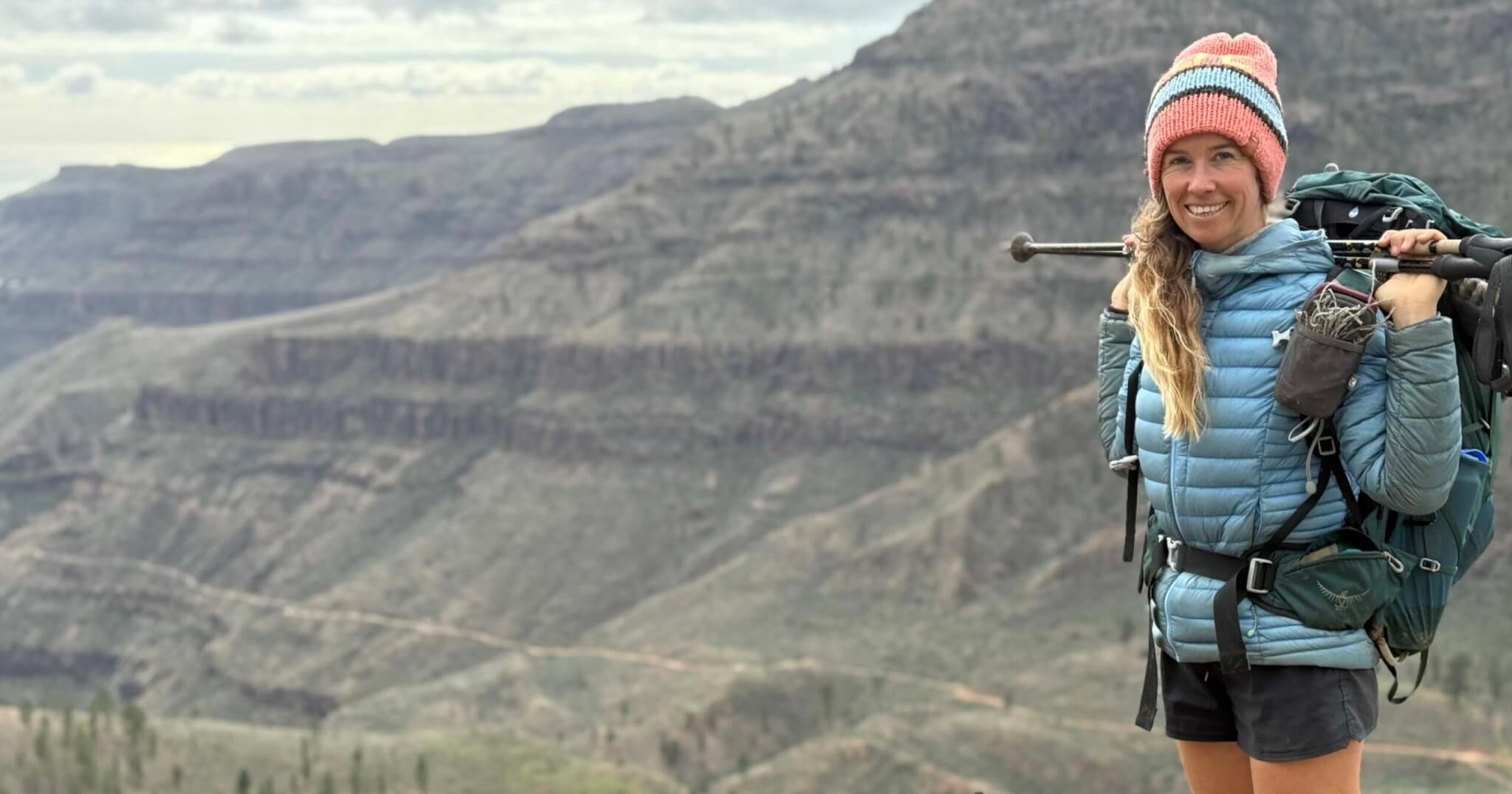
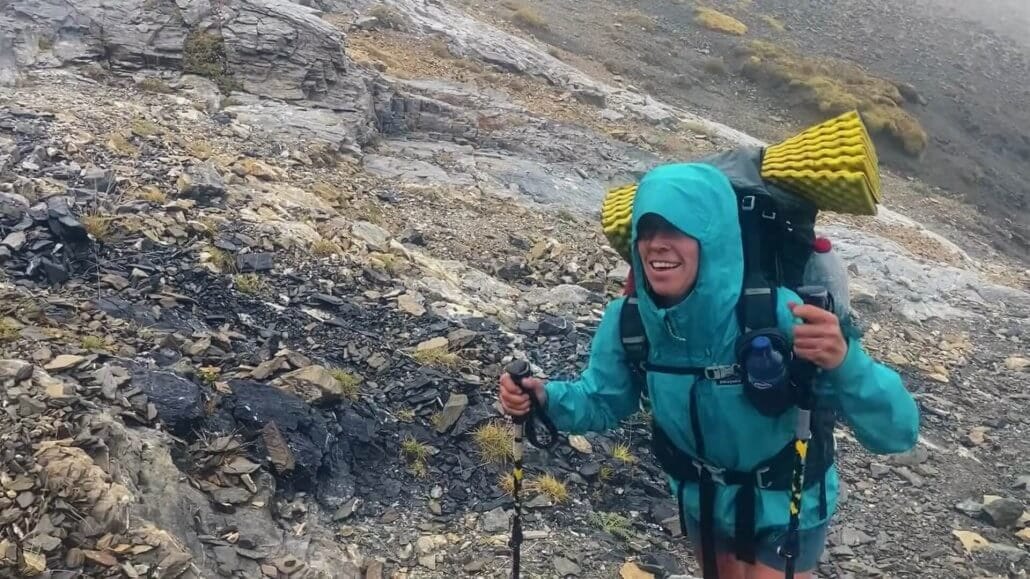
Here's my hiking and backpacking hygiene kit, plus the trail hygiene approach I've worked out for anyone who wants to stay clean (enough) and protect the wild places we love. These are the tips I learned after doing a couple of long-distance hikes, like the Waitukubuli National Trail, and the most recent one: hiking 850 km across the Pyrenees on the GR11, and a few more living out of my pack, practicing natural hygiene the simple way. And as well as from living full-time vanlife and sailinglife for mannny years.
From experience comes awareness. From caring comes action.
Planning your first multi-day hike? I'm finishing a field guide for exactly that, Your First Hike, out this autumn. Join the waitlist and you'll get it first, at a launch price.
One email when it is ready, with the launch price. You can unsubscribe at any time.
Watch the full trail hygiene video
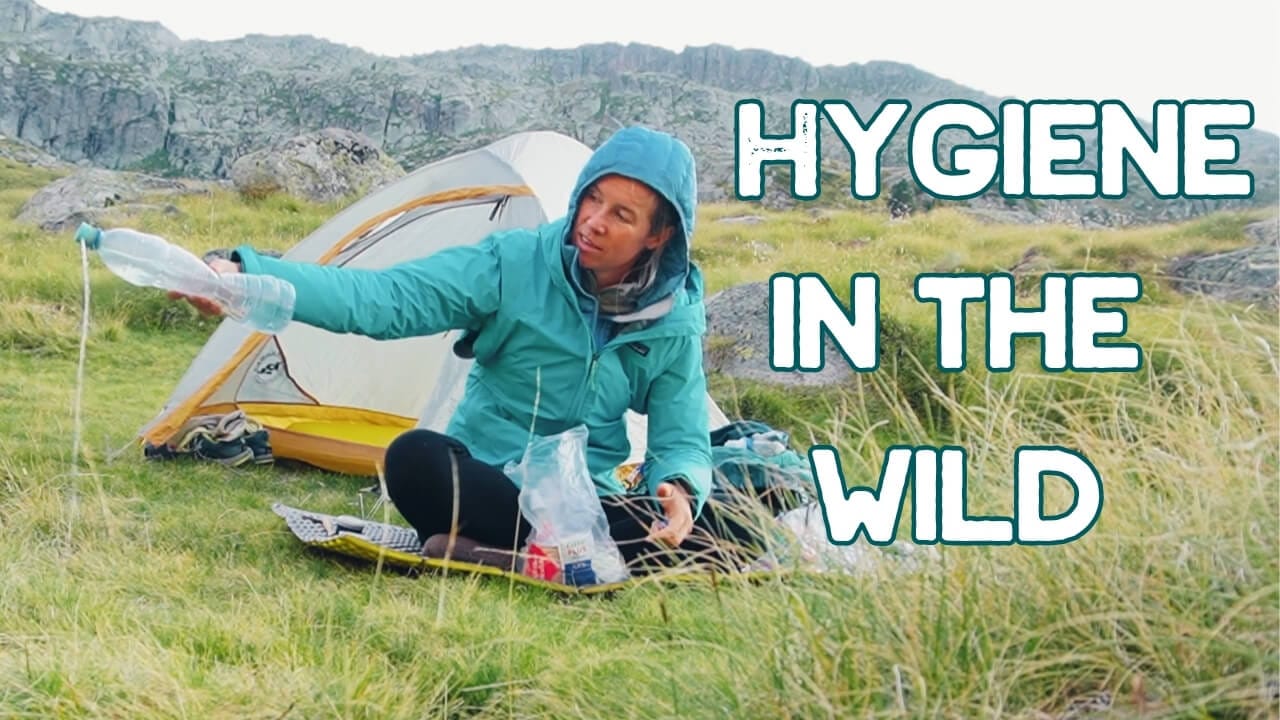
Rather watch than read? I walk and talk you through my full hiking hygiene kit in the video below. This is part of my GR11 series, filmed during my 850 km solo thru-hike across the Pyrenees. If the post below resonates, the video shows you how it all actually works in practice.
If you find it helpful, subscribe to the channel. Less than 10% of the people watching my videos are actually subscribed, and every subscription helps me keep making real trail content.
Why hygiene in the backcountry is different
Hiking and camping in the wild change your relationship with personal hygiene if you're used to having modern facilities. You won't have showers or sinks. Your water source might be a stream, and your “bathroom” involves pooping in the woods.
But that doesn't mean you can't stay healthy. It means redefining what “clean” looks like and understanding that good outdoor hygiene is about keeping yourself, your gear, and nature safe.
Hygiene on trail is about feeling healthy, fresh enough, and leaving the trail better than you found it. Not spotless. There's a big difference between being dirty and being unhealthy. We get dirt under our nails, mud on our face, and stains on our shirt. That's normal. I did not get sick on trail once, and I don't remember the last time I've actually been sick. I believe just being on a long-distance hike is one of the healthiest things you can do.
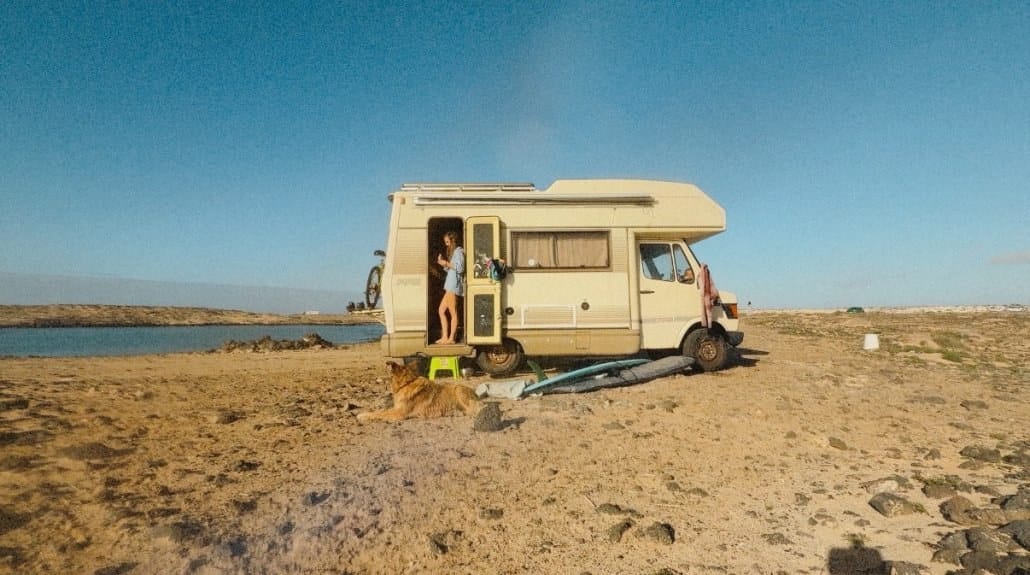
Personally, for me it isn't much different from my daily life. I live in a van with a watertank of only 25 litres. The ocean, streams or spray bottle is my shower. I must do something right.
Forget “clean.” Aim for healthy.
Wild camping and on trail, dirt under your nails, messy hair, and sweat are normal. You'll never stay spotless, and you shouldn't try.
The goal is simple: avoid getting sick and leave no trace. We get sold this idea that you need to bring wipes, hand sanitizer, and chemical soaps to stay clean outside. I don't believe we do. It just adds weight, it pollutes, and it kills the very bacteria that keep you healthy. We're not touching elevator buttons here. We're in the wild with access to rivers and sand and mud.
Even if soap is labelled biodegradable, it doesn't break down properly in cold mountain streams. It needs soil, warmth, and time. Without that, it can pollute the water and harm fragile ecosystems. If you do use biodegradable soap for camping or hiking, step at least 60 metres away from water and let the soil filter it.
Regular soap is even worse. It's full of synthetic chemicals that strip your skin's natural oils, disturb your microbiome, and mess with your hormones. Harsh soaps strip the good bacteria that actually protect you. And it just doesn't belong in nature.
But here's the magic. When you let your skin be free from all the scrubbing and stripping, you begin to feel your body regulate itself. Your skin becomes softer, stronger, more in tune with the elements. When else in life do you get to truly feel your natural oils flourish?
The 60 meter rule (or 200 feet rule) and why it matters
It comes down to one number out here: 200 feet. That's about 60 metres, or roughly 70 big steps. Keep your washing, peeing, pooing, brushing, and dishes at least that far from any water source. Far enough that the soil filters everything before it reaches a lake or river.
It's a Leave No Trace guideline, and it's the simplest way to keep clean water clean, for you and for everyone downstream. When in doubt, walk further. The wild keeps you well when you keep it clean.
Washing in the wild: river, stream, lake
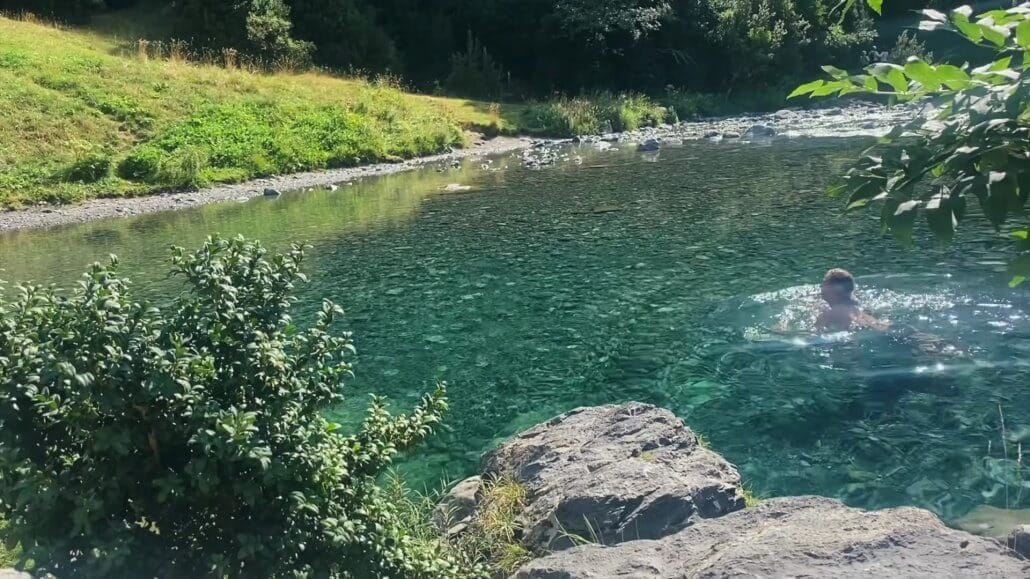
Whenever possible, I take a dip in a river or stream. Skip the lakes. They are fragile ecosystems and often it's also forbidden to take a dip. If you need a wash, carry some water out of the lake and wash yourself further away. Let the earth do the filtering.
On long-distance trails, the standard hiker bath (some call it a sponge bath) is simple: a quick-drying microfiber pack towel or a wet bandana, start with your face, work down to your feet. Two minutes of focused wiping in the end does more for how you feel in the morning than you'd think. Save the river dip for the days you find clean moving water.
I don't carry a camp shower. A litre of water and a microfiber towel does the same job for a fraction of the weight. Same with peeing and pooing: never do it close to a stream. Keep it 200 feet from any water, always.
These days I don't carry soap at all. The best biodegradable soap for camping is no soap most of the time. Water, a quick scrub, a handful of sand, a dip in a moving stream, that's what actually gets you clean out here. If you really want some for a town stop, keep it biodegradable and use it at least 200 feet (60 metres) from any water, where the soil can filter it. Most days you won't reach for it.
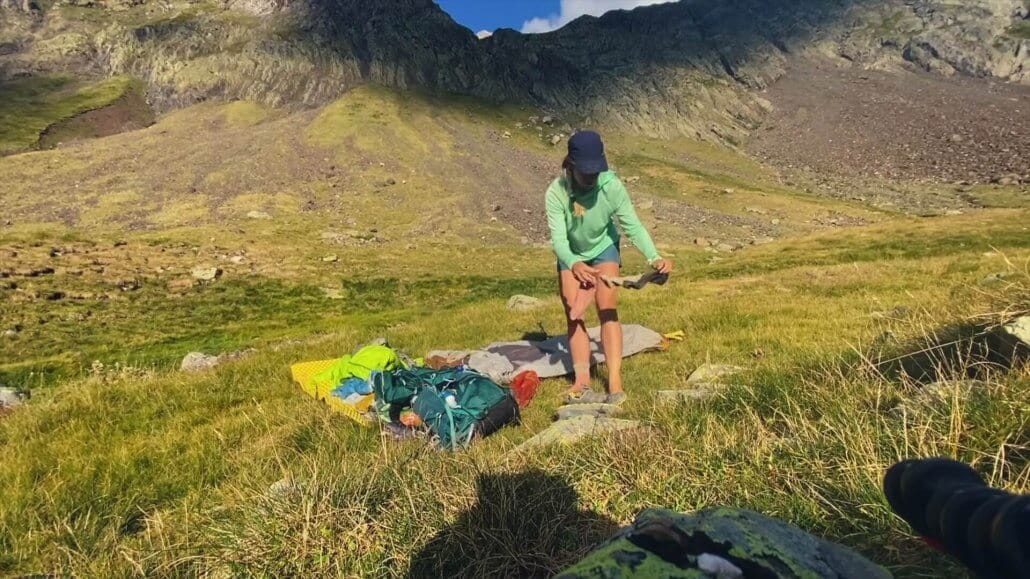
Backpacking hygiene essentials: what's in my kit (and what I skipped)
Keeping things minimal means less weight, less trash, and fewer things that don't belong in nature. Here's the backpacking hygiene kit I carried on the GR11, all of it tucked into a corner of my pack (I hiked with the Osprey Eja):
- Quick-drying microfiber pack towel that doubles for face washing. I use a Kula Cloth, which hangs on my backpack and dries fast. Sea to Summit also makes excellent ultralight pack towels.
- Toothbrush and DIY tooth powder: natural and safe to spit out
- Culo Clean travel bidet: portable bum-cleaner that screws onto any water bottle. No toilet paper, no trash.
- Menstrual cup (OrganiCup): perfect for a period on trail with zero waste
- Small oil mix for my face: castor, rose, and argan oil (more on that below)
- Copper tongue scraper: starts the day fresh
- A pee rag. I use a second Kula Cloth
- Natural electrolytes for sweaty days
- Spirulina powder to help restore muscles
- Activated charcoal powder for food poisoning or bad water
- Blister plasters (Compeed) and tape wrapped around my hiking poles
- Silicone earplugs for quiet nights
- Small amount of baking soda (occasional natural deodorant)
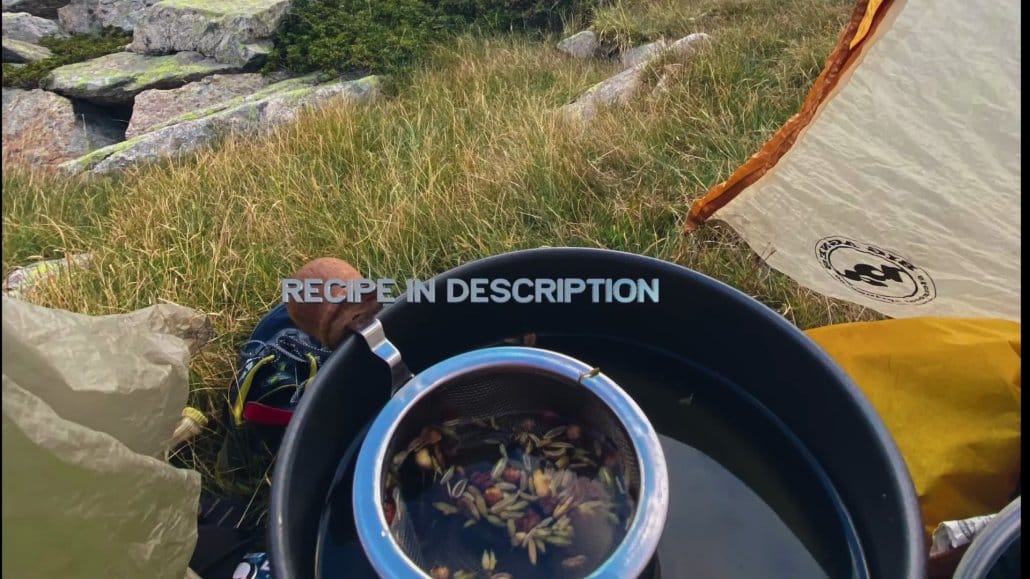
- Chai tea and spice mixes to keep trail food interesting and the digestive system happy
- Extra hair tie
- A plastic bag to carry out any trash
Fun fact about the oils: I bought them directly from the makers. Castor oil and rose oil I bought on the street in Dominica, a tropical island country I travelled to by sailboat and where I hiked the Waitukubuli National Trail. Argan oil I got on the street in Morocco where I spent the last two winters in my van. Small spa treatment for the face, every evening.
Sun is the other half of trail skin care. Rather than carry the chemical stuff, I make my own. Here's how I make a natural mineral sunscreen that's kinder to your skin and to the water.
What I didn't bring hiking and wild camping (and I hope you don't either):
- Wet wipes and baby wipes (heavy and leave trash)
- Bottles of shampoo
- Chemical soaps
- Hand sanitizer
- Deodorant (more on that below)
Instead, I kept my hygiene essentials natural and simple.
Hands: the one habit that actually matters
If you do one thing for your hygiene out there, wash your hands before you eat. Most stomach trouble on trail comes from hands, not from the water. A rinse with clean water and a quick scrub does it, or a little biodegradable soap well away from the stream.
I skip hand sanitizer. It kills the good bacteria along with the bad and it's another little plastic bottle to carry. This is the most basic hygiene habit out here, and the one that saves you the days you really don't want.
Oral hygiene: toothbrush, tongue scraper, pine needles
I make my own tooth powder. It's super light, simple, and natural, so I can spit it out in nature (away from water streams). Commercial toothpaste is full of chemicals. I don't recommend them for you or for nature. At the end, it's the bristles that matter the most.
Actually, my favourite and the most natural and oldest toothbrush in the world is the miswak branch. My teeth get super clean and smooth with it. Zero waste, zero chemicals, zero packaging.
Another little oral hygiene trick from the wild: pine needles. They make great toothpicks.
Since I'm on it, what I really swear by is a copper tongue scraper. First thing in the morning. I really believe already half of the hygiene and health is set for the day. It eliminates all the built-up waste your body wants to get rid of overnight. Starts the day fresh and clean.
Bathroom on the trail: the real talk
Going to the bathroom in the wild is one of the biggest mental hurdles for some. But it's not complicated. It's actually much more natural than sitting on a toilet.
Follow Leave No Trace principles:
- Dig a hole 10-20 cm deep and at least 200 feet (60 metres) from any water source. That's the 200-foot rule again.
- Use a portable bidet instead of toilet paper. Or pack out toilet paper (a resealable plastic bag works).
- Use a pee rag to catch the drops. I attach mine to my backpack strap so I can use it even with my backpack on. Like this, the underwear stays cleaner much longer. I can wear them for one week instead of two days. I'm joking. I do wash them sometimes.
- If required by regulations, use a wag bag to pack out human waste.
It might feel awkward at first, but once you do it a few times, it's just part of life out there.
If your home base is a van or a boat rather than a tent, the bathroom question changes shape. I've written separately about the compost toilets I'd choose for vanlife and sailboats.

Hygiene on your period, and the other women's questions
The question I get most from women is about staying clean and avoiding yeast infections on long hikes. What works for me: merino underwear that breathes, going commando under hiking shorts when I can, and letting everything air out at night. That solves about 95% of it. The groin stays happiest when it's dry and gets some air, so the synthetic, tight stuff is what to leave at home.
On underwear, I carry two pairs. One to hike in, one clean pair set aside for sleeping. The pee rag handles the daytime drops, so the underwear stays fresh much longer. Washing them is the same as everything else on trail (see the clothes and dishes part below). Chafe is the other thing to watch: keep things dry, and a little oil where something rubs goes a long way.
And yes, you can stay clean on your period while hiking. On trail I use a menstrual cup (OrganiCup). It's practical, zero-waste, and there's no need to carry pads or tampons or a sealable plastic bag full of trash. Empty and rinse it at least 200 feet from any water, the same rule as everything else. NL readers can grab a menstrual cup on Bol.
I plan to make a video on how to approach the moon time on trail or when camping. Subscribe to stay in the loop.
Deodorant, sweat, and smelling like you
Deodorant doesn't make you cleaner. It doesn't make you healthier. It just masks smell. Sweat is normal and actually healthy. It cools you down and flushes out toxins.
Will you stink by day three? Less than you'd think. No one expects you to smell like flowers in the wild, and trying too hard just adds unnecessary hygiene products to your pack. Out here, you just smell like you.
What you eat also changes how you smell. So take it easy on the processed cookies and your sweat will be less funky. The grime washes off in the next stream. Sometimes I use a little bit of baking soda as deodorant if I really need something. That's it.
Feet first: socks, shoes, and blisters
Your feet are your thru-hike foundation. Treat them well and you'll go far. A little foot massage in the evening goes such a long way.
- Dry your socks and shoes every chance you get.
- Carry two pairs of socks to prevent blisters and reduce chafing. Hike in one, keep one clean and dry for sleeping.
- Choose merino wool socks. They resist smell, breathe, and don't shed microplastics. BRANWYN makes great merino base layers and underwear.
- Buy shoes two sizes bigger. Your feet will swell on trail. I wear Altra Lone Peak trail runners with the wide toe box, so there's lots of space.
- Carry tape around your hiking poles (no extra weight, always accessible).
A little wool tucked in your sock where something rubs can save you from a blister. Whether it's blisters or pain somewhere, a bit of raw merino wool changes everything.
Caring for your clothes and dishes on trail
Laundry on a thru-hike is quick and low-tech. Rinse the dirty pair of socks or underwear in clean water you've carried at least 200 feet from the stream, scrub with your hands, skip the soap most days. Wring it out and clip it to the back of your pack. By afternoon it's clean and dry, smelling of sun and wind.
Dishes work the same way. I scrape the pot and eat everything, which is the Leave No Trace way anyway, then rinse with a little clean water well away from any water source. A pinch of sand or a thumb does the scrubbing. No soapy water near streams, no eating utensils left to soak in the lake. Pack out the scraps you can't eat.
Natural fabrics vs synthetic: the microplastic truth
A lot of hiking gear is basically plastic. Polyester, nylon, synthetics. Sure, it's light and dries fast, but it also traps bacteria and makes you smell worse.
Natural fibres like merino wool resist smell, breathe better, and last but not least, don't leech microplastics into your skin or into nature. Every time you wash synthetic fabric, thousands of tiny plastic fibres end up in waterways, in our food, even in our blood.
My rule: the layers closest to my body (base layers, socks, underwear) are always natural. The shell layers (rain jacket, windproof) can be synthetic because they don't sit on my skin and they need to be light.
Digestive health is hygiene too
Your gut health affects your hygiene more than you think.
If you're constipated, you'll feel worse. If you get diarrhoea, things can get messy fast. The last thing you want on trail is either one, which then turns into a less hygienic situation.
The same few things from my kit do the work here. Chai and spice mixes keep the trail food interesting and the belly happy. Natural electrolytes on the sweaty days, spirulina for tired muscles, and activated charcoal for when the water or the food turns on you. That last one has saved me more than once.
Good digestion makes life (and hiking and camping) a lot cleaner.
Hair on the trail
Hair on the trail is simpler than you think.
I kept my hair in braids all the time, so I don't need to brush it or bring a brush. I washed my hair during some of the zero days at the campsite. And that's it. You really don't need to wash your hair every week. Your scalp adjusts when you stop washing it every day, and the greasy-hair feeling settles down once it does.
If you get the opportunity, a fresh rinse in a river stream could do magic. And mud on the scalp can do wonders for the grease.
For the longer breaks, a town stop or a zero day, I keep one bar of biodegradable shampoo and that's it. If you want something gentle on your hair and on the water, I've rounded up the biodegradable shampoos worth packing.
Water on trail
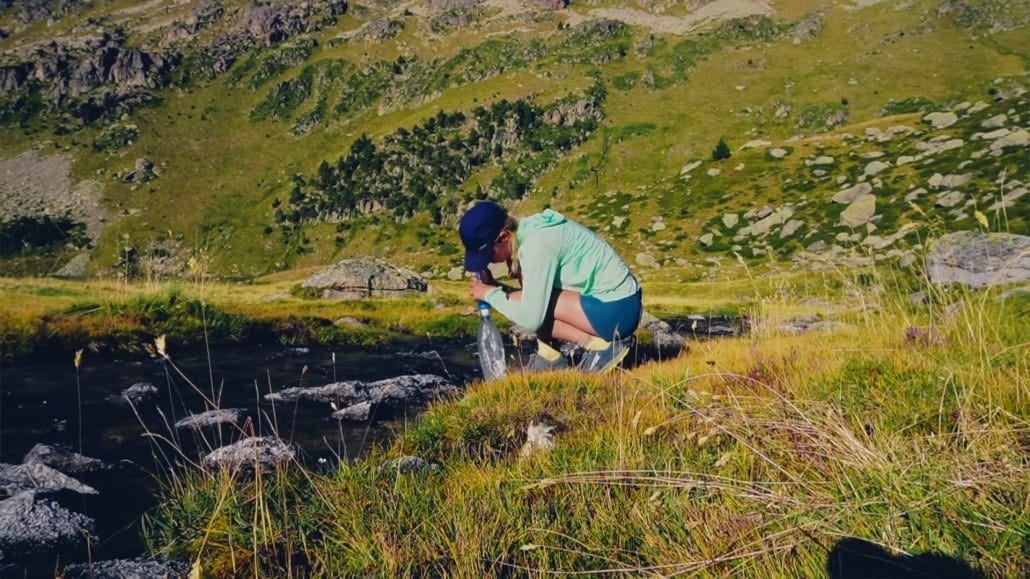
What a wealth to be drinking fresh mountain water. I hardly carried water on the GR11 as there was enough to be found in streams. Of course filtered, because with lots of cows and sheep around, water can be contaminated. And the higher up you take the water, the better.
The filter I used on this trail was the Katadyn BeFree. Very lightweight, very simple, and it does the job for this kind of trail. The LifeStraw is another solid option if you want to drink directly from streams. In my van and for sailing, I use the Maunawai water filter (5% off with code OP2020) for better filtration and mineral capacities, but the Maunawai hiking filter is a little bit heavier, so for long distance I go for a lighter option.
Read my full guides: best water filters for solo hiking and best water filters for sailing and van life.
Sleep hygiene
At night, I switch into clean layers: merino leggings and a merino thermal top. It feels like a reset button. I keep this set clean and dry only for sleeping, which also keeps the sleeping bag clean. I even carry a tiny pillow. Luxury? Maybe. But waking up rested makes every day better.
I also put everything back in its place each night so I can exactly find it tomorrow morning again. Saves a lot of time when you're starting cold at sunrise.
Mental hygiene
Hygiene on trail is about your mind as much as your body.
I had some struggles in the beginning of this trail, which I shared about in the first video of this series on hiking across the Pyrenees. My main advice here: you can either complain about how dirty it is, how tough it is, how much your feet hurt, or how wet the rain is. But it's not going to change anything about the situation.
Focus on what's amazing. Like the fact that you're actually out there hiking, breathing clean air, connecting to nature. It keeps the spirit high, not only for yourself, but also for your hiking buddy.
Another little thought that often helps: realize it can always be worse.
Leave the trail (and yourself) better
Every choice leaves a mark. What you wash with. Where you spit. Where you pee or poo. It all flows downstream.
Trail hygiene is about respect. For yourself, for others, and for nature.
Walk at least 200 feet (60 metres) away from lakes and streams before brushing, spitting, washing, peeing, or pooing. Pack out what doesn't belong in nature. But even better: don't bring any chemicals in the first place that don't belong in nature or on you either.
You will never feel fully clean on a thru-hike. And that's part of the magic. You will just feel healthy, fresh enough, and leave the trail better than you found it.
The goal is simple. Keep the wild places wild, and keep yourself wild.
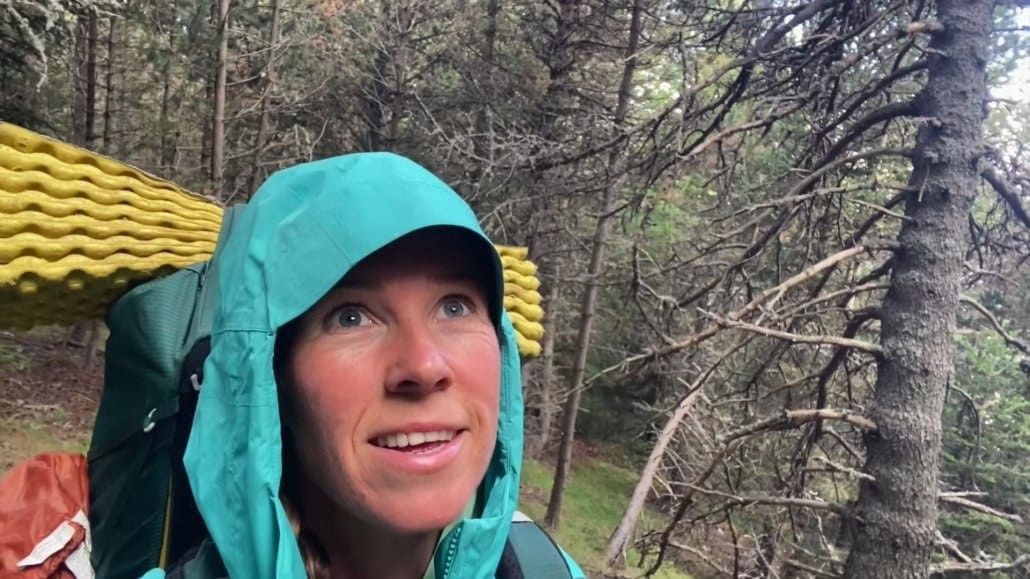
Watch the full video on YouTube
If you found this post helpful, the full trail hygiene video on my YouTube channel shows you all of this in practice. You can see exactly how the Culo Clean bidet works, how the Kula Cloth sits on my backpack strap, what my oil mix looks like, and the full routine I use on trail.
Subscribe to the channel for more real trail, sail, and van life content. It's where I share the unfiltered version of nomadic life with nature.
Key takeaways
- Forget spotless, focus on healthy
- Wash your hands before you eat, the simplest and best hygiene habit
- Keep everything 200 feet (60 metres) from any water source
- Use biodegradable soap sparingly, and only far from water
- Skip lakes. Dip in rivers and streams. Carry water out for washing.
- A portable bidet changes the trail bathroom equation. Try it.
- Wear merino wool socks and shoes two sizes bigger
- A menstrual cup makes a period on trail easier
- Natural fabrics next to your skin, synthetics only on shell layers
- Always fill the hole (and pack out what needs packing)
- Above all: keep it simple, natural, and leave no trace
You may also like reading: Gift ideas for hikers
Stay wild.
With love, Suzanne
Wild at heart? Let's be friends.
Join me on YouTube for slow travel adventures by van, sail and on foot.
Or get my new stories by email, every couple of weeks.
Ocean Nomads is the community I founded, for people who want to live a little wilder, explore a little further, and do it with good people.
For deeper trail stories and the behind-the-scenes, I write on Patreon.
Explore more
Read next
 GR131 Gran Canaria guide: 5 stages, where to stay, map
 Fisherman's Trail Portugal guide: 13 stages, map and where to stay (2026)
 Best hiking apps: the 4 I use after 2,500 km thru-hiking
 All my thru-hiking stories
Watch on YouTube