


Updated May 2026
Table of Contents
- What goes in a zero waste travel kit
- Why solid bars beat liquids (and breeze through airport security)
- Reusables that earn their weight
- Plastic-free toiletries: what to swap, what to make
- Reef-safe sunscreen
- Period products on the road
- Small refill containers (for the liquids you can't swap)
- Backpack, duffel and what to pack things in
- Eco-friendly travel clothes
- Shoes
- Sunglasses
- Tech, power, the unavoidable plastic
- Food and supplements for long trips
- Mermaid gear
- What I stopped packing
- FAQs
- What's the easiest first zero waste swap for travel?
- Are shampoo bars and solid toiletries allowed in carry-on?
- Do bamboo toothbrushes go mouldy?
- How do you keep solid soap and shampoo bars dry while travelling?
- Why doesn't my shampoo bar lather?
- What's the difference between plastic-free and zero waste travel?
- How do you handle period products on long trips?
- Are reusable kits actually cheaper?
- Building your kit, the simple way
I'm writing this from my van, parked on a cliff above the Atlantic. My zero waste travel kit lives in a cotton pouch the size of a paperback. Toothbrush, soap bar, deo powder, menstrual cup, spork, water bottle. That's most of it. After 15+ years sailing across oceans, hiking long trails and living out of bags, I have stripped this kit down to what actually survives the road.
You want to travel light, compact and purposeful. You want to support the small change-maker brands rather than the lobbying giants on page one of Google. You want to leave less plastic in the ocean than you found. You want to collect memories, not things. And you still have to pack something.
So here's what I actually carry, what works, what failed me, and what I stopped packing after years on boats and trails. Plus the DIY recipes I keep coming back to when the shops don't deliver. Disclaimer: no brand is paying me to mention them. Recommendations are based on my own years of testing.
What goes in a zero waste travel kit
The core of a working zero waste travel kit is small. Five categories cover almost everything:
- Reusables for water, coffee, food, shopping, eating: bottle, cup or thermos, spork, tote bag, food container or silicone pouch.
- Plastic-free toiletries: solid toothpaste tabs or DIY powder, bamboo brush or miswak twig, shampoo and soap bars, refillable deo, safety razor.
- Reef-safe sunscreen, mosquito repellent, and a tiny first-aid pouch.
- Period products if relevant: menstrual cup or reusable pads.
- Refill containers: small stainless steel or glass jars for anything liquid you can't go solid on.
The rest, the bags, shoes, clothes, tech, depends on where you are going. The principles stay the same. Buy less. Buy better. Buy second-hand when you can. Buy from change-makers when you can't.
Almost every day someone asks me ‘what do you use for this' or ‘where did you get that?'. I wrote a much broader post on travelling as part of the solution. This one stays focused on the kit itself.
Let the dollar be your voice and your reflection of love for the planet.
People say you are what you eat. You are also what you buy, use, wrap and present yourself with. Responsible travel is not just about hitching a sailing boat ride or doing a long hiking trip. It's how you pack and prepare for it.
As my dad always said: ‘Een slimme meid is op haar toekomst voorbereid', a smart girl has her future prepared. He still shows up with a piece of rope (‘always handy!') when I head out for another adventure. Fifteen years of travel have taught me what to expect and what's of use in this crazy lifestyle.

Why solid bars beat liquids (and breeze through airport security)
Here's the practical reason zero waste also makes airport life easier. Liquids in carry-on are capped at 100 ml per container, all in one quart-size bag, one bag per person. Solid bars, powders and tablets don't count. Shampoo bar, soap bar, solid deodorant, toothpaste tabs, lotion bar, perfume balm: full size, no liquid limit, no plastic bottle.
Going solid is the single change that gets you past the security gate faster, with less plastic, less spillage and full-size product. Travelling carry-on only becomes much easier the moment you ditch the mini bottles.
The rest of this post goes section by section through what I actually carry, with links to the brands I trust and the homemade recipes I keep coming back to.
Reusables that earn their weight
Reusable water bottle (and a filter for sketchy taps)
Fifty trillion plastic bottles are produced every year. It takes crude oil and chemicals to make them. The most positive scenario: a third get recycled, which again takes oil. The rest ends up in nature.
The fix is one good stainless steel bottle that lasts a decade. Refill from cafés, fountains, taps, refill stations, and waterfalls when you're lucky enough to find one. For dodgy tap water or remote travel I carry a filter. The LifeStraw works straight from streams. A Katadyn BeFree is lighter for hiking. For the van I use a Maunawai filter (readers get 5% off with code OP2020). NL readers can grab a Dopper bottle from Bever.
Here's a longer round-up of travel-friendly water filter solutions.
Reusable coffee cup or small thermos
A coffee cup is the easiest reusable to forget and the most worthwhile to pack. Cafés around the world now give a small discount when you bring your own. A collapsible silicone cup from Sea to Summit packs flat and survives years. I also use mine for plane and train rides and roadside picnics. More on why the disposable cup is such a beast and how to ditch it.
Spork, knife, chopsticks
The most powerful tool against single-use plastic at street food stalls, train stations, airports and night markets is a spork. I travel with a titanium spork: light, indestructible, doubles as fork, spoon and (gentle) knife. Sea to Summit also has a good travel cutlery set.
Reusable straw
Straws are in the top six items found on beach clean-ups. Used for fifteen minutes, around for a few hundred years. I carry a stainless steel one because it survives my style of travel (bumpy and clumsy). Glass and bamboo are lighter but more breakable. You can also make your own from a piece of bamboo. Full straw breakdown here.
A small tote bag (or three)
Once you're carrying a tote, you can say no to the plastic bag at the counter, the produce bag at the market, and the takeaway bag at the food stall. My mum sewed me a few cotton organiser bags years ago and I still use them as my packing cubes (one for shirts, one for shorts, one for tech, one for bikinis). If sewing is not your thing, Etsy is full of handmade organic cotton bags and produce bags from small makers. More on the plastic bag problem here.
Food container or silicone bag
Useful for storing nuts, seeds, teas, half a sandwich, and saying no to plastic takeaway boxes. Life Without Plastic has lightweight stainless steel airtight containers in different sizes. Their travel jars are great for spices, soap pieces and small ointments. For flexible storage, silicone pouches (Stasher style) on iHerb close airtight and survive years.

Plastic-free toiletries: what to swap, what to make
All the fragrances and chemicals on the back of conventional toiletries end up in waterways and mess with your hormones. How many words on the back of your shampoo can you actually pronounce? Quick rough calculation: with one shampoo bottle every few weeks, in 30 years that's around 360 bottles. Just shampoo. Just me. Plastic never EVER disappears.
The good news: most of these you can either swap to a solid bar, or make yourself with three ingredients from any kitchen.
Toothpaste tabs (or DIY)
Toothpaste tabs are the fastest swap if you don't want to DIY. You bite, it foams, you brush. They come in small glass jars or compostable pouches, last weeks, and breeze through airport security (powder, not liquid). Find them on iHerb (global), Natural Heroes (NL) or Bol.
My everyday version is even simpler: baking soda, coconut oil, and a pinch of activated charcoal (yes, the black stuff). Add a drop of peppermint or eucalyptus if you want that toothpaste-y feel. On long hikes I just travel with plain baking soda powder. Light, cheap, available everywhere. Full DIY toothpaste recipe and a how-to video here.
Bamboo toothbrush (with one catch)
Eight toothbrushes per year, over 30 years of brushing, equals 240 toothbrushes from one person. A bamboo toothbrush from Life Without Plastic is the standard swap.
The catch nobody talks about: bamboo is porous. In humid tropical climates and on boats, where my toothbrush lives, the handle starts to go mouldy if you stuff it back in a closed travel case while damp. The fix is simple. Let it dry standing up before you store it. Soak in vinegar for fifteen minutes once a week. Replace every three months whether you remember to or not.
For long trips off-grid I've also moved to a miswak twig: a small stick from the arak tree, used as a toothbrush for centuries across the Middle East and parts of Africa. No bristles, no plastic, no mould, no travel case. Available cheap on iHerb.
Shampoo and soap bars (with a heads up on hard water)
One shampoo bar can replace three plastic bottles of liquid. Same for soap. Dr Bronner's castile soap is the multi-tasker I keep coming back to: body, hair, dishes, laundry. Bar form on Life Without Plastic. For traditional olive-oil soap I love a real Aleppo bar
Real-world heads up. Soap-based shampoo bars react with the minerals in hard water and leave a white film. They also dissolve faster. If your bar feels like it isn't lathering, you're not doing it wrong, the water is hard. Two fixes: a syndet bar (synthetic-detergent based, pH-balanced, works fine in hard water), or rinse with diluted apple cider vinegar after washing to lift the film.
Storage matters too. A bar stored wet in a closed tin turns to mush. Crack the lid when you arrive. Let it dry between uses. Longer post on biodegradable shampoo and soap brands I've tested here.
Deodorant
My favourite is the Ohm Deo Powder. Expensive up front, lasts forever, plastic-free, and you genuinely don't stink. Crystal sticks work too but feel heavy for travel. Plain baking soda also does the job (one pinch under each arm, done).
I hardly use deodorant most of the time. With a clean diet and merino base layers it just isn't necessary. The week before a period is when fragrance kicks up, that's when I reach for the Ohm.
Safety razor
One stainless steel razor lasts a lifetime. You only replace the blade, which is recyclable steel. No plastic disposable handle, no plastic strip of “moisture” gel. iHerb stocks safety razors and refill blades, or Etsy has handmade options from small makers.
Other small bits in my toiletry pouch
- Tea tree oil: antiseptic for cuts, bites and weird bumps.
- Coconut oil: conditioner, body oil, makeup remover, and oil-pulling mouthwash (rinse for five minutes first thing in the morning, Ayurvedic practice, cleanest mouth ever).
- Oats and water as a facial wash. Available in any country.
- Mosquito repellent: lemongrass, citronella, tea tree, eucalyptus, cinnamon. Eating loads of garlic also keeps them off. I rarely get bitten, but on iHerb the Honest brand bug spray ingredients pass the smell test.
- Ear infection prevention after snorkelling or freediving: 25% white vinegar, 75% water, a couple of drops in each ear. Has saved me from ever getting swimmer's ear.
- A wooden hairbrush and organic cotton hair ties from Life Without Plastic.
- Toothpicks: in many countries these come individually wrapped in plastic. Bring your own, or use a pine needle. Works fine.
For NL readers, Natural Heroes is where I source ingredients for DIY toiletries.
Reef-safe sunscreen
Average sunscreen has tons of chemicals that affect corals and fish. Biodegradable sunscreen is better for the environment and better for your body too. Some destinations now prohibit chemical sunscreens entirely.
The order I work through: cover up first (hat, long sleeves, rashie), pick the shaded chair, do outdoor adventures early or late. Apply sunscreen for when you have to. And when you do, make it count.
My everyday favourite is from The Ohm Collection. A full day at sea in the tropics, no sunburn, smells incredible, fully natural. It does come in plastic (small brand, limited options). For mineral options on Amazon globally: All Good, Raw Elements, Badger. UK readers, Green People routes you straight to their natural sunscreen page. NL readers, Natural Heroes.
Or make your own. Zinc oxide powder + a base oil (coconut, jojoba) + optional shea butter. Cheap, no plastic, works. Full DIY sunscreen recipe here.

Read labels properly. Any brand can claim ‘reef safe' or ‘eco'. First test: can you pronounce the ingredients?
Eight ingredients to avoid when buying sunscreen (source):
- Oxybenzone (used in over 3,500 sunscreens worldwide)
- Octinoxate / octylmethoxycinnamate (found in ‘long lasting' creams)
- Octocrylene
- 4-methylbenzylidene camphor (4MBC), banned in the US, still in Canada and parts of Europe
- Octisalate
- Homosalate
- Avobenzone
- Ethylhexyl methoxycinnamate
Longer piece on biodegradable sunscreen and reef-safe brand recommendations here.
Period products on the road
An estimated 11,000 tampons or pads in a lifetime. In many countries tampons are bleached, hard to find, or ridiculously expensive. The solution that changed my travel life: a menstrual cup. You insert it like a tampon, you can swim, dance, freedive and hike with it, and you only need one. Reusable for years.
I've used the Lunette cup for years. The OrganiCup also has solid reviews and ships globally. NL readers: menstrual cups on Bol. Reusable cloth pads are a good back-up. If you absolutely have to use disposables, choose organic cotton tampons (no bleach, no plastic applicator).
Small refill containers (for the liquids you can't swap)
For whatever liquid you genuinely need, oil, vinegar, tincture, a stash of your homemade shampoo, decant into small reusables instead of buying mini bottles. I use stainless steel pots and recycled small glass jars. Life Without Plastic's travel jars are made for this. Old jam jars, pill bottles and spice tins also work. Ask friends and family before you buy new.
Backpack, duffel and what to pack things in
I travel between water and land, so waterproof matters. For sailing I use a Thule 70L duffel. For thru-hiking I use the Osprey Eja 48L, lightweight and built for women's frames. Both brands last me a decade-plus. Osprey as a whole is one of the better outdoor brands on sustainability and warranty.
For dry storage inside the bag I love Aquapac waterproof pouches. They survived sailing across the Atlantic with my electronics inside. For broader outdoor packing solutions, Sea to Summit have lightweight, water-resistant gear (code FREEPILLOW at checkout :)).
Before you buy new, check second-hand. There are loads of barely-used backpacks on Marktplaats, Preloved, Vinted, eBay and local outdoor shops. Saves money, saves a new bag from being made.
Eco-friendly travel clothes
What you pack depends on where you're going. I gravitate to warmer places (frangipani and coconuts have a strong pull). A few items that travel with me everywhere:
- A merino wool base layer. Doesn't smell after days of wear, regulates temperature, dries fast. Icebreaker 200 is my long-trip go-to. Branwyn is great merino underwear (US-shipped).
- A good lightweight wind and waterproof shell. I use a Patagonia 3L jacket, the kind that lasts.
- Organic cotton T-shirts and one pair of fast-drying shorts. NL readers, Bever stocks ethical brands like Patagonia, Vaude and Tentree.
For waterproofing clothing without nasty chemistry, Repellx is a small Finnish brand I've tested. Drops roll right off.
Shoes
For long distance hiking, the Altra Lone Peak changed my life. No blisters, wide toe box, zero drop. They are the standard on long-distance trails for a reason. Topo Athletic make a similar style.
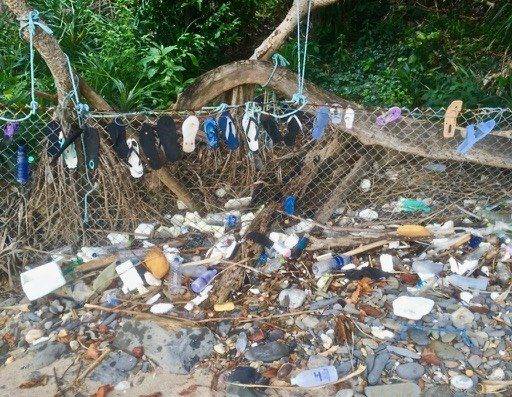
For all-round adventuring my Merrell trail runners have lasted years. They're light, vegan, comfortable. For boat life I'm mostly barefoot. The volume of flip flops washed up on every beach I've walked has cured me of those. Walk in proper shoes, or with nothing. Either way the planet wins.
Sunglasses
Most sunglasses are made from plastic, produced unethically, and barely protect your eyes. Two brands I trust: Sunski make their frames from recycled plastic and they hold up to ocean sport. Ombraz are cord-armless sunglasses, born from a kitesurfing problem, and brilliant for sailing because they don't blow off your face when the wind kicks up. Both are polarised options, which matters when you want to see the dolphins riding the bow.
Tech, power, the unavoidable plastic
The keys I type on are plastic, my phone case is plastic, my earphones are plastic. The digital nomad office is the least planet-friendly part of my kit. The fix is to keep it for as long as humanly possible. Protect what you have with waterproof pouches and dry bags. When it breaks, look second-hand first (Preloved, eBay, refurbished from Apple or your local shop). Send old gear to a recycling program, not the bin.
For long off-grid trips a good solar charger is worth its weight. Goal Zero panels have been my standard for years. A small Anker Nano III USB-C charger is enough for normal travel.
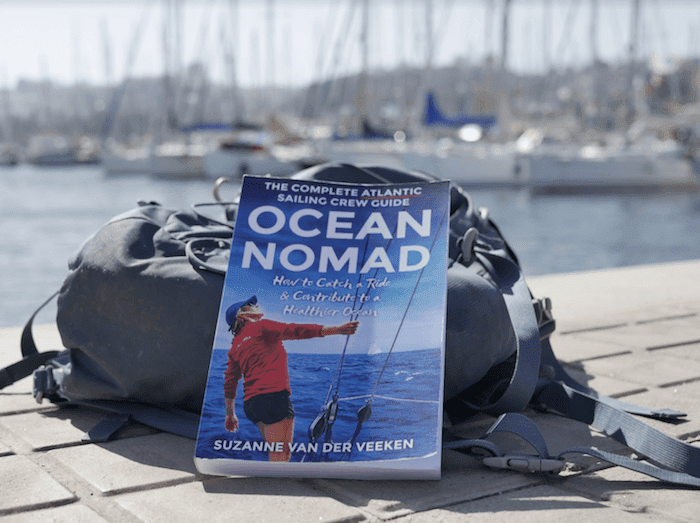
For books, the Kobo Clara e-reader is made from recycled ocean plastic, small and lightweight. Saves trees, saves weight, saves you packing five paperbacks. Or load up Ocean Nomad (my Atlantic sailing crew guide) on the Kindle or Kobo app.

Made from recycled ocean plastic, small & lightweight. Perfect travel reader.
Food and supplements for long trips
I've been vegetarian for over a decade (vegan for five years before that). I started for environmental reasons and stayed for how good I feel. On long passages and in off-grid places, fruit and veg supplies thin out. What I carry to stay sharp:
- Spirulina and chlorella for omega-3s. Skip the fish oil. Algae is where fish get their omega-3s in the first place, and you skip the by-catch.
- Probiotics for gut health, especially on long sailing passages when fibre intake drops.
- Vitamin B12, the one thing a vegan or vegetarian genuinely needs to supplement.
- A natural multi-vitamin for when I'm stuck on a boat for weeks.
- Loose-leaf tea in a small stainless steel tin. In many countries tea bags are individually wrapped in plastic. Bulk-buy or loose at home, decant for travel.
Sources I trust: iHerb globally, Natural Heroes NL, Green People UK.
Mermaid gear
The single most important thing in my travel kit these days: my mermaid outfit. The world below the surface is the most magical to explore, and I'm a passionate freediver.
I still dive with the basic set I bought when I started. SubGear Steel Comp mask: comfortable, low volume, made for small faces. A simple snorkel. Basic plastic fins (I'm on the lookout for a non-plastic alternative, the dream is a monofin one day). A stretchy rubber weight belt for the hips. Weights I borrow or rent locally.
My freedive watch is the Oceanic F-10: long battery, depth gauge, does the job. If money was no object I'd switch to a Suunto D4i.
If you know more about ethically produced freedive gear, drop a comment. This is the section of my kit I'm least happy with.
What I stopped packing
Fifteen years of travel teaches you what you don't actually use. The kit got smaller as I learned. Things I've dropped:
- Collapsible food containers. I love the idea. I never use them. I either eat-in or order less. The container stays in the bag.
- Q-tips. Wasteful, single use, individually wrapped in many countries. A small metal ear pick lives in my toiletry pouch instead.
- Mini liquid bottles. Once you go solid bars across the board, the whole quart bag of liquids disappears. Faster security, no spillage, full-size product.
- A second pair of shoes. One trail-running shoe for everything land-based. Bare feet for everything sea and beach.
- Flip flops. They snap, get tossed, end up in the ocean. I've seen too many washed up. Proper shoes or bare feet.
- Travel-sized everything. The whole concept is a waste-machine. Buy regular size at home, decant into reusables, take what you need.
FAQs
What's the easiest first zero waste swap for travel?
A reusable water bottle. One bottle replaces hundreds of plastic ones a year, costs less than ten euros for a stainless steel one that lasts a decade, and works everywhere. After that, a tote bag and a spork.
Are shampoo bars and solid toiletries allowed in carry-on?
Yes. Solid products don't count as liquids and don't fall under the 100ml carry-on limit. Solid shampoo, conditioner, soap, deodorant and toothpaste tabs all pass airport security as normal items. This is one of the practical wins of going zero waste.
Do bamboo toothbrushes go mouldy?
They can, especially in humid climates or on boats. Bamboo is porous. The fix: let it air-dry standing up before storing, soak in vinegar weekly, and replace every three months. If you're long-term off-grid or sailing the tropics, a miswak twig sidesteps the problem entirely.
How do you keep solid soap and shampoo bars dry while travelling?
Store them in a ventilated tin or pouch, not a sealed plastic case. Crack the lid as soon as you arrive at your stop. If you've showered with a bar, let it dry on a small soap saver dish before repacking. Wet bars in closed tins turn to mush within days.
Why doesn't my shampoo bar lather?
Almost always hard water. The minerals in hard water bind to soap-based bars and form a film instead of lather. Two fixes: switch to a syndet bar (synthetic-detergent based, pH-balanced, doesn't react with minerals), or rinse with diluted apple cider vinegar after washing to lift the residue.
What's the difference between plastic-free and zero waste travel?
Plastic-free focuses on cutting one specific material out of your kit. Zero waste is broader: cutting the volume of throwaway material in any form, including paper, packaging, food waste. In practice they overlap heavily. The first 80% of zero waste travel is plastic-free travel.
How do you handle period products on long trips?
A menstrual cup. One purchase, years of use, no plastic, no waste, no panic-search for tampons in countries that don't really stock them. Lunette and OrganiCup are both solid. Bring reusable cloth pads as a back-up.
Are reusable kits actually cheaper?
Long-term, yes. A stainless steel water bottle costs the same as 10-20 single-use ones. A shampoo bar lasts longer than 2-3 plastic bottles of liquid. A menstrual cup replaces 11,000 tampons. The upfront cost is higher, the per-use cost much lower.
Building your kit, the simple way
You don't need to buy any of this all at once. The point isn't a perfect kit, it's a working one. Start with what you already have. Borrow. Re-purpose. Buy second-hand. Make your own where you can. Buy from change-makers when you can't. Replace as things wear out.
What's helped me more than any single product is the question my dad's grandma generation would ask: what would grandma do? She wouldn't buy a hundred mini bottles. She'd refill the one she had. She wouldn't pack a different gadget for every meal. She'd carry a bandana and a spoon. She wouldn't apologise for caring about the planet. She'd just get on with it.
If you want the broader picture of what travelling lighter on the planet actually looks like, here are three more starting points: 70 eco travel tips, the 7 R's from Rethink to Recycle, and 50 eco travel gift ideas for the next birthday in the family. Then come back here, pick one swap, and go.
Stay wild,
Suzanne
Disclosure: everything in this kit has been personally tested unless I've said otherwise. Some links go through affiliate partners. At no extra cost to you, anything you book or buy via the links helps me keep researching, writing and walking the talk on this stuff.











Very thorough, excellent work!
Hi Suzanne, this is a wonderful resource! I write about plastic-free travel, so will be sharing this on my Facebook page.
Thank you LC!! I’ll look up your writing as well! We got to spread the word on plastic free zero waste travel.
I like how to link related products below the content. I am surely buying some of these.
This is so useful! I hate the thought of killing our environment, it’s all we have. As a traveler myself, I really appreciate this post and thank you you for making me more aware of these things.
Thank you Jenny! I’m glad it helped to raise your awareness and hopefully of all those future traveller you’ll meet :) Good luck!
This is a very detailed work! I support anything that helps protect the environment. Kudos to you Suzanne.
Thank you so much Brian! By making conscious decisions as a consumer we can influence what will be on the market tomorrow:)
I loved your article! Really helpful! Thank you for that!
But I have a question about the filter of the filter bottle. You’re saying it last more or less 2 months and it’s made of plastic. It means you have to buy a new filter every two months so buy plastic stuff every two months?
Thanks Amelie!
Yes so it’s not a 100% ocean-friendly and #zerowaste solution yet. I’m looking for alternatives. In situations where there is no potable tapwater and plastic water bottles have become the norm, the filter bottle is the better option. I’m also not aware of a filter recycling program. We must find a way to make it circulair!
Thanks, great post :) I love my water to go bottle to refuse plastic bottles while traveling, but haven´t been able to find a real plastic free reefsafe sunscreen yet (last one claimed to be but they had a plastic lining inside), so I will check out your recommendations. Have you tried the solar charger yet?? Looking for one at the moment.
Kind regards
Jule