


Hey wild one! I'm writing this from a sandy parking spot by the ocean. Lost count of how many days I've been here. The surf is right in front of me, the tide is rising. And so is the sun!
Two things I always have for the paddle out: surf hat and my DIY sunscreen. Tiny things. But they're the reason I can surf at any time of day, without leaving anything toxic in the water I'm about to be in, or on my skin.
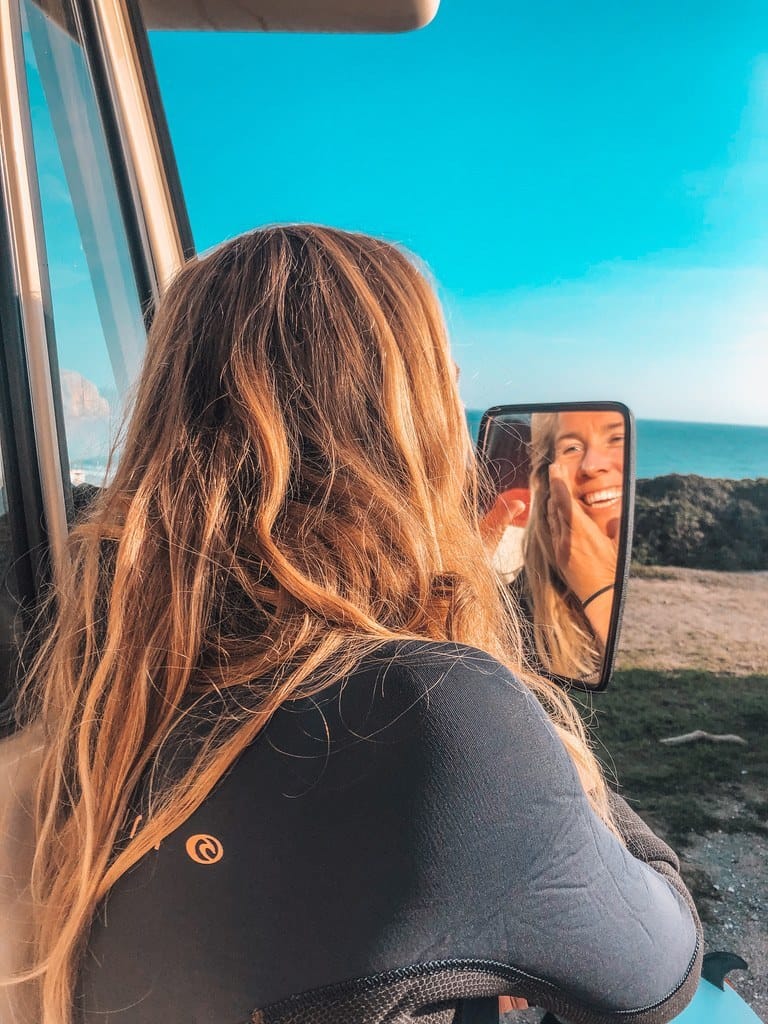
Ever read the back of a sunscreen bottle? Most are full of stuff you don't want on your body, and definitely not in the ocean you're about to swim in. Oxybenzone and octinoxate (in most conventional sunscreens) bleach and kill coral. Even small amounts damage reef ecosystems.
How to make DIY natural sunscreen (a reef-safe recipe)
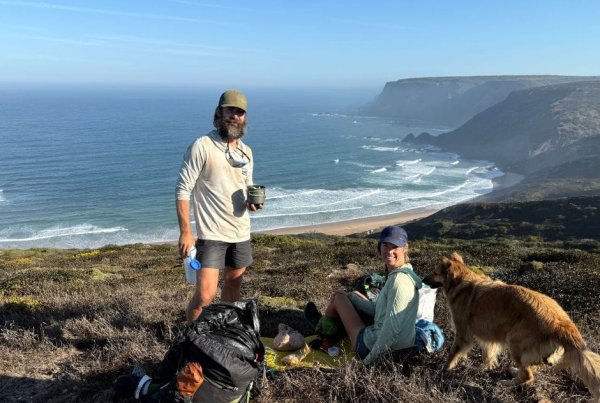
You can make your own at home in 15 minutes. 5 to 7 ingredients. Costs a fraction over time. I've used this mix sailing in the tropics, hiking 850 km on the GR11 in Spain, walking the Fisherman's Trail in Portugal, and surfing wherever there's a wave. As long as I use it consciously and don't treat it like a free pass to roast in the sun all day.
Quick recipe (approximately SPF 25)
- 1 spoon coconut oil
- 1 spoon almond oil
- 1 spoon jojoba oil
- 1 tablespoon rosehip oil
- 2 spoons shea butter
- 1 small block (3x3cm) cacao butter
- 2 spoons non-nano zinc oxide powder
Melt au bain marie, stir, pour into a jar, let it set. That's it.
It smells like cacao. Like you'd want to eat it.
Not in the mood to DIY? Skip to my recommended ocean-friendly mineral sunscreens at the bottom.

Why make your own sunscreen?
- Nothing mysterious. If you can't pronounce it, you probably don't need it.
- Reef safe. No oxybenzone, no octinoxate, no coral damage.
- No hormone disruptors. Many conventional sunscreen ingredients disrupt human hormones and have been linked to increased skin cancer risk.
- Freedom. You're not dependent on finding a shop, a specific brand, or even a specific country. You can make this anywhere. You do have to anticipate to find the ingredients.
- Cheaper long-term. Initial ingredient spend lasts a long time.
- Zero waste packaging. Reuse an old tin or jar.
- Nourishing. Coconut, almond, jojoba and rosehip oils are good for your skin on top of blocking UV.
For me this goes deeper than sunscreen. Making small things yourself. Knowing what you put on your body. Stepping out of the system one tin at a time. Same reason I keep a compost toilet in my van, filter my own water, and sometimes stay in one place longer than planned.
Sunscreen is one small lever. The bigger ones happen in community. People living on and around the water, doing the slow, hard work for it. Sailors, surfers, divers, ocean people. That's why I keep Ocean Nomads going. If that's your kind of crew, come find us.
For a deeper look at why conventional sunscreen is a problem for the ocean and for you, read my full post on biodegradable sunscreen and which ocean-friendly brands to buy.
How does mineral sunscreen actually work?
The active ingredient in DIY mineral sunscreen is zinc oxide (sometimes titanium dioxide). Unlike chemical sunscreens which your skin absorbs, zinc oxide sits on top of your skin and physically reflects UV rays like a shield.
Rough rule of thumb: every 1% of zinc oxide in your total mix adds about SPF 2. A 10% zinc mix gives roughly SPF 20. The oils you mix it with also add some SPF, though hard data on oil SPF is patchy.
Use non-nano zinc oxide (the larger particle size). Nano-zinc particles are small enough to be absorbed by the skin and to harm marine life. Non-nano is the safe choice for you and the reef.
Is DIY sunscreen safe?
Zinc oxide is one of the most effective UV blockers known and the ingredients here are all skin-friendly. Homemade mineral sunscreen has been used for decades.
One thing to know: you can't lab-test the exact SPF of your batch. So don't treat this as bulletproof. Treat it as one layer in a bigger system: shade, clothing, timing, awareness. Sunscreen is the last line of defence, not the only one.
If you're fair-skinned, on medication, or spending full days in intense tropical sun, a lab-tested mineral sunscreen might give you more peace of mind. See my recommendations below.
Words of warning: I'm not a trained cosmetic chemist. I'm curious, creative, and looking for natural ways to live lower impact. Test this on a small area of skin first to make sure you're not sensitive to any ingredient.
How to make DIY natural sunscreen: step by step
Step 1: Gather your ingredients
The 7 ingredients I use (and why):
- Non-nano zinc oxide powder. The active UV blocker. Every 1% is roughly SPF 2.
- Extra virgin coconut oil. Natural SPF 4-6, nourishing base.
- Almond oil. Natural SPF 5, light and easy to absorb.
- Jojoba oil. Natural SPF 4, shelf stable.
- Rosehip oil. Skin regenerating, great for sun-exposed skin.
- Shea butter. Natural SPF 4-6, gives the cream body.
- Cacao butter. Solidifies the mix, smells like the tropics.
Choose cold-pressed and organic wherever you can. The quality of your oils matters for shelf life and skin feel.
Want higher SPF? Add raspberry seed oil
Raspberry seed oil is often cited as the highest natural SPF oil, with some studies suggesting SPF 25-50. Adding 1 tablespoon to the recipe above may increase overall sun protection, though the exact SPF is hard to verify outside a lab. It's more expensive than the other oils but you only use a little. Add it if you're heading into tropical sun, sailing, or high-altitude hiking.
Other oils you can experiment with
If you want to add smaller amounts of SPF support, these are worth looking at:
- Carrot seed oil. Said to have SPF 38-40.
- Hemp seed oil. SPF around 6.
- Macadamia oil. SPF around 6.
- Avocado oil. SPF 4-10.
- Olive oil. SPF 2-8.
- Sesame seed oil. SPF around 4.
Scientific data on oil SPF is thin, so treat these as bonus layers rather than primary protection. Zinc oxide does the main work.
A note on beeswax: some DIY recipes use beeswax for thickness and water resistance, but beeswax comes with ethical questions (bee welfare, colony exploitation), so I skip it. Shea butter and cacao butter give you plenty of body without it.
Step 2: Melt au bain marie
In a heatproof glass or metal bowl, combine:
- 1 spoon coconut oil
- 1 spoon almond oil
- 1 spoon jojoba oil
- 1 tablespoon rosehip oil
- 2 spoons shea butter
- 1 small block (3x3cm) cacao butter
Place the bowl in a pan of warm (not boiling) water. Let everything melt and stir gently. Boiling damages the oils, so keep it on low heat.
Once melted and mixed, add 2 spoons of non-nano zinc oxide powder. Stir well to make sure the zinc is evenly distributed.
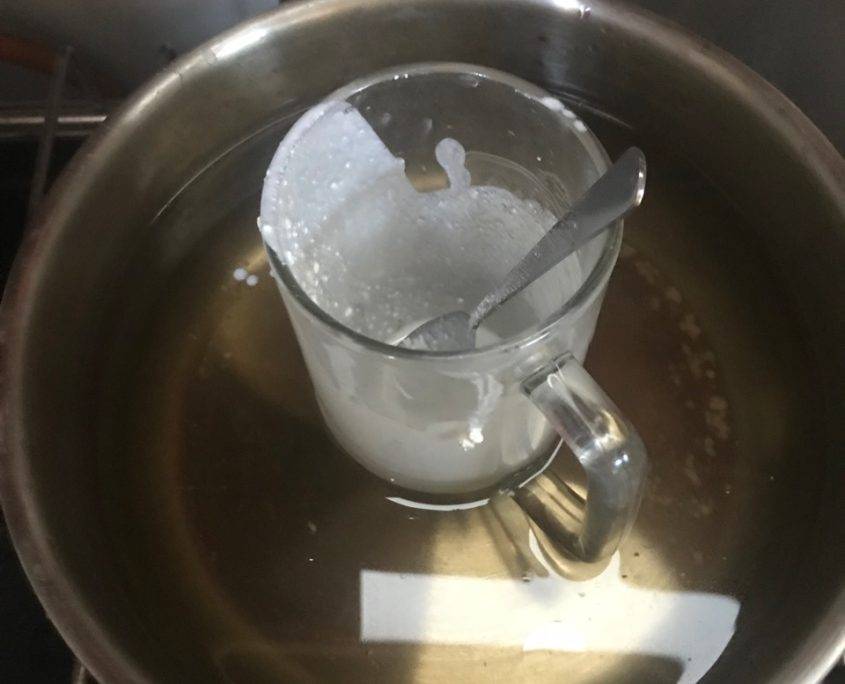
This recipe gives roughly SPF 25. For higher SPF, add an extra spoon of zinc oxide.
This feels like too much work?
Totally fair. Not everyone wants to melt oils au bain marie. If you just want a good reef-safe mineral sunscreen without the DIY, skip to my recommended ready-made mineral sunscreens. Same reef-safe result, less kitchen time.
Step 3: Pour into your container
Reuse whatever you have. I use a small metal tea tin. Other options:
- An old pill jar
- An empty sunscreen or shampoo bottle
- An empty soap pump
- A small glass jar (for home use, not travel)
- A small metal container

Step 4: Let it set
Leave it at room temperature for an hour or two and it will solidify. No need to refrigerate. Store in a cool, dark place when you're not using it.
Step 5: Test it, then go outside and see how it feels on your skin
Apply generously. Rub it in well (mineral sunscreen can leave a slight white cast if you don't spread it properly). Start with a short sun session to see how your skin responds before relying on it for a full day.
Mine feels like a little spa on my skin. The cacao butter smell is strong but I love it. The coconut-almond-jojoba blend absorbs well and leaves my skin soft rather than greasy.
Reapply every 2 hours if you're sweating or in the water, same as any sunscreen.
If you're packing this for a hike, adventure, or sailing trip, you might also like my post and video on trail hygiene and staying cleanish while hiking and wildcamping. Covers the whole natural-care kit you'll want out there.

Where to buy the ingredients
Source as locally as possible. Check your herbal shop, pharmacy, or eco shop first. Here's why local matters. In Morocco and Spain I've found beautiful ingredients at local markets and herb shops for a fraction of the price.
If you can't find them locally, here's where to look by country:
- Netherlands: Natural Heroes stocks every ingredient in this recipe (non-nano zinc oxide, rosehip oil, coconut oil, shea butter, cacao butter, jojoba). One order, done. Big Green Smile NL is a good second option, and Bol.com covers the basic oils.
- UK: Holland & Barrett for the oils and butters. Big Green Smile UK and Natural Collection for the natural skincare basics. Local herbalists tend to stock zinc oxide.
- Germany: Reformhaus, DM, or a local Bioladen for the oils and butters. For zinc oxide and the small-batch specialist stuff, German DIY skincare makers on Etsy are gold. iHerb also ships to Germany cheaply.
- France: Your local herboristerie or biocoop is the first stop. For zinc oxide and anything missing, search small French DIY skincare makers on Etsy or order from iHerb.
- Spain: Herbolarios stock most oils and butters at fair prices. For zinc oxide and harder-to-find things, Etsy Spain or iHerb.
- Australia: iHerb ships to Australia and is usually cheaper than local health shops. Aussie makers on Etsy are another solid route, especially for zinc oxide.
- USA: iHerb for one basket. Etsy US has a big small-batch DIY skincare scene if you want to support a maker. Or grab each ingredient on Amazon US (shopping list below).
- Anywhere else: iHerb ships to most countries. Etsy works almost everywhere too and gets you closer to the person making the thing.
The shopping list below picks up your country and routes you to the closest route.
Full shopping list
The essentials:
- Non-nano zinc oxide powder (the must-have)
- Extra virgin coconut oil
- Almond oil
- Jojoba oil
- Rosehip oil
- Shea butter
- Cacao butter
Optional upgrades:
- Raspberry seed oil (boost SPF to 40-50)
- Au bain marie melting pot (if you want to go fancy)
One-stop browse: iHerb (global) · Natural Heroes (NL/EU)
Choose cold-pressed and organic where possible. The quality matters for shelf life and skin feel.
Zero-waste packaging ideas
Before buying new, check what you already have. Old pill bottles, empty moisturiser jars, tea tins. All perfect. If you do need new, look for small tins or glass jars at your local zero-waste store or my favourites: metal travel tins and small glass jars.
Recommended ready-made mineral sunscreens
Sometimes you don't want to DIY. Or you're flying. Or you just want something tested and ready. These are the ones I've tested. All are mineral (zinc oxide), non-nano, and free of oxybenzone and octinoxate. That matters because “reef friendly” on a label legally means nothing.
Where to shop them, by region:
- Netherlands & Belgium: Ohm (Dutch-made, my personal favourite)
- UK & rest of EU: Green People (UK-made, organic-certified)
- US: Badger (US-made, HEL certified). Picks below auto-route to Amazon US.
- Australia & global: iHerb stocks most reef-safe brands (Badger, Suntribe, Coola, Mineral Fusion) under one shipping order
If I had to choose:
- My personal favourite (EU only): Ohm Sun Safe SPF 30
- Best overall (HEL certified): Badger
- UK & EU pick: Green People
- High sun, long days: Thinksport
- Face and daily use: Thrive
- Sensitive skin and kids: Blue Lizard
- Diving and watersports: Raw Elements
My personal favourite: Ohm Sun Safe SPF 30 (EU only)
This is the one I actually reach for. Ohm Sun Safe SPF 30 is a small Dutch-made mineral sunscreen that's become my go-to in the van. 20% non-nano zinc oxide, 77% certified organic ingredients, with raspberry seed oil, jojoba and cocoa butter. It reflects the sun beautifully, smells warm rather than chemical, and feels caring on the skin instead of plastic-coated.
Best overall: Badger Reef Safe Sport SPF 40
Badger is the only widely-available sunscreen with HEL (Haereticus Environmental Lab) certification, which is the most rigorous reef-safe testing out there. Only 4 ingredients: zinc oxide, sunflower seed oil, vitamin E, beeswax. Woman-owned, family-run, B-Corp certified. Water resistant 80 minutes. I pick this one when I want something simple I don't have to think about.
Check Badger Reef Safe Sport SPF 40 →
For UK & EU readers: Green People Scent-Free Sun Cream SPF 30
Green People is UK-based, organic-certified, and makes one of the cleanest mineral sunscreens I've come across in Europe. Non-nano zinc oxide, no synthetic fragrance, suitable for sensitive skin. If you're in the UK or EU and don't want to wait on US shipping, this is what I'd buy. Bonus: their sunscreens come in a recyclable tube and they donate to marine charities.
Browse Green People natural sunscreens →
For higher SPF: Thinksport SPF 50+
Thinksport is popular with hikers, surfers, and divers. Non-nano zinc oxide, 80-minute water resistance, no PABA, no parabens. A good choice if you want SPF 50+ for tropical conditions or long days outside.
For sensitive skin: Blue Lizard Sensitive SPF 50+
Blue Lizard is 100% mineral, fragrance-free, and made for sensitive skin. The bottle's Smart Cap turns blue in UV light, which is useful as a reapply prompt. Great for kids, babies, and anyone with reactive skin.
Check Blue Lizard Sensitive SPF 50+ →
For face (less white cast): Thrive Natural Care SPF 50
Thrive Natural Care uses 23.5% non-nano zinc oxide but still applies sheer. Of the sunscreens I've tested, this one leaves the least white cast, so it's my pick for face and daily use. Plus the company does regenerative farming and uses recycled plastic tubes.
Check Thrive Natural Care SPF 50 →
For divers and watersports: Raw Elements
Raw Elements is popular with divers and marine biologists. Non-nano zinc oxide, available in a plastic-free tin, certified reef-safe. Denser than lotion-style sunscreens, which means it stays on through swimming and sweating.
Check Raw Elements Face + Body SPF 30 →
Want to compare more brands in one place? iHerb stocks most reef-safe sunscreens (Suntribe, Coola, Mineral Fusion, plus the picks above) under one shipping order.
What to avoid
Skip anything with oxybenzone, octinoxate, octocrylene, avobenzone, homosalate, or octisalate listed as an active ingredient. “Reef friendly” on the label means nothing legally. Read the actual active ingredient list. If it says “zinc oxide” or “titanium dioxide” only, it's mineral. Anything else is chemical.
For a full country-by-country breakdown of the best reef-safe sunscreens (UK, Australia, Netherlands, Spain, Portugal), plus the Oceanica after-sun range and why mainstream sunscreen is a problem for reefs: read my full biodegradable sunscreen guide.
Frequently asked questions
Can homemade sunscreen replace regular sunscreen?
For daily use, moderate sun, and most of life, yes. For extreme conditions (tropical midday sun, long water exposure, very sensitive skin, fair babies), a lab-tested mineral sunscreen like Badger or Blue Lizard is the safer choice. I use DIY most of the time and keep a tested mineral one in the cupboard for high-intensity days.
What SPF does homemade sunscreen give you?
This recipe is approximately SPF 25. Every 1% of zinc oxide in your total mix adds roughly SPF 2. For higher SPF, add more zinc oxide. Plus side: the oils you use add smaller amounts of natural SPF on top.
How long does homemade sunscreen last?
Zinc oxide itself has an indefinite shelf life. The oils and butters last several months to a year when stored in a cool, dark place. The sunscreen degrades faster when exposed to heat or direct sunlight (the exact conditions we take it into). If it starts looking grainy, smells off, or stops applying smoothly, it's time to make a fresh batch.
Is DIY sunscreen waterproof?
Not fully. Some recipes add beeswax or raspberry seed oil for better water resistance, but no sunscreen (DIY or commercial) is fully waterproof. Reapply every 2 hours, especially after swimming or sweating. Same rule as any sunscreen.
Why non-nano zinc oxide specifically?
Non-nano particles are large enough to stay on top of your skin (reflecting UV) without being absorbed into your body. Nano-sized particles can penetrate skin and also cause damage to marine life. Non-nano is the safer choice for both you and the reef.
Can I add essential oils to my DIY sunscreen?
Yes, a few drops of skin-safe essential oils like lavender or chamomile can add a nice scent and soothing properties. Avoid citrus essential oils (lemon, bergamot, orange). They're photosensitising and can actually make your skin burn more easily in the sun.
Will homemade sunscreen make me look white?
A little. All mineral sunscreens leave some white cast because zinc oxide is white and reflects light. Rubbing it in well makes a big difference. In my experience this recipe leaves less white cast than most commercial mineral sunscreens, probably because of the oil blend.
Is it cheaper than buying sunscreen?
Upfront: no. You buy a bunch of ingredients. Long-term: yes. One batch of ingredients makes many tins of sunscreen. I'd estimate the cost per tin drops to €2-4 versus €15-25 for a decent commercial mineral sunscreen.
Can I use this on kids?
Zinc oxide is considered one of the safest sunscreen ingredients for children. The oils in this recipe are also gentle. I'd still patch-test on a small area first and avoid essential oils for very young children. For sensitive skin or babies, a lab-tested mineral sunscreen like Blue Lizard Sensitive or Badger might give you more confidence.
Learn more about sunscreen and the ocean
- Biodegradable Sunscreen Guide: which brands to buy in your country
- The 7 dangerous ingredients of sunscreen
- Why oxybenzone and octinoxate are bad for reefs
- A single drop of sunscreen can kill coral
Related reading
If you liked this, you'll probably like these too:
Natural living and zero waste
- Trail Hygiene: Staying Cleanish on Long Hikes and Wildcamping
- Biodegradable Shampoo for Travel
- Natural Toothbrush: The Miswak Branch
- Zero Waste Travel Kit
- Conscious Gift Guide for Ocean and Outdoor People
For vanlife and off-grid living
Let me know how yours turns out!
If small systems, DIY experiments and stepping out of the supply chain one thing at a time are your thing too, I share more of this slow, hands-on stuff on Patreon.
Disclaimer: opinions are my own. No brand is paying me to write this. Some ingredient links are affiliate links. At no extra cost to you, purchases through this site help me keep creating content about ocean action and natural living.













Brilliant!!
Based on your recipe in the article, what SPF would you estimate this combo to be Suzanne? And based on teh recipe, how much extra Zinc Oxide would I need to add to increase by 10SPF?
Thank you so much for sharing this recipe and knowledge!
Hey Elaine! Thanks for your comment. And good question! I added some more info on this. This recipe, I estimate to be +/- SPF 25. Every percentage of zinc in the mix is around SPF 2. To increase the SPF with 10 it needs + 5% of extra Zinc Oxide which is half a spoon.
Enjoy! And let me know how you go!
Suzanne