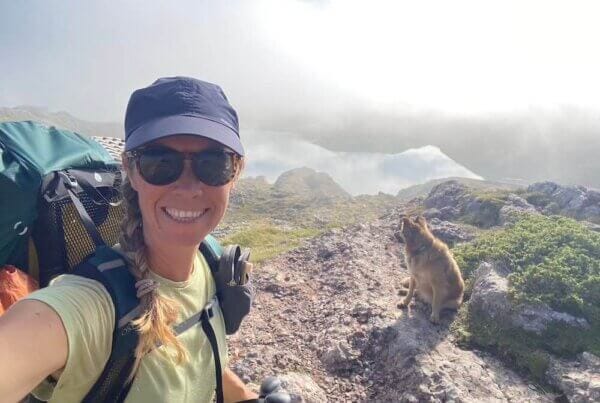

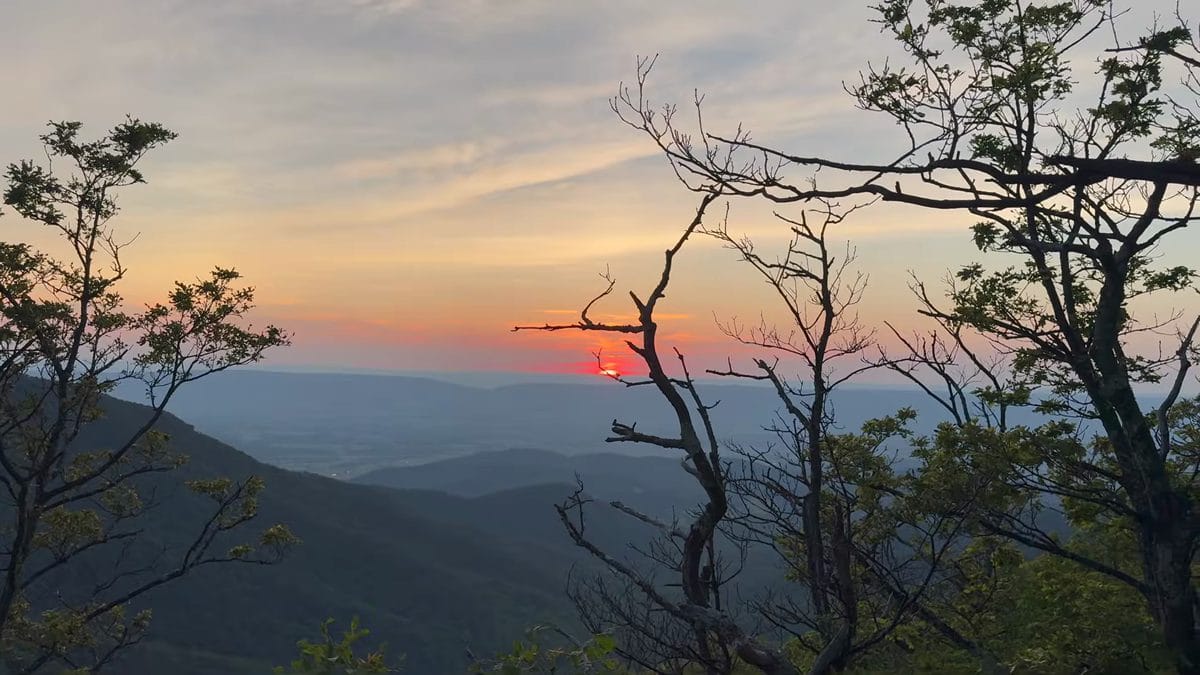
The photo came through at 3am my time. Jonatan on Katahdin, beard longer, the wooden sign behind him. 100 days from Springer Mountain. He typed two words: “I finished.” Then a sunrise photo, fog rolling off Maine like steam.
I haven't hiked the Appalachian Trail myself. Since I met Jonatan, trails have been a constant. He'd already done the PCT, the Colorado Trail, the Arizona Trail, long routes across Europe. Our first date was a long-distance trail across Fuerteventura. We've covered a lot of ground together since: the GR11 across the Pyrenees, the Fisherman's Trail in Portugal, Waitukubuli through Dominica's jungle, the GR131 across Gran Canaria. He always comes back from a trail already thinking about the next one. I see him happiest when he's walking. So when he decided to go for the AT, 2,194 miles NOBO, filming every day, I could only support it.
About 1 in 4 starters finishes. In 2025, 93.5% of thru-hikers were US residents, which makes a Swedish NOBO a bit of an outlier. What follows is the terrain, the gear, the people, the logistics. The things I'd want to know before committing. Jonatan's documentary on YouTube is the deeper companion to all of this.
Watch Jonatan's documentary before you plan a single mile
“I didn't come out here because I needed another hike.” That's the first thing he says on camera, on day one, in Georgia. He'd already done the PCT, the Arizona Trail, the Colorado Trail. He knew what long-distance hiking was. He came to the AT anyway. “Maybe it was curiosity, maybe it was the stories I had heard. Or maybe I just wanted to see what would happen if I kept walking long enough.”
He filmed it while it was unfolding, not after. Not a recap, not highlights. 100 days of daily footage, edited on town days. “How else can you share your experience if you don't bring people along with you?” The tripod (this one) went everywhere with him.
The documentary is here: https://www.youtube.com/watch?v=zxUG2Vpy91I. His full gear breakdown is here: https://www.youtube.com/watch?v=XSYDC2tc-RU.
Everything below makes more sense if you've seen it first.
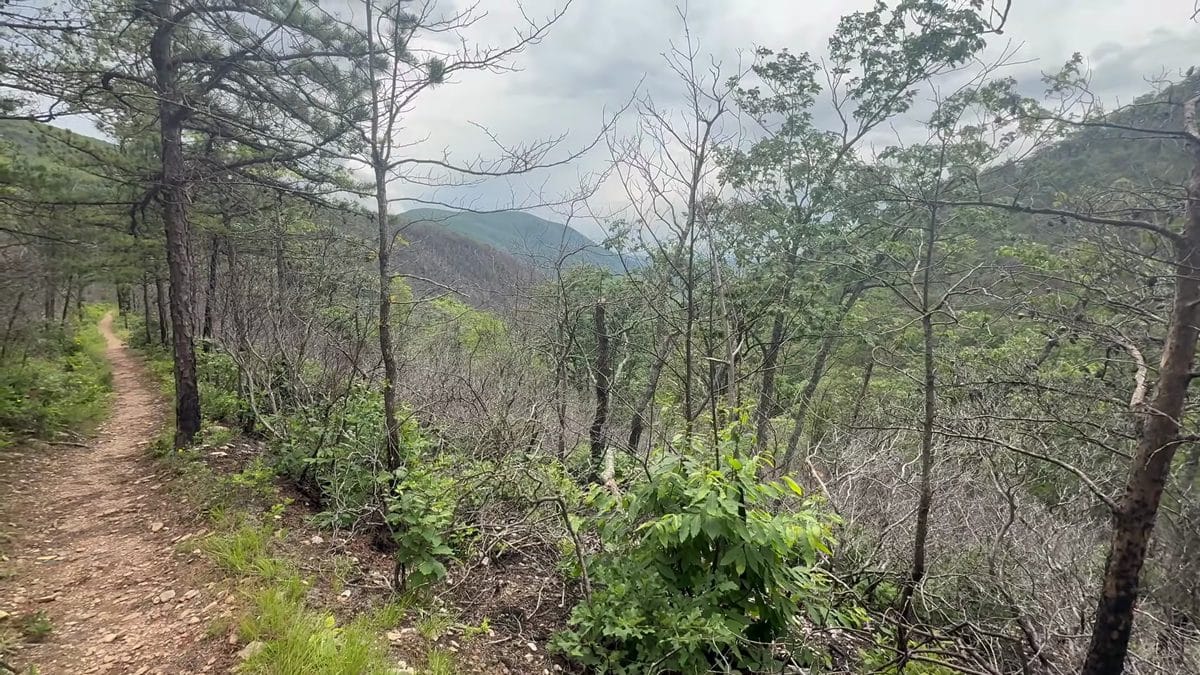
The AT is not the PCT, and that catches experienced hikers off guard
The AT is shorter than the PCT, and has roughly 100,000 feet more elevation gain and loss. Total cumulative climbing is the equivalent of summiting Everest 16 times.
It isn't just the elevation. It's how the trail goes up. No switchbacks. The AT goes straight at climbs, the way a goat would. Wet roots, slick granite, mud, rocks that don't let you find a rhythm. A mile on the AT is not a mile anywhere else.
Jonatan came in with the PCT, the Arizona Trail, the Colorado Trail and the GR11 already in his legs. He still told me, more than once, the AT was harder per mile than anything he'd done. About 1 in 4 thru-hikers finishes, closer to 1 in 5 since 2016. Most people who quit aren't unfit. They've just underestimated what 12 miles a day on this terrain actually costs.
Something I've noticed watching Jonatan over the years: he doesn't push his pace early. He walks lower mileage for the first 500 miles than instinct suggests. His 22-mile daily average came later. The 4-6 month median hiker does 12-15.
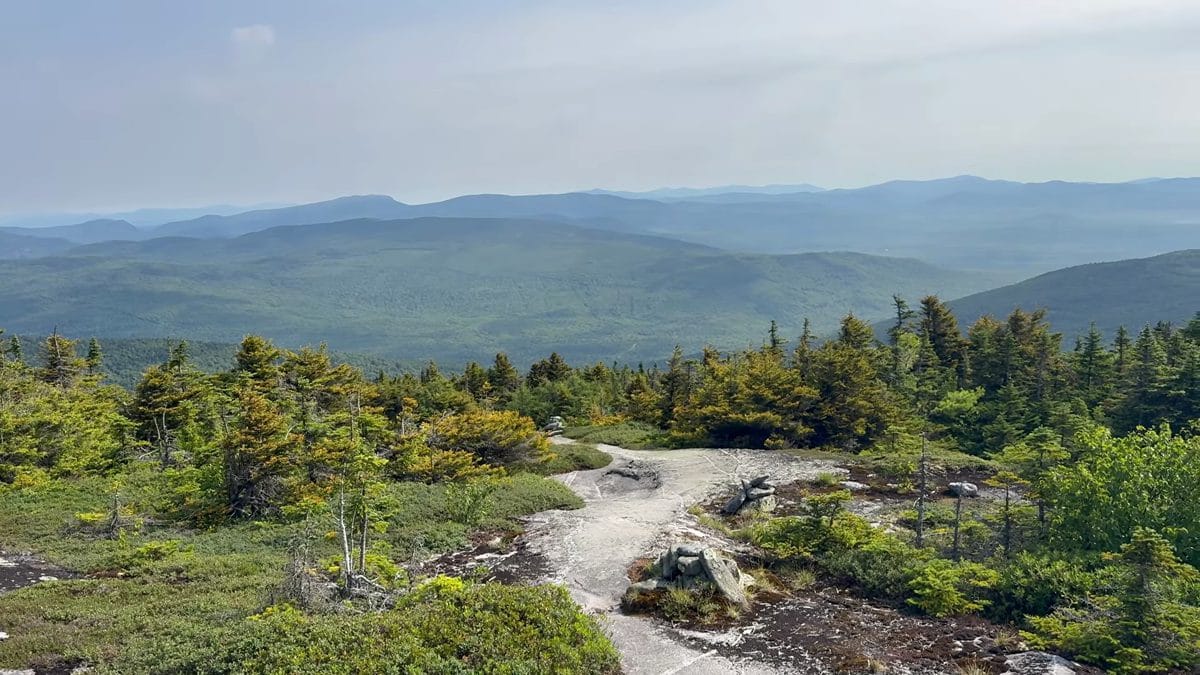
If you've done long trails in Europe, the AT will feel mossier, wetter, more enclosed. Less view, more woods. That's a different kind of head game. My GR11 across the Pyrenees was the opposite: open ridgelines for weeks. Two completely different relationships with the sky.
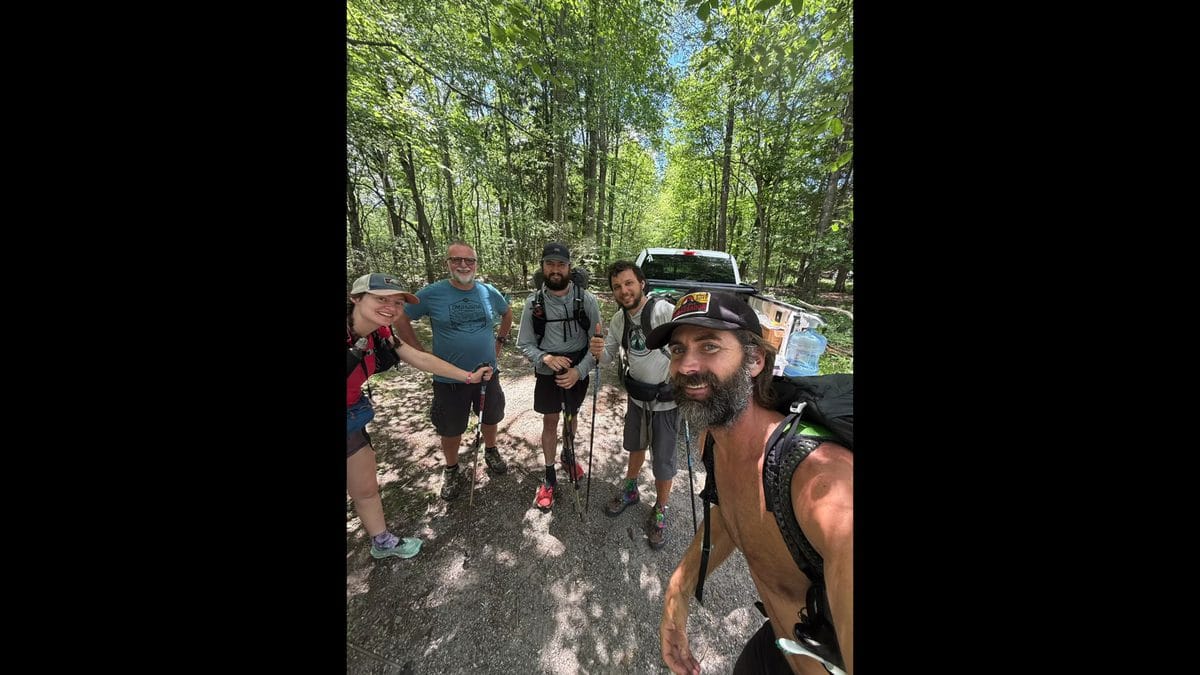
The people are the trail
“You start the journey thinking it's about walking,” Jonatan says near the end of the film. “But along the way you realize it's also about people.”
He walked mostly alone and was almost never lonely. “Most days I walked alone. And I was okay with that. I liked the quiet. But the trail was never lonely for long.”
Trail magic is the shorthand for spontaneous generosity. Cold drinks at a road crossing. A cooler of fruit. A mobile cafe in a parking lot serving pancakes. Trail angels are the people behind it, often former thru-hikers paying it forward. Tramilies are trail families that form from weeks of overlapping pace, the same faces at the same shelters until you're texting each other from town stops.
Two moments from his footage stayed with me. The morning a woman let him pitch his tent in her backyard and then invited him for breakfast. Coffee, blueberries, pancakes. And Natalie and John: “When I was at my lowest point, I was lucky to be invited to Natalie and John's house to recover for a few days. They saved my hike and probably more people's hikes out there.”
“Out there looking after each other becomes normal. You remind someone to drink water. You help hang a food bag. You check that everyone made it in before dark. Little things, but those small things matter.”
“This trail is special. People call it the people's footpath. And after spending time out there, you understand why. It's not just the mountains or the miles. It's the people.”
What 100 days actually does to you
“You don't really know what day it is. And somehow that feels right.”
He said that around day 50, somewhere in New England. By that point: “You live with the conditions, not a schedule. And life becomes pretty simple.”
The body adapts in about two weeks. The mental shift takes longer and goes further. “Walk, eat, film, edit and sleep. And then do it all again tomorrow. Days becomes weeks on the trail and what seemed to be so difficult in the beginning starts to become easier and you start to adapt more and more to your surroundings.”
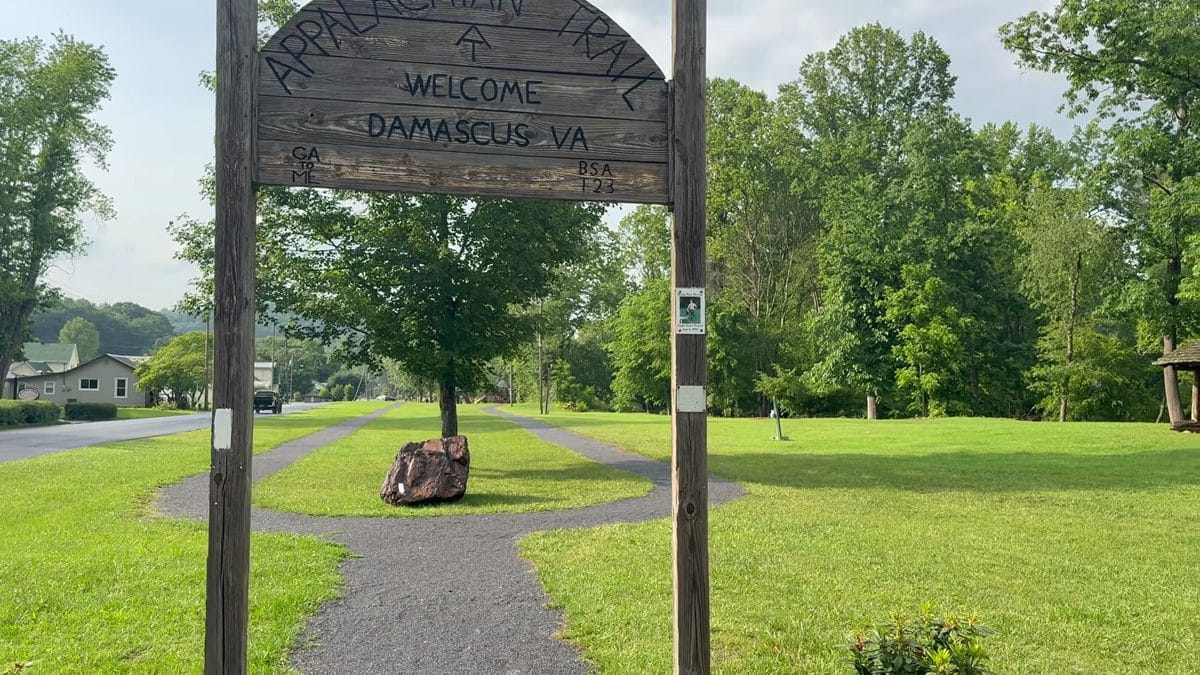
The first 2-3 weeks are the hardest. Most people who quit do it before week three. If you can stay past Damascus, Virginia, around mile 470, your odds improve significantly.
“And yes, you do change out there. Nothing dramatic, just gradually, over time. You become more confident in your own decisions. You trust yourself to figure out things.” More rain than he thought he could handle. Steeper climbs than he wanted. “You realize you can handle more than you thought.”
I had my own version of this on the Waitukubuli National Trail in Dominica, in jungle so wet I stopped trying to dry anything. After a few days you stop fighting the conditions. The trail just becomes the weather.
The gear that survived 2,200 miles
“You carry what matters and leave the rest behind.” What actually made it from Georgia to Maine:
The big three:
- Pack: Osprey Exos 58. The frame keeps the load off your back, which matters in AT humidity. The sternum strap buckle has a known tendency to snap on long trips, Osprey replaces it, worth knowing in advance. Women's-fit version: my Osprey Eja 48 review.
- Tent: Big Agnes Fly Creek. Solo, ultralight, freestanding. Handled the AT's rain when sited well. Tight inside if you're tall.
- Sleep system: Thermarest NeoAir pad, Sea to Summit pillow. The pad crinkles loud enough to wake shelter neighbours, but it's warm, light, packs tiny.
Around camp: a Thermarest sitting pad for breaks on rocks, and the AT has a lot of rocks. An Optimus stove. Swedish brand, reliable simmer, weaker in cold.
Footwear: trail runners broke 90% usage in 2025 for the first time. Altra (93 users) and Topo Athletic (85) were the top two. Jonatan rotated Topo, Hoka and Altra, one pair per roughly 520 miles, four pairs total. Darn Tough socks the whole way, same two pairs. Never had to claim the lifetime warranty.
Poles: LEKI from the Smokies north. AT descents are relentless. Knees feel them cumulatively. Poles spread the load and steady you on wet rock.
Baselayers: BRANWYN merino underwear, Georgia to Maine. Merino doesn't hold sweat smell the way synthetics do. On a 100-day hike that matters more than it sounds.
Power: Anker Nano III charger, paired with a small power bank for charging the camera in town.
Don't copy a list. Use it as a reference point. Whatever you carry has to finish, not just look right at REI.
The most-used piece of kit, and the most likely to fail, is the water filter.
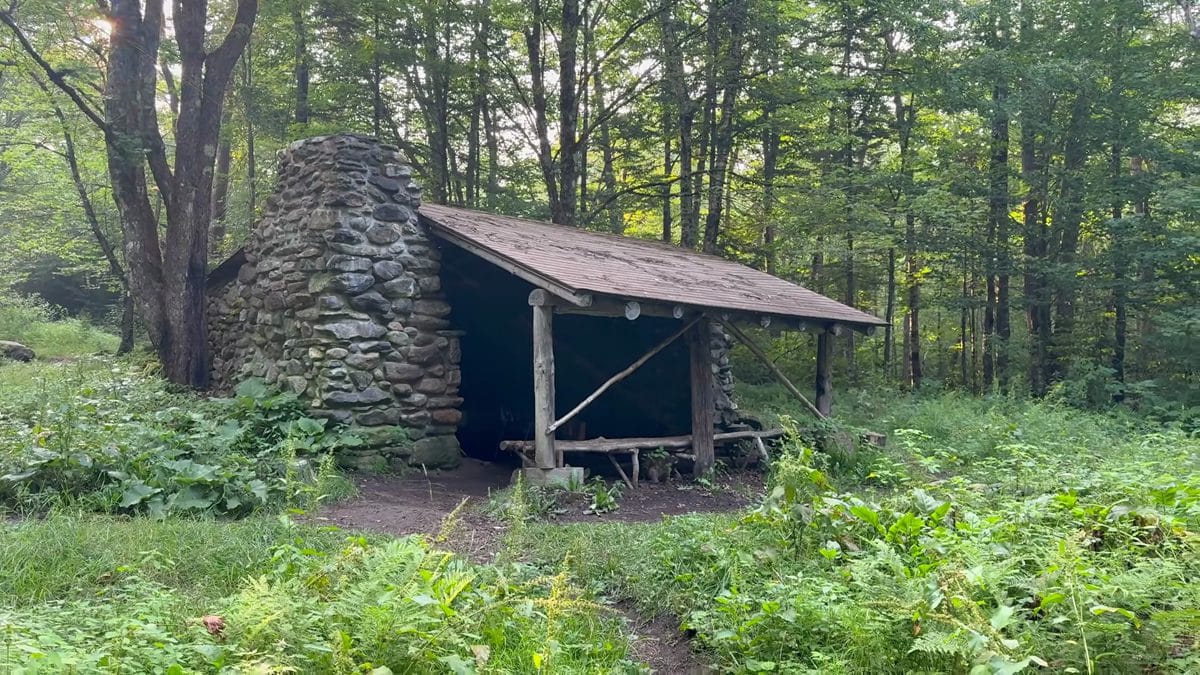
Water on the AT and why the Sawyer Squeeze keeps winning
93% of 2025 AT thru-hikers used the Sawyer Squeeze. Including Jonatan. Including the ones whose pouches delaminated 800 miles in.
The filter itself lasts forever. 1 million gallons rated, 3 ounces, the warranty is real. The included bag is the problem. Sawyer's pouches have a documented history of pinhole and seam failures under repeated squeezing. Almost every long-time AT hiker has a story about a leak in the middle of nowhere.
What most hikers land on by Damascus:
- Smartwater bottle threaded directly onto the filter. Free, at every gas station and Dollar General on the trail.
- CNOC Vecto bag. More durable, faster fill from shallow streams, works as a dirty-water bladder.
Backflush weekly at minimum or the flow drops to a trickle.
Cold-weather note: don't let the filter freeze. A frozen filter is broken, even if it looks fine. Sleep with it in your quilt in the Smokies and the Whites.
Buy the Squeeze, ditch the pouch on day one, carry a Smartwater bottle.
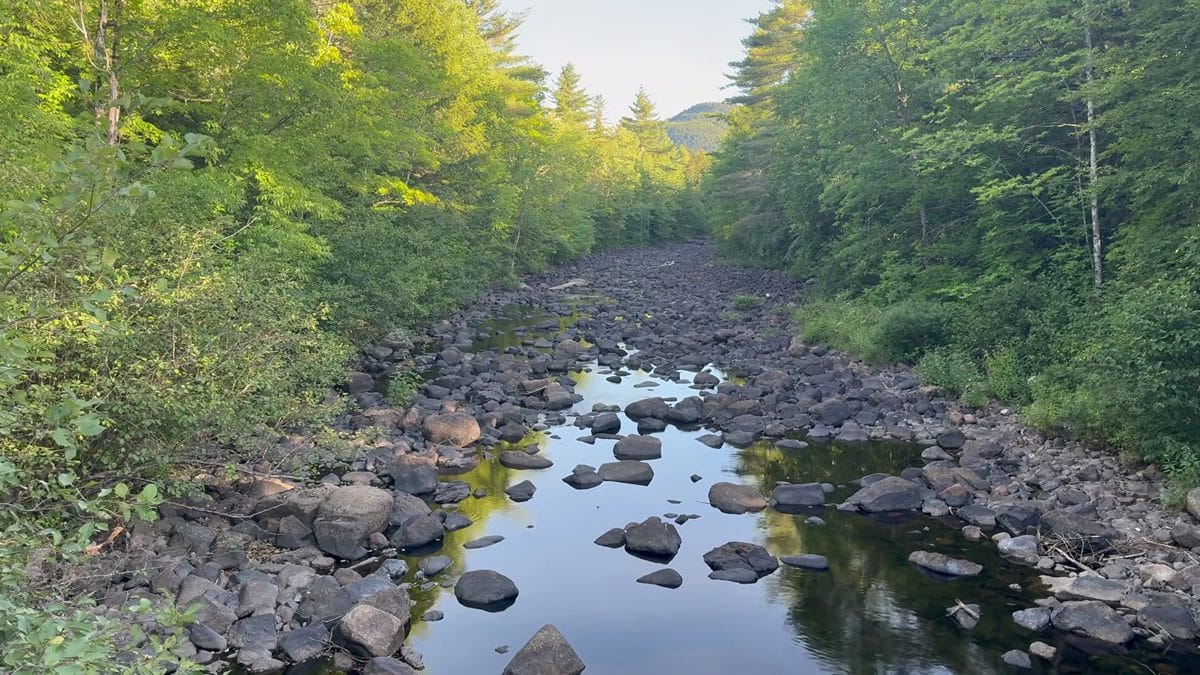
2025 trail conditions: what Hurricane Helene left behind
When Jonatan started in 2025, large stretches of North Carolina and Tennessee were still recovering from Hurricane Helene (September 2024). The trail was open. It just wasn't quite the trail it had been.
Status as of April 2025:
- Roughly 5 miles closed in NC/TN.
- Two active Tennessee detours: a 3.6-mile walking detour around a collapsed bridge, and a 6-mile detour near the destroyed Cherry Gap Shelter.
- The Chestoa Pike Bridge in Erwin, Tennessee was destroyed. Bridge construction is expected to begin in 2026. No ferry service planned.
- Storm-damaged areas remain dynamic, with trees still falling and soil still eroding.
Check ATC trail updates within two weeks of your start date. Expect detours, not closures. Plan extra time for the Tennessee section and budget for an extra resupply if detours add road miles.
Jonatan filmed through the detour sections. Locals went out of their way for hikers in 2025, and his footage has more than one example. One family fed him dinner and refused payment because, as they put it, the trail had brought enough good back to their town to be worth feeding.
Conditions change yearly. Check, adapt, support local.
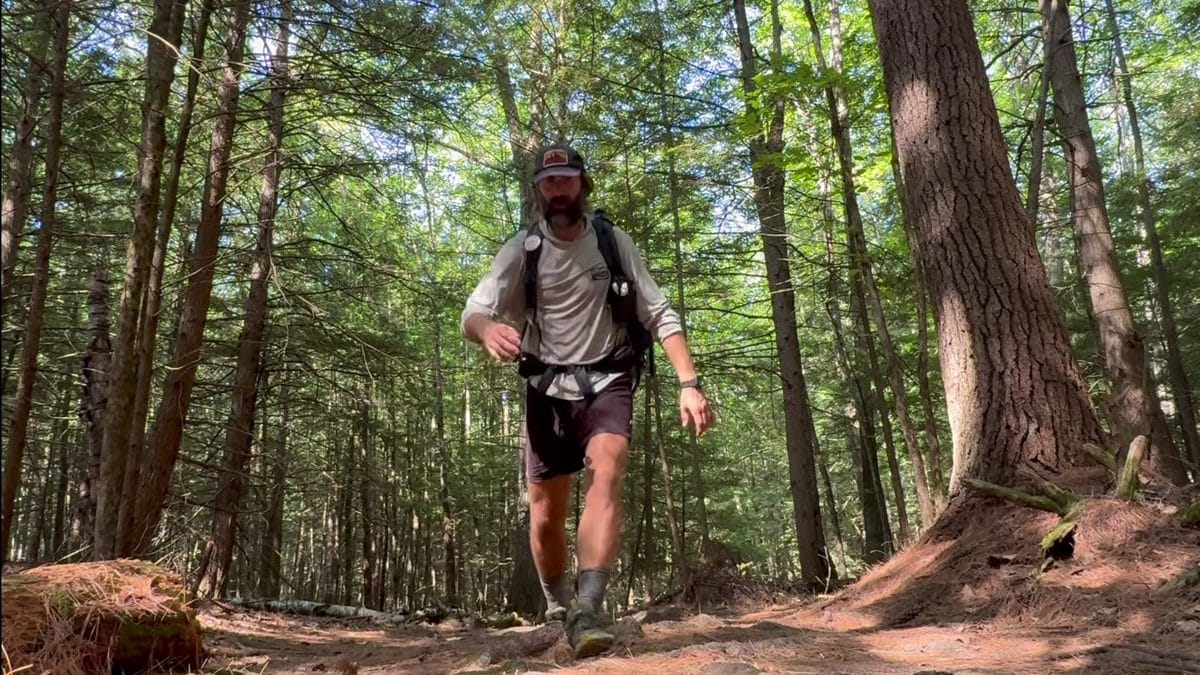
Start window and pacing: why 22 miles a day is not the goal
Jonatan averaged 22 miles a day. “I walked at my own pace. Sometimes faster than most. Not because I was in a hurry. That's just how I like to do it.” The 4-6 month median thru-hiker averages 12-15. Both finished. Only one of them needed knee bracing by Maine.
NOBO start window: late February to mid-April from Springer. March is now the bubble, with 50-70 hikers starting per day at peak. Earlier means colder and emptier shelters. Later means warmer hiking but a tighter Katahdin window. Baxter State Park typically stops issuing summit permits after October 15.
A realistic pacing arc looks something like:
- First 2 weeks: 8-12 miles a day.
- Week 3 to Damascus: 12-15.
- Mid-trail: 15-20.
- Whites and Maine: drops back to 10-15.
- Total finish time: 4-6 months for most, 100-130 days for the fast crowd.
Give yourself 5 months minimum unless you've done a long trail before. Add a week buffer for injury. The Whites and Maine come at the end, when you're tired and your gear is worn, and they're not easy terrain. A 4-month plan has no buffer. A 5-month plan does.
What I keep seeing on long trails, including the GR11: most injuries happen in the first 30 days, when ego pushes mileage past what the body can absorb. Start slow, finish standing.
Jonatan's 100 days is an outlier, not a target.
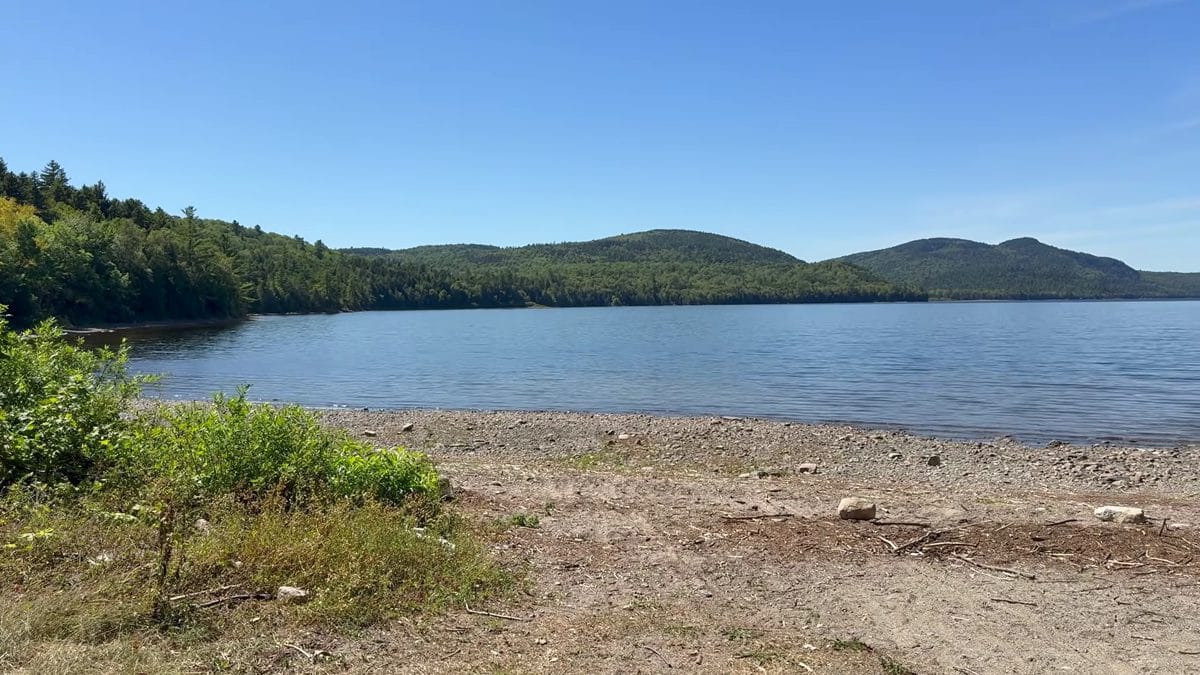
Filming on trail while walking 22 miles a day
“At first, filming every day felt like a challenge.” By week 2 it was just part of the routine. “It helped me notice how each day felt, instead of letting them blur together.”
His workflow, from his footage and what he told me:
- Camera lived in a shoulder strap pocket so he could grab it without taking the pack off.
- Tripod every day. Self-shots, time-lapses, evening camp footage.
- Editing only on town days, never on trail. Every experienced trail vlogger says this. It's the one piece of advice that actually matters.
- Power: Anker Nano III plus a power bank, charging in trail towns every 4-5 days.
The trade-offs are real. “The last thing you want to do is talk to a camera. Because you have other things to deal with, like staying warm and dry.” Camera and tripod add weight. Filming slows your pace. Editing eats town days. “But after a while, to be honest, it became part of my rhythm.”
“I'm grateful that I decided to vlog my journey. First of all for my own memories, so I wouldn't forget how it really felt.”
If you want to document your hike, commit to something small enough to sustain on a bad day. A 60-second clip. A voice memo at lunch. That's it. His full gear breakdown video is here.
Food, resupply, and the town-day rhythm
“Town feels different after a while. Louder and busier. But also familiar. A place to rest, do laundry, recharge, eat something warm. And then you head back out again.”
Resupply reality on the AT: most thru-hikers buy as they go. Gas stations, Dollar Generals, outfitters, the occasional actual grocery store. Mail drops are for specific dietary needs. Resupply gaps are typically 3-5 days, with the 100-Mile Wilderness in Maine being the longest stretch.
Calories: 4,000-5,000 a day on trail. Most people lose weight anyway. Town meals aren't optional, they're where you rebuild. Two breakfasts. Two dinners. Ice cream at the end is a thru-hiker tradition for a reason.
Budget: 2025 average on-trail cost was around $7,680. Average gear spend $2,113. Town stays are the biggest variable. Hostels at $25-40 a bed, motels $80-120. Roughly $30-40 a day on trail, $80-150 a day in town. The ratio of town days to trail days drives your real budget.
Jonatan's town protocol: shower, laundry, food, edit, sleep. Same order every time. Removes decisions when your brain is cooked.
Navigation, safety, and the European logistics question
Jonatan is Swedish, which put him in the 6.5% of 2025 AT thru-hikers who weren't US residents. Small enough group that the logistics are worth covering.
Navigation. FarOut (formerly Guthook) is the de facto AT app. Water sources, shelters, town services, hiker comments updated daily. The white blaze system marks the trail with a reliability that makes the GR11 feel like guesswork in comparison. For offline mapping and pre-trip route planning, Gaia GPS is worth adding. More in my review of the best hiking apps for thru-hiking in 2026.
Safety. Garmin inReach Mini for the stretches without cell coverage. Most of Maine, parts of the Smokies. Bear canisters are only required in specific zones. Tick checks every single night. Lyme disease is the AT's most underrated risk, more dangerous than the bears by a long way.
European logistics, briefly. B-2 visa or ESTA. ESTA gives 90 days, which isn't enough for most thru-hikes. Jonatan's 100 days sat right at the edge. The B-2, with up to 6 months, is what the standard 4-6 month hike needs. Health insurance with evacuation cover is not optional. I use SafetyWing for long international trips. An Airalo eSIM handles US connectivity in trail towns without a local SIM contract. Most NOBO finishers fly out of Bangor or Portland.
Appalachian Trail FAQ
How long does it take to hike the Appalachian Trail?
Most thru-hikers finish in 4-6 months. The 2025 average was around 5 months. Fast hikers like Jonatan (100 days) average 22 miles a day. The median does 12-15. About 1 in 4 starters finishes the full 2,194 miles. Plan 5 months minimum unless you've done a long trail before, plus buffer for injury.
How much does an AT thru-hike cost in 2025?
On-trail costs averaged about $7,680 in 2025, with gear adding around $2,113 on average. Town stays are the biggest swing: hostels at $25-40 a night, motels at $80-120. Plan for $1,500-$2,000 a month on trail, plus a $500-$1,000 emergency fund. International hikers add flights and insurance on top.
Is the Appalachian Trail dangerous?
The biggest risks are mundane. Tick-borne Lyme disease. Hypothermia from cold rain. Falls on wet rock or roots. Bears are managed, not feared, and shelters have bear cables in most sections. Carry a satellite communicator for stretches with no cell coverage, and do tick checks every night. Water-related illness is rare with a proper filter.
Can I hike the AT as a beginner?
Most thru-hikers start with little long-distance experience and the trail teaches you. The first 500 miles do it the hard way. Keep mileage low early (8-12 a day in week one), listen to your feet, and don't try to keep up with the bubble. Section hiking is a softer entry if a full thru-hike feels too big right now.
Do I need a permit to hike the Appalachian Trail?
No single permit covers the whole trail. You'll need a Great Smoky Mountains permit (around $40 for thru-hikers, valid 8 days), a Baxter State Park reservation for the Katahdin summit, and smaller park permits in Shenandoah and elsewhere. Register your thru-hike voluntarily with the Appalachian Trail Conservancy. It's free and it helps trail management.
After the trail
“The journey is full of moments and every long trail changes you a little. Sometimes slowly, sometimes in a way you don't notice until later.”
What Jonatan brought home wasn't a record. “I'm very happy that I decided to come out here and do the Appalachian Trail and that I was able to do it.”
If you want the full story, watch his documentary. If you're planning your own hike, save this and come back the week before you fly to Atlanta.
“It's never too late to go for a walk.”
Stay wild.
Follow the journey
Some links on this page are affiliate links. If you buy through them, I may earn a small commission at no extra cost to you. I only recommend things I or people I trust actually use.