
Table of Contents
- Fisherman's Trail Stages: All 13 Stages at a Glance
- Where to Stay on the Fisherman's Trail: Quick Version
- Rather Someone Else Sort the Logistics? Guided and Self-Guided Tour Options
- How We Hiked the Fisherman's Trail
- Video: What the Fisherman's Trail Actually Looks Like
- Reality Check
- What Walking the Fisherman's Trail Is Really Like
- What the Trail Taught Me
- Planning Your Fisherman's Trail Hike
- Camping and Accommodation on the Fisherman's Trail
- What to Pack for Hiking the Fisherman's Trail
- Best Time to Walk the Fisherman's Trail in Portugal
- A Few More Tips for Hiking the Fisherman's Trail
- Final Thoughts
- Recommended Links & Resources
- Fisherman's Trail FAQ
- What is the difficulty of the Fisherman's Trail?
- Do I start the Fisherman's Trail in Porto Covo or São Torpes?
- Is the Fisherman's Trail in Portugal difficult?
- How long does it take to hike the Fisherman's Trail?
- What is the best part of the trail?
- Can you hike the Fisherman's Trail with a dog?
- Do you need to book accommodation in advance?
- What is the best time to hike the Fisherman's Trail?
- Can you wild camp on the Fisherman's Trail?
- How do you navigate the trail?
- How do you get back to the start?
Hey wild one. I'm writing this from my van somewhere along the fisherman's trail. The backpack still to unpack, Wingo my dog snoozing next to me, and the Atlantic wave sounds in the background.
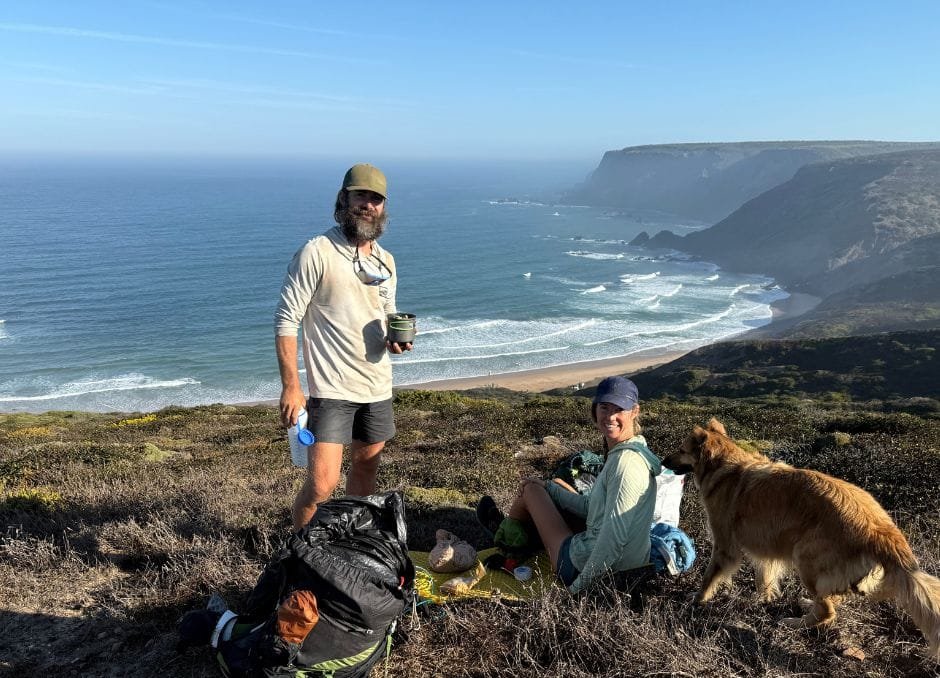
This is my complete guide to hiking the Fisherman's Trail in Portugal. 230 km of coastal cliffs, sandy beaches, fishing villages, and endless Atlantic views. I hiked the full route with my boyfriend Jonatan and my dog Wingo and I'll walk you through the 13 stages, where to stay, best time to go, what to pack, and how to plan it.
The Fisherman's Trail (Trilho dos Pescadores) is a 230 km coastal long-distance hiking route in Portugal, part of the Rota Vicentina network. It's well marked, beginner friendly, and one of the most accessible thru-hikes in Europe.
From experience comes awareness. From caring comes action. That's why I walk trails like this. To connect myself and you to nature! I've hiked 10 long-distance trails now, over 2,000 km on foot, and this coastal walk on Portugal's Rota Vicentina is one I'd happily point any beginner towards. Perfect as a first multi-day trail. It's so beautiful, whether you're a seasoned hiker or just dipping your toes in.
Can't find the answer in this guide? Drop a comment. And let's connect on YouTube and Instagram.
The Fisherman's Trail in a nutshell
- Distance: 230 km along the Atlantic coast
- Stages: 13 official stages
- How long: 9 to 14 days (we did it in 12, with our dog)
- Start and End: São Torpes or Porto Covo to Lagos or Odeceixe
- Difficulty: Easy to moderate. The sand is the real challenge.
- Best time: April to June, or September to October
- Dog friendly: Yes, just watch for territorial farm dogs
- Where to sleep: Hostels, guesthouses, small hotels, campsites, or a tent
Not sure if you're actually ready for your own hike?
Between us, 10,000+ km on foot PCT, AT, GR11, Fisherman's Trail, and many more. We made the readiness check we wish someone had given us before our first long walks. 5 minutes. Take the check →
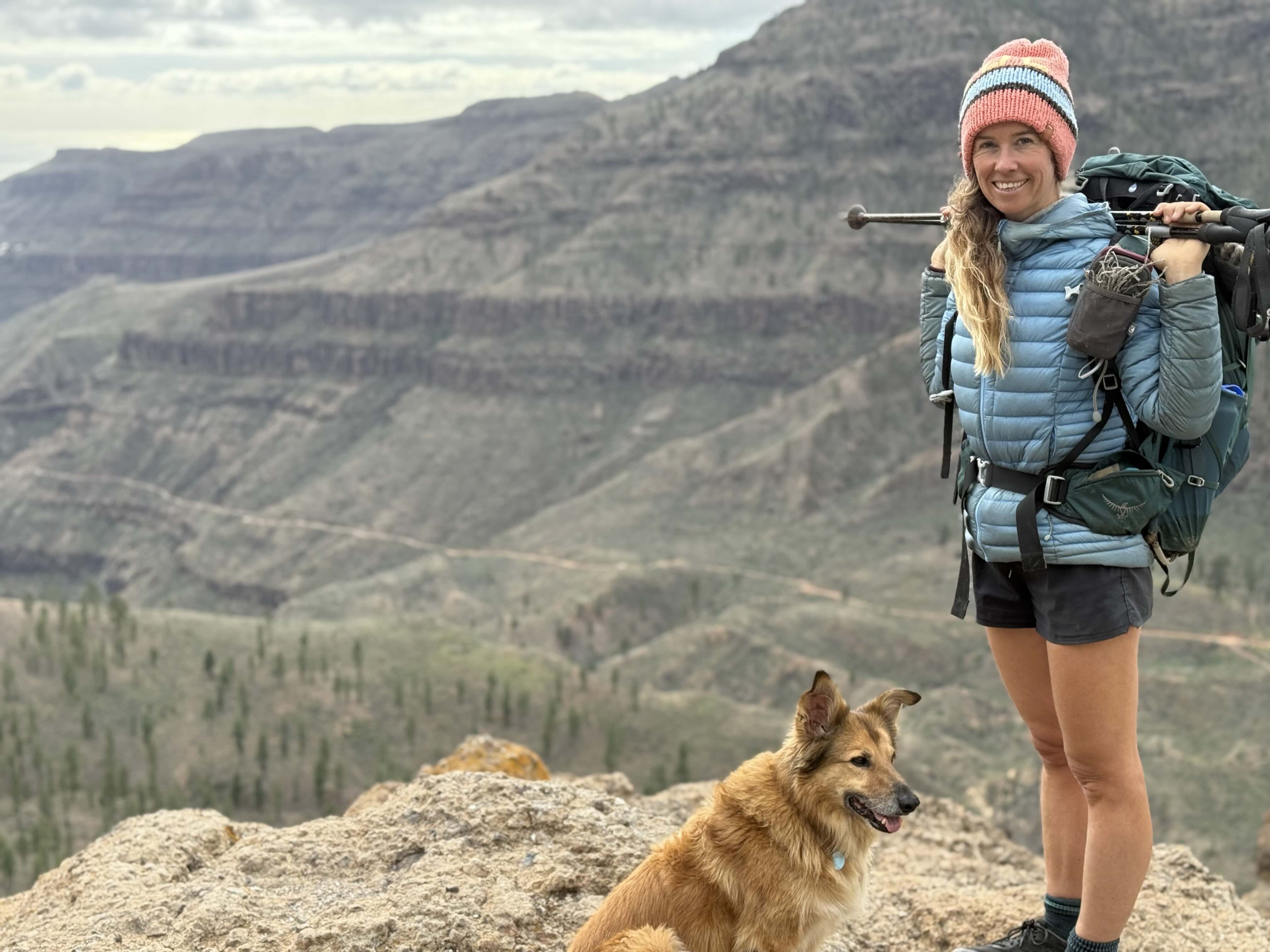
I already knew many parts of the Portuguese coastline through surf, sailing and vanlife living, so I was wondering how excited I would actually be to hike it. But walking the Fisherman's Trail, also known as Trilho dos Pescadores, still felt like a thing I had to do.
This trail in Portugal is part of the Rota Vicentina network in the Alentejo and Algarve regions and connects villages like Porto Covo, Vila Nova de Milfontes, Almograve, Zambujeira do Mar, Azenha do Mar, Odeceixe, and later Lagos in the Algarve. It's a beautiful coastal route for a self-guided walking holiday and one of the most accessible long-distance hiking options in southern Portugal.
The Fisherman's Trail is well marked, beginner friendly, and ideal if you want a coastal hike along the cliffs and beaches of Portugal without complicated ascents, descents and logistics.
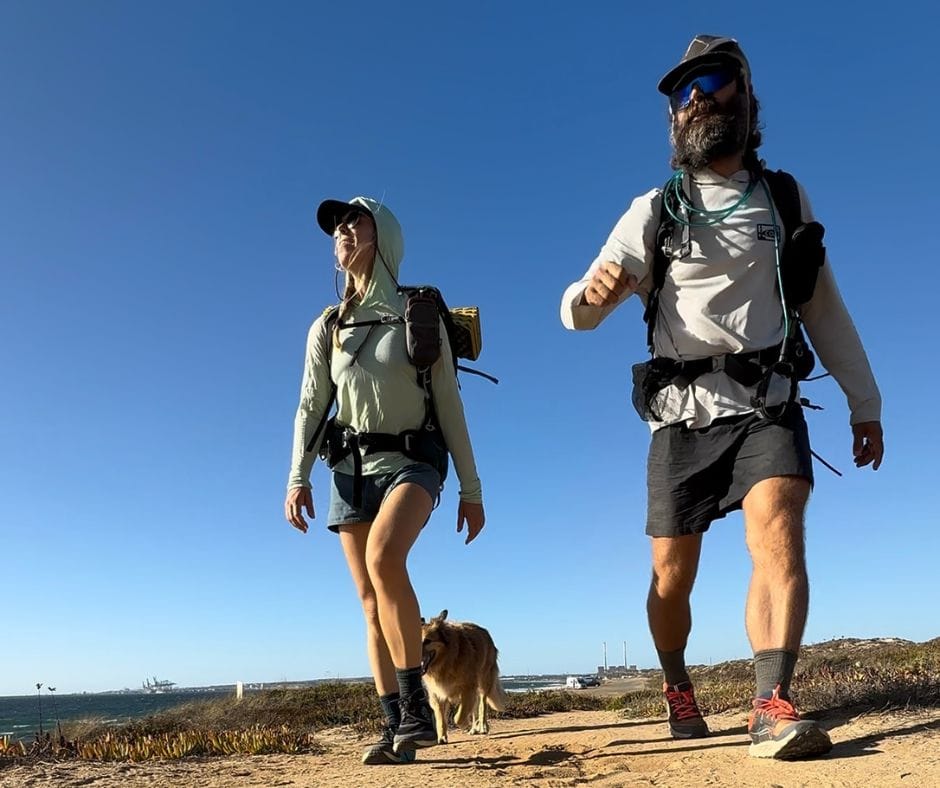
Fisherman's Trail Stages: All 13 Stages at a Glance
Here's a quick overview of the 13 official stages of the Fisherman's Trail from Porto Covo to Lagos. Distances are approximate and depend on route choices (low tide shortcuts, inland detours). For exact stage maps, see the official Rota Vicentina website.
| Stage | From | To | Distance | Difficulty |
|---|---|---|---|---|
| 1 | São Torpes | Porto Covo | ~10 km | Easy |
| 2 | Porto Covo | Vila Nova de Milfontes | ~20 km | Moderate (lots of sand) |
| 3 | Vila Nova de Milfontes | Almograve | ~15 km | Easy-Moderate |
| 4 | Almograve | Zambujeira do Mar | ~22 km | Moderate |
| 5 | Zambujeira do Mar | Odeceixe | ~18 km | Moderate |
| 6 | Odeceixe | Aljezur | ~18 km | Moderate |
| 7 | Aljezur | Arrifana | ~15 km | Easy-Moderate |
| 8 | Arrifana | Carrapateira | ~19 km | Moderate |
| 9 | Carrapateira | Vila do Bispo | ~22 km | Moderate |
| 10 | Vila do Bispo | Sagres | ~19 km | Moderate |
| 11 | Sagres | Salema | ~22 km | Moderate |
| 12 | Salema | Luz | ~11 km | Easy |
| 13 | Luz | Lagos | ~10 km | Easy |
Total: approximately 226-230 km depending on route choices.
Where to Stay on the Fisherman's Trail: Quick Version
The short answer on accommodation per town. Detailed breakdown per village is further down the post. Booking beds ahead is the part of this trail that takes the most planning, so if you're hiking without a tent, spend a bit of time on this.
| Town (end of stage) | Budget | Difficulty to book | My top pick |
|---|---|---|---|
| Porto Covo | €25-80 | Book ahead in summer | Ahoy Porto Covo Hostel |
| Vila Nova de Milfontes | €23-70 | Easy, lots of options | Opa Hostel Milfontes |
| Almograve / Zambujeira | €24-55 | Book ahead in summer | Almograve Beach Hostel |
| Odeceixe | €23-65 | Easy | Surf Seixe Guesthouse |
| Aljezur / Arrifana | €34-65 | Book ahead in summer | The Lighthouse Hostel |
| Vila do Bispo | €29+ | Book early, limited options | Algarve Surf Hostel |
| Sagres | €28-50 | Easy to book | The Lighthouse Sagres |
| Burgau | €30+ | Book early, few options | Aloha Burgau |
| Salema | €55+ | Book early, very limited | Salema Eco Camp |
| Luz | €32+ | Easy | Club House CVL |
| Lagos (finish!) | €13-100+ | Easy, loads of options | Lagos City Center Hostel |
Tip: the ‘free cancellation' filter on booking.com is your best friend here. Book the hard-to-get towns with flexibility and cancel if plans change.
Book these three towns first, or you might be in trouble
There are 3 towns where accommodation is genuinely tricky: Salema, Vila do Bispo, and Burgau. Small villages, few budget beds, and they book up fast (especially April-June and September-October, when most hikers go). If you're hiking without a tent, sort these first. The rest of the trail you can figure out as you go. Booking.com with free cancellation is the safest bet so you can still pivot if weather or pace changes.
Rather Someone Else Sort the Logistics? Guided and Self-Guided Tour Options
Planning your own accommodation for 13 nights can feel like a lot. For me that's part of the adventure, but if you'd rather let someone else sort the sleeping arrangements and luggage, there are some good options out there.
Self-guided: they book everything, you walk at your own pace
Self-guided tours are great if you want the freedom of walking alone without having to book 13 accommodations yourself. The operator picks the guesthouses, transfers your luggage between stages, and gives you route notes and GPS maps. You just walk.
The main options come from local Portuguese operators and international walking specialists. Availability changes through the year (some sell out months ahead in spring), so the easiest way to see what's bookable right now is to browse current self-guided walking tours in Portugal on TourRadar. They list live pricing and dates from multiple operators in one place. Portugal A2Z is one local Portuguese operator I'd look at if their dates work.
Fully guided: walk with a local guide and a small group
If you'd rather walk with a group and a guide, Intrepid Travel's 8-day Rota Vicentina tour is a solid option (Lisbon to Sagres). Intrepid have been running small-group adventure trips for 40+ years so you know what you're getting. For more guided options, browse all coastal walking tours in Portugal.
For a shorter taster, there's a guided day hike out of Sagres on GetYourGuide which is more of a day-tour style experience.
My take
I hiked this trail very spontaneous and with a tent to have more flexibility. For me, figuring things out as I go is half the reason to be on a trail. But I get that it's not for everyone. And also this trail has become quite popular, in some months it needs some anticipation to be able to do it. If the planning stresses you more than the walking, a (self-guided) tour is a convenient option. This trail is too beautiful not to do.
How We Hiked the Fisherman's Trail
We began at Praia de São Torpes near Sines, the official start of the trail, and walked south to Lagos in the Algarve. Many hikers also choose to start in Porto Covo, but to my knowledge, the actual start of the Fisherman's Trail is in São Torpes. And as I'm kind of a purist, I like to walk the trail from the very start to the very end. In São Torpes, you'll find the first trail sign and a map of the Fisherman's Trail (on the north side of the beach). You'll spot the first blue and green Rota Vicentina trail marker and get the adventure started.
A big reason we chose the Fisherman's Trail is because it was simply on our way south. Like the birds moving with the seasons, so do we. Living nomadically by sail, van, and for now by foot. Jonatan had just come back from hiking 3,500 km on the Appalachian Trail in 100 days and what better way to catch up on some quality time than going on a multi-day walk together.
There are 13 official stages. We more or less did a stage a day which is very doable. If you are a fast hiker you can combine some stages. As we were hiking with Wingo we took lots of breaks.
Walking south meant the northwest winds were behind us. In late September / early October we had comfortable temperatures, steady breezes, still quite a few daylight hours, and fairly quiet cliffs and beaches. A great window for the Fisherman's Trail.
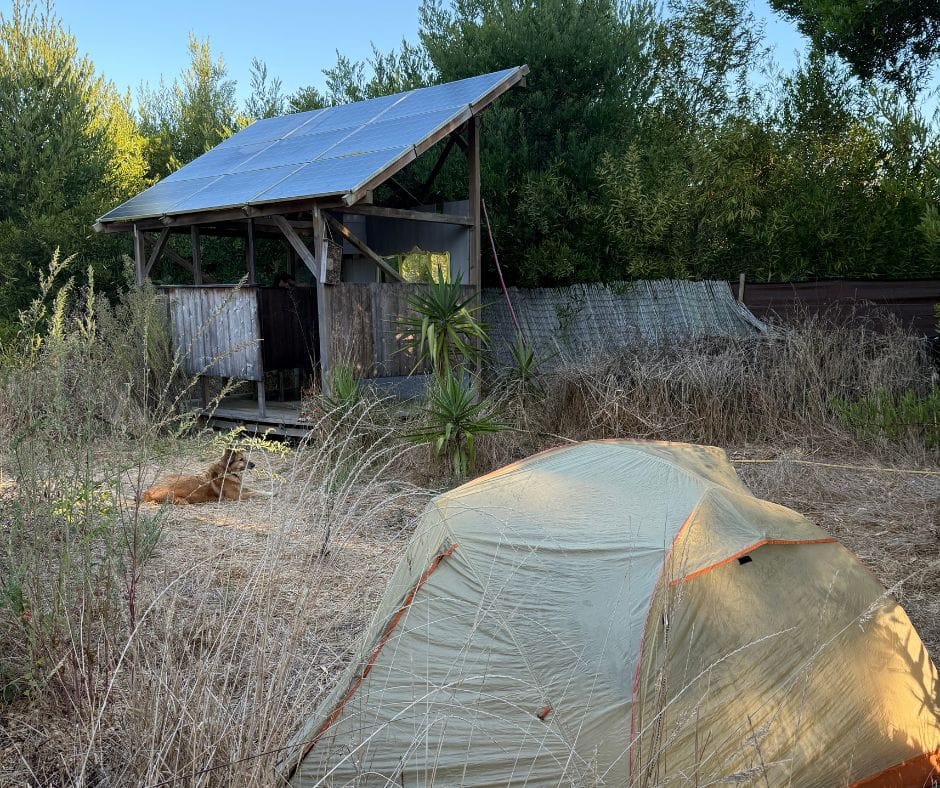
We carried a tent because we hiked with Wingo. This gave us flexibility to wing it a little bit, stay at campsites, backyards, or with buddies from the Ocean Nomads network. We ended up sleeping in all kinds of places. Small campsites, gardens, invitations from community members, and one night even in a hostel. The trail always provides breakfast with a view.
Accommodation options along the route are plentiful if you prefer not to camp but also they are often booked out in advance, and it can add up with the costs. Bringing a tent is the most budget-friendly and laid-back way to hike the Fisherman's Trail. Or you team up with fellow hikers to share accommodation.
After finishing near Lagos, we hitchhiked back to Sines. It took us 7 different cars and the full day but we made it. If you're without a dog you can simply take the bus.
Video: What the Fisherman's Trail Actually Looks Like
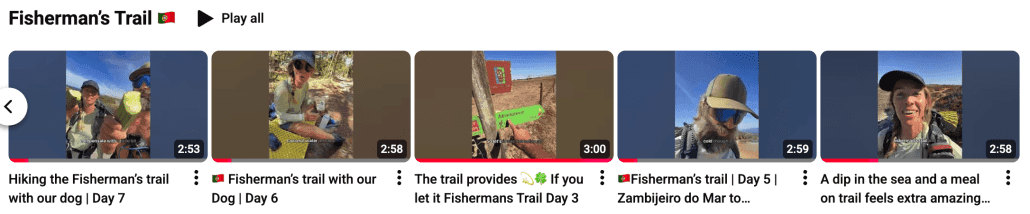
Here's the video of Part 1 of hiking the Fisherman's Trail, from Sao Torpes to Odeceixe. I share tips and tales what it was like. Part 2 is coming soon. Subscribe to my channel to get notified.
Jonatan documented the hike per stage with a daily 3-minute vlog. You can watch them here.
Reality Check
This trail is beautiful. It's also not just a postcard. A few honest things I'd want to know before I went:
- The sand will slow you down more than you expect. About half the route.
- Accommodation stress is real without a tent. Especially in Salema, Vila do Bispo, and Burgau.
- It's not remote, but it still asks something from you. Sun exposure, limited shade, and long stretches between villages on some stages.
- Farm dogs were our biggest challenge with Wingo. Not the heat, sand or distance.
- Summer is too hot. Don't do this trail in July or August. Northern Spain or the Pyrenees are much better (and so beautiful too) in those times.
- The trail signs are really good. The distance estimates on the signs are optimistic.
What Walking the Fisherman's Trail Is Really Like
Scenery along the route, terrain, and rhythm of the trail.
Sand Along the Route
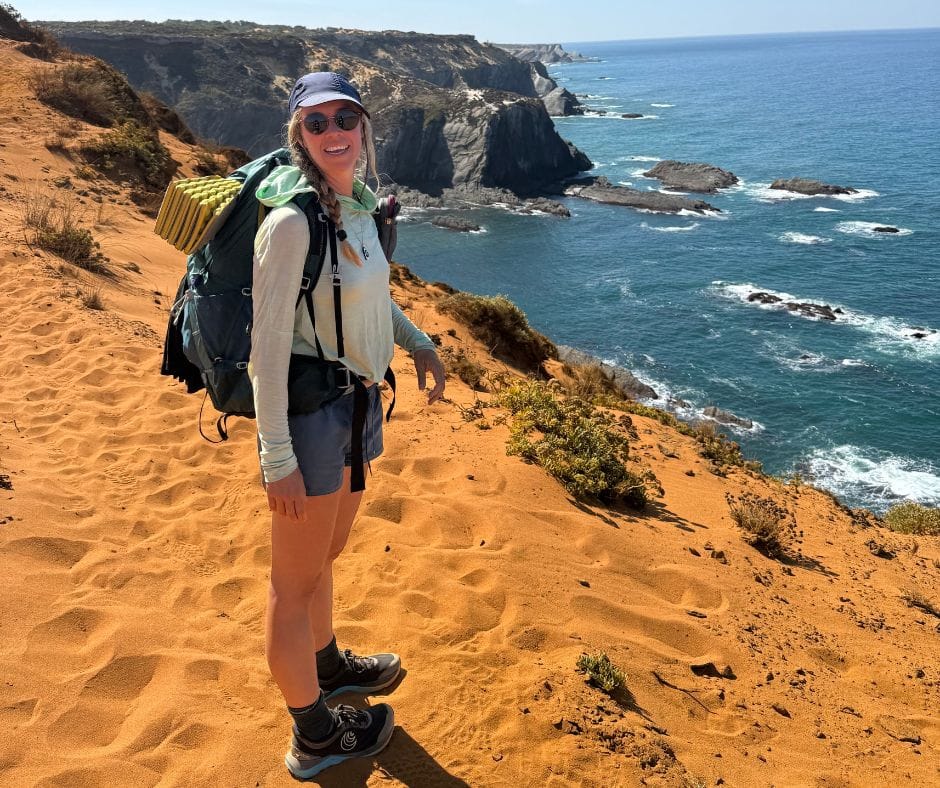
About half the route is soft sand. It slows you down but becomes part of the coastal rhythm. Lightweight hiking shoes and a minimal backpack help a lot. Traversing through the sand is very doable and do not let this put you off. The sand is also gentle for dogs. Many hikers also hike with gaiters to prevent sand going in the shoes. Probably nice to have, but I wasn't so bothered about the sand in my shoes.
Tides Matter
At low tide you can sometimes hike along the hard sandy beach, which is easier than the loose dune sand. At high tide, the trail follows the cliffs or goes inland. Checking tides makes planning simple.
On a coastal trail, the tides become part of your planning. Low tide means hard sand and easy cruising. High tide means soft sand and heavier work. Work with nature, not against it. Thanks to new moon and low tide we could sometimes walk along the hard descent and save tons of energy.
Also, if you consider skipping the roadwalking around the river of Odeceixe and Aljezur (you can only cross the rivers on low tide), be mindful of new moon and full moon too when the tidal differences are greater.
Villages and Easy Resupply
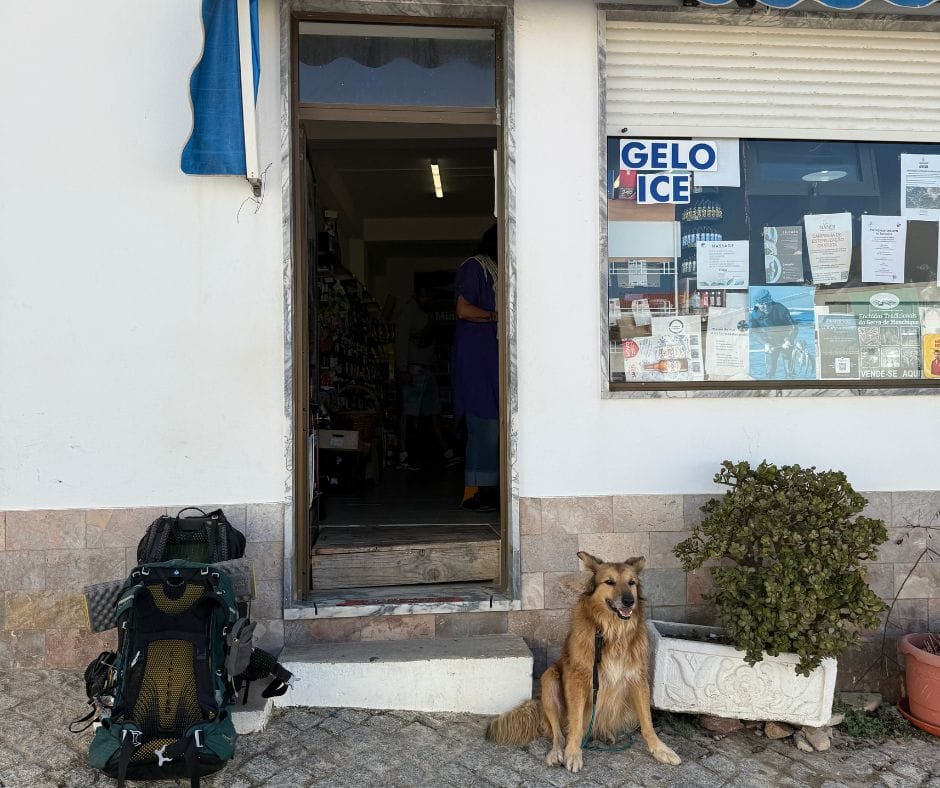
You pass at least one village every day. Porto Covo, Vila Nova de Milfontes, Almograve, Zambujeira do Mar, Rogil, Odeceixe, Aljezur, Carrapateira, Vila do Bispo, Sagres, Salema, Lagos, all offer cafés, terraces, small supermarkets, bakeries, and accommodation options.
You never need to carry a week of food on your back. Fresh bread, fruit, a little pastel de nata if you like. Water is easy to refill at the cafes. There's no stress about having to do big resupplies and you can just focus on walking. Resupplying here never feels like a chore. You refill water at the tap, follow your nose to the pastelaria, pick up bread, something sweet, and maybe a little surprise for the next picnic.
You better love bakeries. Also, the Indian and Nepalese restaurants on route were a very exciting element for me walking this trail. As a student of Ayurveda, that's a very exciting treasure to find.
Dry Climate and Water
This region is very dry. Between April and November, it hardly rains. That makes pleasant hiking weather. It's dry, hot, and little shade to be found. Luckily, there's a little breeze and around every corner there's a beach to jump in for a swim, which feels extra rewarding when you hike for it.
Fire warning: Always check local fire rules and be mindful. While we were on trail, a forest fire broke out, which is not uncommon in this region. No open flames, no cigarettes, no cooking outside designated areas.
Water-wise, you can refill in each village, mostly at bars, restaurants and accommodations. Sometimes there are water points and streams in the wild. Now and then you come across a little water stream, perfect for Wingo and for tea. Maps.me maps some of them. Always use a water filter.
On this trail, as well as on the GR11, I used the Katadyn BeFree. One of the most lightweight water filters and does the job. I also love the water filters of Maunawai (use code OP2020 for 5% off). I use them for sailing and vanlife. They also have a hiking filter, which is better than the Katadyn but a little bit heavier.
You may like reading: Maunawai water filter review

Beautiful Coastal Scenery
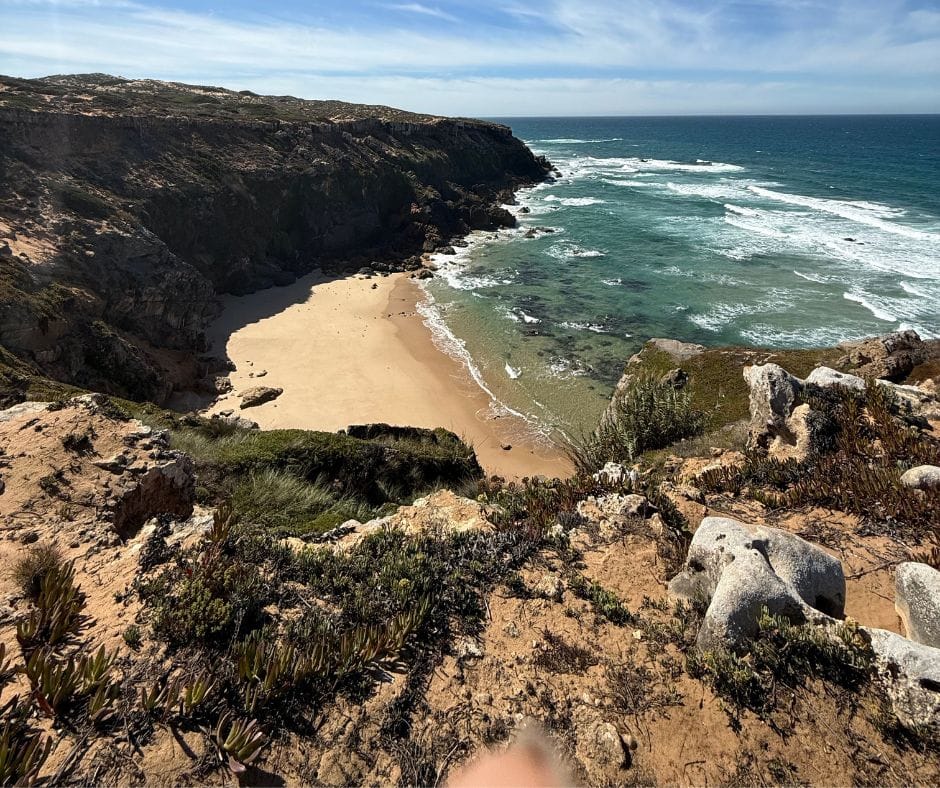
Expect rugged cliffs, turquoise coves, sandy beaches, dunes, the Atlantic coast stretching endlessly beside you, and fishing villages tucked into the coastline. Stork nests on sea stacks are a cool sighting. This scenery is quite wild. The blue, the green, the sand. I loved it.
Some of the best beaches and coves have no roads, no staircase, nothing. Just a tiny footpath dropping down from the trail if you're lucky. Sometimes there's even only a rope. You really earn every view and every swim. And that's the magic of traveling by foot. You get access to a version of this coastline that most people will never see.
The swim stops also make a perfect opportunity for washing the basics and ourselves. Make swim stops when you can. When else in life do you swim at a different beach every day? It's these little things that make the days so joyful.
Hiking With a Dog
The trail is dog friendly. The sand on the Fisherman's Trail is gentle on paws. Wingo loved the beach breaks and ocean swims.
The biggest risk hiking with a dog is not the heat, the streets, or the distance. It's other dogs being territorial. We are non-stop on alert for situations not to happen, but sometimes it comes unexpected. Watch especially for farm dogs near small villages and inland sections.
Our whole rhythm shifts around Wingo. Breaks happen when there's shade and water. We check his paws. The distance is never the goal. His comfort is. Hiking with a dog is not just bringing him along. It's designing the day around his needs.
Pawwax is something I recommend if your dog's paws are sensitive. In the video I talk a bit more about hiking with a dog. I also hiked part of the GR11 (across the Pyrenees) with my dog, which I talk about in this video.
You may like reading: how I prepared for hiking across the Pyrenees with my dog
What the Trail Taught Me
Walking the Fisherman's Trail reminded me how refreshing a simple long-distance coastal trail can be. You don't need mountains to disconnect. Or do months of preparation to have nature time. When I was preparing for hiking across the Pyrenees (GR11) I was anticipating for months (part of the fun too). For the Fisherman's Trail we literally decided the same week to go for it, as the weather looked great.
Walking a long trail is not a break from real life. It's an investment in it. Or even a way of life. When your days are just about walking, eating, sleeping, and finding the way and water, all the noise drops. New ideas show up. Going on a hike for a couple of days is the best thing you can do for your health, mentally, physically, spiritually. It just gives so much superpowers.
If you wait for the perfect gap, it will never come. There's always something going on. At some point, you just have to close the van or the door, put on your pack, and trust that the trail will meet you where you are. And this trail, the Fisherman's Trail, it's not that long. Even if you have the busiest of agendas, you can squeeze this in.
Even my mum is gearing up to hike it now.
Are you ready for life ON trail?
Most people think they are. Then the struggle hits. Jonatan and I made a free 5-minute readiness check for your first hike — the questions we wish someone had asked us before our first long walks. Check where you actually stand →
Planning Your Fisherman's Trail Hike
Here are some of the practical bits. Like transport, navigation, accommodation, and food.
Map of the Fisherman's Trail
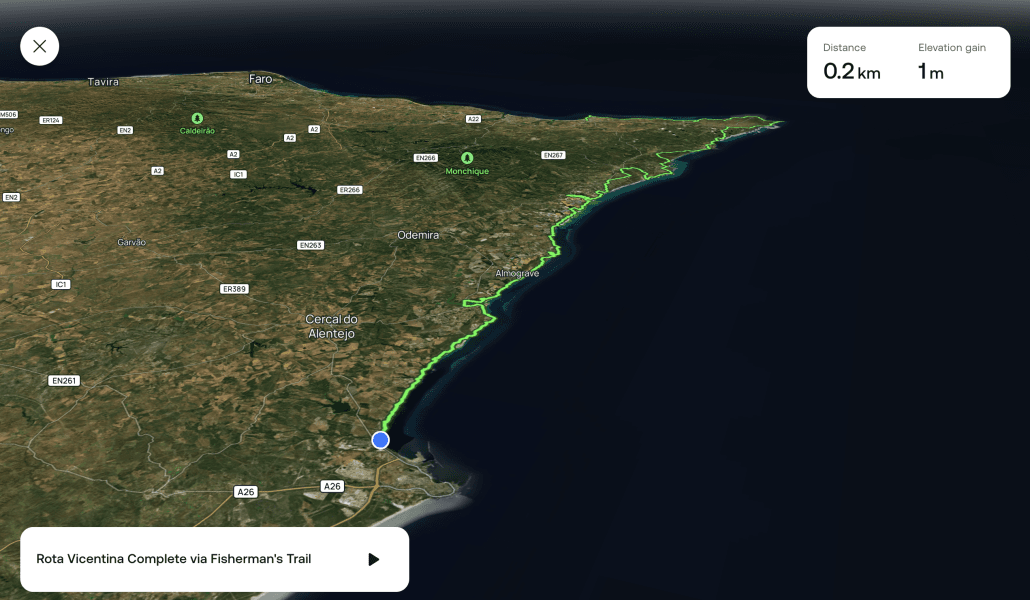
See here the 13 stages mapped.
Getting to the Start
If you're with the car or a van, Camping Sao Torpes is a great place to leave the vehicle. It's 3 kilometers from the trail start. There are also some free parking options in São Torpes but I'm not sure how safe that is. Sines, as well as Porto Covo, is easy to reach by bus from Lisbon (or Lagos). Lagos also has a train station which make it easy with flying in and out of Faro. Blablacar ridesharing is also worthwhile looking into. Flixbus is an easy straightforward website to book buses and trains.
Navigation
Navigation is simple. Just follow blue and green Rota Vicentina markers along the Fisherman's Trail. The trail is very well marked so you hardly need to look at your phone or fancy watch. You can download the GPX file here and import it to your navigation app. For this trail I downloaded AllTrails and Maps.me.
With AllTrails+ you can visualize the stages and download the offline maps. Try AllTrails 7 Days for Free. I also use this app to discover trails around me.
Water and Food
It's usually a dry area. You can refill in each village, mostly at bars, restaurants and accommodations. Sometimes there are water points and streams in the wild. Maps.me maps some of them. Always use a water filter. I recommend Maunawai (better but heavier, use code OP2020 for 5% off) and Katadyn BeFree (ultralight and often good enough).
Tap water is often chlorinated. Food is easy to find. There are many cafés, pastelarias, supermarkets, and restaurants. And Indian / Nepalese restaurants, and supermarkets. Portuguese food involves lots of meat and fish. As a vegetarian, the legume soup of the day is often a great (and super cheap) choice, which they serve almost everywhere. Sweet potatoes are also very delicious in Portugal. And the little artisanal cheeses.
Camping and Accommodation on the Fisherman's Trail
Where to stay on the Fisherman's Trail?
The stages are created in a way that each one ends in a place where you can find accommodation. Along the route you'll find hostels, guesthouses, small hotels, campsites, and simple rooms in the fishing villages.
There are plenty of campings, but not enough to cater for a Fisherman's Trail hiker and sometimes they are a bit off trail. There are some budget hostels to be found along the trail. However, they get booked out fast which for hiking this trail without a tent requires some accommodation planning in advance. Especially if you're on a budget.
See below a range of accommodations and campings recommendations per town along the Fisherman's Trail. Booking.com often allows for last-minute cancellation, convenient when hiking and all the variables it comes with.
Budget accommodation is limited. To score the best deals you need to book in advance. A little bit tricky when hiking. That said, the stages are all planned out so that it's very doable to hop from town to town.
You'll have more accommodation options to choose from if you're hiking with a buddy or the budget isn't tight. That said, there are quite a few budget hostels to be found on trail. If you anticipate, you'll be fine.
Learn how to get 10-20% off bookings with Booking.com when booking numerous hostels or hotels at once.
Sines
I always like to hike out in the afternoon. Consider arriving in Sines and starting your hike right away. It's not a very nice place to stay. I stayed at Camping Sao Torpes with my campervan and parked it there.
At Camping Sao Torpes (from €70 for 2 pax) you can also rent a tent or a small bungalow. The camping is 20 minutes walk to the start of the trail.
Porto Covo
Porto Covo is a pretty town with good vibes and lots of nice restaurants. I opted for the Indian restaurant and it was probably the best dinner I had on trail. Decent grocery store, ATM, and a few cafés for breakfast before heading out.
Budget (€25-40): dorms, simple private rooms, basic hostels
Ahoy Porto Covo Hostel (from €25). The most affordable option in town, short walk to the beach, shared kitchen. Great for solo hikers on a budget.
Mid-range (€40-80): sea views, breakfast included, a bit of comfort
Mute Porto Covo (from €39). Super nice sea view accommodation with a swimming pool and breakfast. One of the nicest spots in town for the price.
Ocean House Alentejo. Mid-range, well located, good if you're 2 people.
Campings
Parque de Campismo Porto Covo
Parque de Campismo Costa do Vizir
Browse more Porto Covo accommodation with free cancellation.
Vila Nova de Milfontes
Vila Nova de Milfontes is a lovely seaside town. Good vibes. Maybe one day I will actually live here. There's a nice market with fresh fruit and veggies, a couple of supermarkets, pharmacies, and lots of good food options. Of all the trail towns, this one has the widest range of accommodation.
Budget (€23-35): dorms and basic private rooms
Opa Hostel Milfontes (from €23). 9.6 rating on Booking.com, consistently one of the best-reviewed hostels on the trail.
Casa Amarela (from €24). Simple and central.
Pirata Milfontes Guesthouse (from €25). Short walk to Franquia Beach.
Mid-range (€40-80): private rooms with breakfast, more comfort
Sol da Vila. Nice mid-range option in the centre.
Campings
Orbitur Sitava Milfontes
Camping Milfontes
Campiférias
Browse Vila Nova de Milfontes accommodation with free cancellation.
Almograve / Zambujeira do Mar
These are two small fishing villages stages apart. Both have limited but decent budget options. Small shops for resupply, a café or two. Basic but beautiful.
Budget (€24-35): hostels and youth hostels
HI Almograve (from €24). Official youth hostel, decent prices.
Hostel Nature in Zambujeira (from €35).
Mid-range (€40-70): guesthouses, more comfort
Almograve Beach Hostel. My top pick in the table, decent mid-range.
Lodge & Hike Almograve. Geared towards hikers.
Campings
Browse Almograve accommodation with free cancellation.
Odeceixe
Odeceixe has a good range of budget-friendly options. It's a really pretty town with a good choice of dinner options too. Small grocery store and ATM in town. If you want to skip the road walk, you can cross the river at low tide and stay at Odeceixe Beach instead (way prettier location but fewer options).
Budget (€23-35): hostels and simple guesthouses in town
Surf Seixe Guesthouse (from €23)
Hostel Ceixe (from €25)
Bohemian Antique Guesthouse (from €34). Quirky place with character.
Mid-range at Odeceixe Beach (€55-80)
Casa Dorita (from €65 for 2 pax). Right at the beach. At low tide you can cross the river at the widest point, which saves you the long roadwalk into Odeceixe town (though it's a pretty town worth visiting).
Campings
Browse Odeceixe accommodation with free cancellation.
Aljezur / Arrifana
Arrifana is a surf town that's a bit stretched out, so double-check the map when booking. Aljezur (the inland town) has more budget options but means a detour from the coastal trail. Both are nice if you want a rest day, Arrifana especially if you want to try surf.
Budget (€29-45): surf hostels and simple hostels
HI Arrifana Destination Hostel. Official youth hostel.
The Lighthouse Hostel (from €34). My top pick for the price here.
Endless Summer Surf House (from €45). Surfer vibes.
Mid-range (€65+): hotels with more comfort
Hotel Vale Da Telha (from €65). With a swimming pool, nice spot to rest tired legs.
Campings
Browse Arrifana accommodation with free cancellation.
Vila Do Bispo
Vila do Bispo is tricky, especially for solo hikers. Not many budget beds, and prices jump quickly. If you're 2 people it's easier. Just outside the village there are a couple of better-priced options worth the small detour. Book early here.
Budget (€29-40): hostels a short detour from the trail
Goodfeeling Hostel. A little outside Vila do Bispo but worth the detour.
Algarve Surf Hostel & Guesthouse (from €29). Located in Raposeira, a doable detour.
Sagres
Sagres has lots of options. It's a surf town and end-of-the-world feel at Cabo de São Vicente. Supermarkets, restaurants, ATMs all sorted here.
Budget (€28-45): hostels, some with pools
The Lighthouse Sagres (from €28). With a swimming pool. My top pick for Sagres.
Sagres Sunstay (from €29). Also with a pool.
Aldeia Caiçara. Classic hostel option.
Beach Front Dive House. Very close to the trail if you want to minimize walking.
Campings
Browse Sagres accommodation with free cancellation.
Burgau
Burgau is tiny and there aren't many budget-friendly options. Book early here or continue to Salema or Luz. Small grocery store, a few cafés.
Budget (€30-45): guesthouses
Aloha Burgau Guesthouse (from €30). The most reliable budget pick.
Mid-range (€50+)
Amarguinha. Nice if you want more comfort.
Browse Burgau accommodation with free cancellation.
Salema
Salema has very limited budget accommodation. This is one of the towns you really need to book ahead. Small village, pretty beach, handful of restaurants.
Campings and bungalows (€55+)
Salema Eco Camp (from €55). You can book a tent, apartment or mobile home. Note: the campsite is about a 1 km walk uphill from the trail.
Browse Salema accommodation with free cancellation.
Luz
Luz is a small beach town just before Lagos. Quieter than Lagos with some nice places to stay. Good option if you want a mellow last night before the finish.
Budget (€32-50)
Club House CVL (from €32). Solid budget pick.
Lagos
The final destination. Lagos is one of the coolest towns on the Algarve coast and here you'll find the widest range of accommodation on the whole trail, from €13 dorms to seriously beautiful cliff-top hotels with pools. Plenty of supermarkets, restaurants, ATMs, and an easy bus connection to Lisbon or Faro airport. You can leave booking to the last minute here.
After walking 230 km, honestly? Treat yourself. A few options depending on what you're in the mood for:
Budget (€13-45): hostels and private rooms in hostels
Lagos City Center Hostel (from €13). Dorms, also private rooms. Great location for the old town and beach.
Olive Hostel. Classic Lagos hostel.
Boutique Tag Hostel. A bit more style.
Mid-range (€70-120): nice hotels, balcony views, breakfast
Browse mid-range Lagos options with free cancellation. I'd look for something in the old town with a balcony, or a 10 minute walk from Praia Dona Ana.
Proper treat-yourself (€150+): cliff-top hotels with pools and sea views
Lagos has some really beautiful hotels on the cliffs above Praia Dona Ana with pools and sea views. Browse the higher-end Lagos options here. Honestly, after 12-14 days of hiking, one night with a bath and a balcony is worth every euro. You earned it.
Hot tip: stay at least 2 nights in Lagos. Your body needs a rest day before travelling, and the beaches, food scene and old town are a reward in themselves.
Things to do in Lagos to celebrate finishing
Lagos has loads going on if you want to keep the adventure rolling a few more days:
- Benagil Cave, the iconic sea cave just outside Lagos. Go by kayak, SUP or boat tour. Instagrammed to death but genuinely cool.
- Sunset sailing, the Algarve sunsets from the water are unreal.
- Surf lessons, beginner-friendly beaches near Lagos if you want to try something new.
Have a browse on Lagos activities via GetYourGuide, or the full Algarve activity list if you're exploring more of the coast.
Accommodation Hacks for the Fisherman's Trail
The accommodation situation is probably the element of this trail that requires the most planning and anticipation, given availability. Here are some tips to make it smooth and easy.
- Hike the trail in low season to have better prices and more availability.
- Search beyond Airbnb and Booking.com. Use Google Maps and search for Alojamento Local, “Quartos”, Casa de hóspedes, Turismo Rural. Or check Park4Night for farmstays.
- I'm all about booking directly with the accommodation providers. That said, the ‘free cancellation' option via Booking.com gives peace of mind when hiking a trail and the variables it comes with.
- Embrace to be disconnected now and then on trail. That said, having a working mobile connection helps to anticipate to weather and accommodation options. If you do not have a European sim with roaming, Airalo is a great eSIM provider to get you connected when arriving in Portugal.
- Network in the Ocean Nomads Community. There are members living along trail hosting trusty fellow Ocean Nomads. Membership contribution is similar to 1 night of accommodation on trail. Bonus: I'm in there, and happy to help you with more tips on hiking, sailing and vanlife.
- THE most flexible option is to bring a tent. And it adds a lot of excitement to hiking. It's half the fun, in my opinion.
Looking to stay longer in Portugal? Explore TrustedHousesitters. I'm a member and sometimes spot really cool house or pet sit opportunities here. Not just here but all over the world. It makes long-term travel affordable. Get 15% discount with code TRUSTED15.
(Or 25% off as an Ocean Nomads member, a global network of boats, offgrid adventure people and nomads)
What to Pack for Hiking the Fisherman's Trail
Keep it simple. I've seen some giant backpacks traversing through the sand dunes here. It can make the hike way tougher than it needs to be. You really don't need much. Make sure to bring:
- Water filter (I recommend Maunawai or BeFree)
- Sun protection (Here's a DIY natural sunscreen recipe)
- Cap or hat
- Offline maps (I use Maps.me and AllTrails)
- Warm, wind and waterproof layer (puffy + wind/rain jacket)
- Swimwear (or just use your underwear like I did and save some grams)
- One hiking outfit and one sleeping outfit
- Hiking shoes with good grip for sandy and cliff paths (I'm a fan of Topo's)
My all-time hiking and camping favourites

Gear that will last you for a very long time:
- Backpack: Osprey Eja (48L) for the females (here's a review) or Osprey Exos for the males (58)
- Patagonia 3L wind/water proof jacket
- Icebreaker Merino Wool Legging & Crew Shirt
- Thermarest NeoAir Xlite Sleeping Pad
- Big Agnes Tents (Fly Creek UL for solo hiking + dog & Copper Spur for 2 people + dog)
- Garmin inReach Satellite Tracker (not really needed for this trail)
- Sea2Summit UL Pillow (luxury item)
- Topo Athletic Trail Running Shoes (2-3 sizes too big)
Feet health hack: Bring some wool. If you are worried about blisters or sore feet you simply stuff a little bit of hikers wool on the sore spot. The pressure point changes and your feet will be fine in no time. It works magic. No need to buy the expensive ‘branded' one from the outdoor store. Any piece of wool will work.
Inspiration
If you want a deeper dive into my own long-distance hiking essentials, I wrote up my complete thru-hiking gear list here. Every item, every weight, every lesson I learned after hiking 850 km across the Pyrenees (GR11) with Wingo. You can also download the gear list as a PDF. I carried the same setup on the Fisherman's Trail. Only changed the shoes.
I also made a video of what I carry on a multiday hike. Below.
Best Time to Walk the Fisherman's Trail in Portugal
What's the weather like? And what are the seasonal conditions and considerations?
The best time of the year to hike the Fisherman's Trail is April to June and September to October. These months offer mild temperatures, stable wind, spring flowers, and warm Atlantic water.
April is especially magic. Wildflowers everywhere, stable weather window, cooler afternoons, and the trail is not yet packed. Accommodation still needs to be booked ahead though because it's popular for European hikers. We hiked in late September / early October which was also a beautiful window.
Summer is hot and exposed. Winter can be stormy along the cliffs and the days are short. But it can still be done. The perks of going in winter is that you can probably wing it a bit more with accommodation.
A Few More Tips for Hiking the Fisherman's Trail
- Start early on sunny days.
- Move with the tides.
- Villages are frequent so there's no need to carry much food.
- Inland alternatives offer quieter versions of the trail.
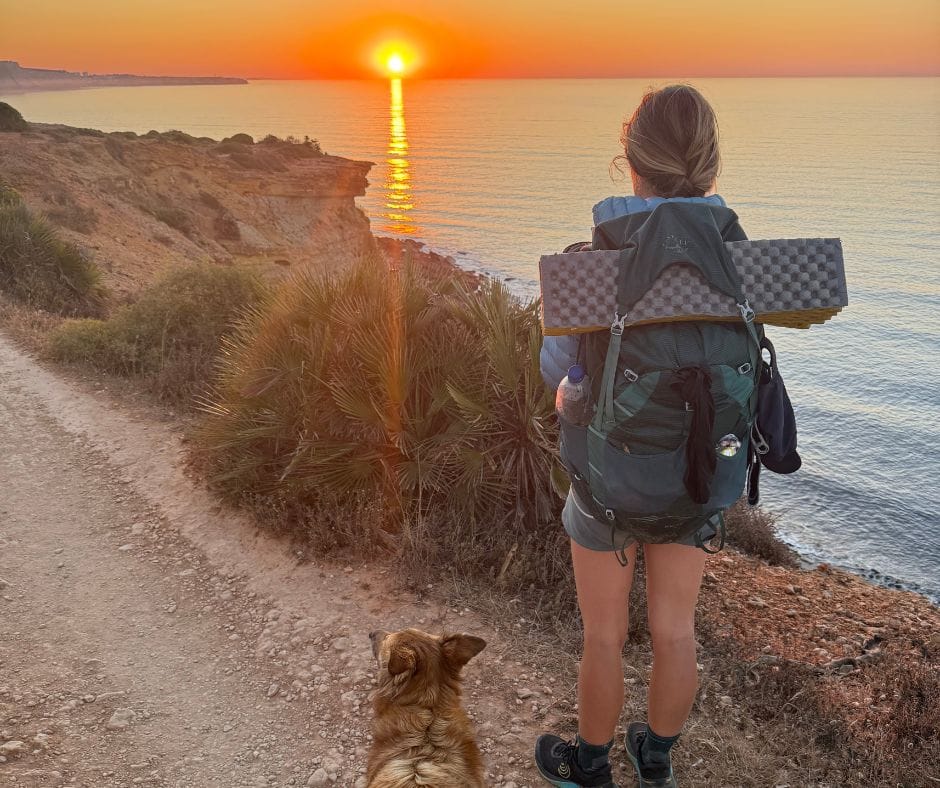
- The sunrises and sunsets are the highlights of the day. Catch them if you can.
- Hike with a tent for maximum flexibility.
- Or select and book your accommodation with ‘free cancellation' on Booking.com (double check the expiry date).
- Stork nests on sea cliffs are spectacular.
- Bring little. It makes the hike way more fun and easier.
- Make swim stops when you can. Many beaches are not easy to reach. I'm surprised how few hikers actually went swimming.
- Just go and walk it :)
Above all leave no trace. I'm shocked about the amount of toilet paper you spot in the bushes here and there. Nature doesn't just absorb that. Please be mindful, and bring a pee cloth and portable bidet for your needs. Much cleaner for you and nature.
Female hiking hack: Attach a bouncing peerag leash to your pee cloth so you can just pee with your backpack on. You just pull out the cloth. Clean and efficient.


Final Thoughts
The Fisherman's Trail is a spectacular coastal trail. Cliffs, beaches, coves, fishing villages, and simple logistics. It is a rewarding introduction to long-distance hiking in Europe.
If you want to dip your toes into doing a multi day hike, this is a beautiful coastal trail without complicated planning or food logistics. If you're curious to discover all the best surf breaks, you must walk this trail too. Or if you simply live there. I guarantee you discover something new. Even if you are a more advanced hiker, this trail is just a joy to walk. Which trail isn't, right? As long as you go outside.
You don't need the perfect moment for a trail like this. Just a window of weather, a bit of curiosity, and the willingness to start. The trail is much closer than it seems.
If this trail is pulling you, don't overthink it.
But before you go, take 5 minutes. Jonatan and I put together a free Trail Readiness Check — the questions we wish someone had asked us before our first long walks. Gear, mindset, the stuff nobody tells you about the first days on trail. See where you stand →
Recommended Links & Resources
Official website of the Fisherman's Trail
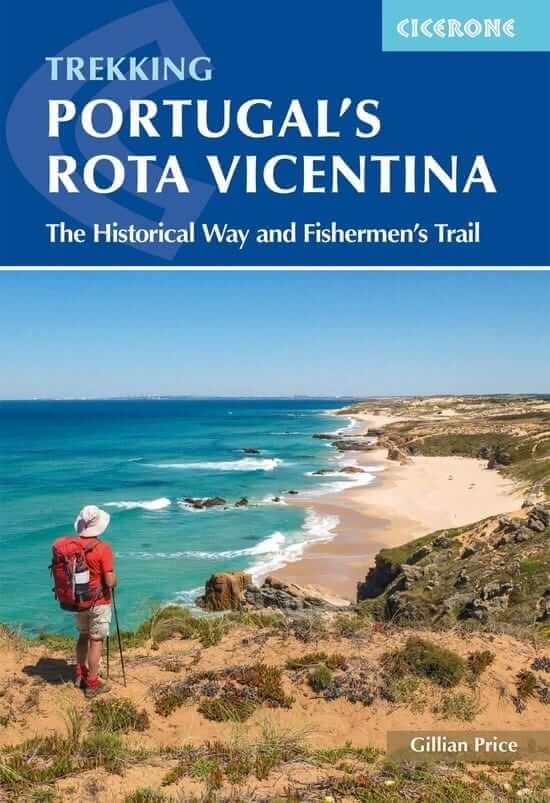
Fisherman's Trail Guide Book by Cicerone
Map & stages of the Fisherman's Trail
Fisherman's Trail on AllTrails. All stages mapped and visualized.
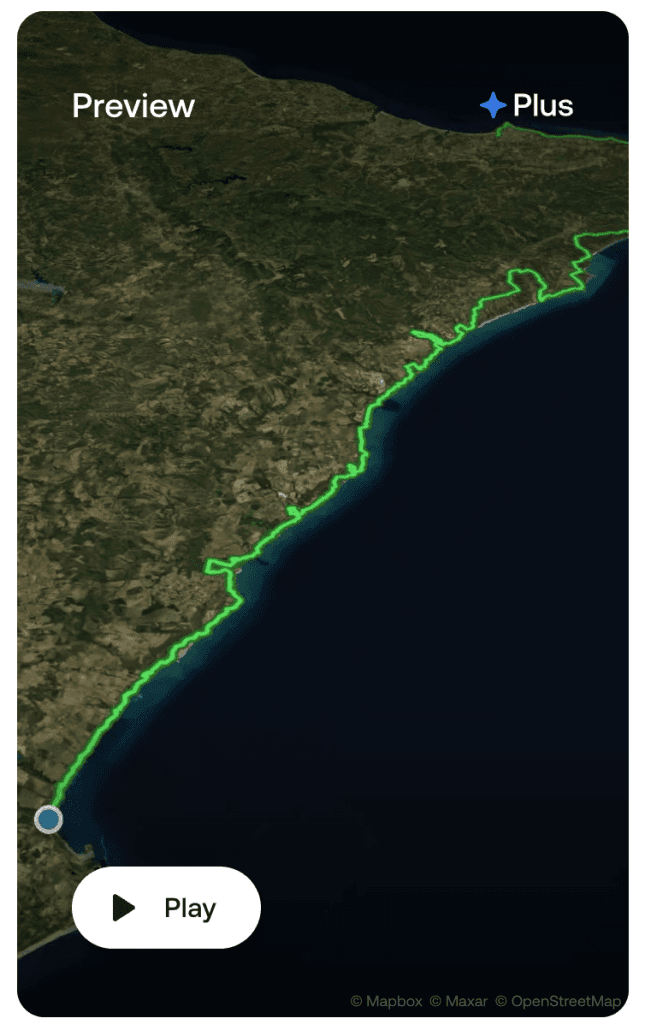
My favourite navigation app: Maps.me (remember to download offline maps).
Jonatan made a daily vlog on the trail documenting each stage. Watch them here.
Algarve tours and activities on GetYourGuide, if you want to add guided walks, boat trips, or day tours to your Fisherman's Trail adventure.
Fisherman's Trail FAQ
Some quick answers to questions I get a lot.
What is the difficulty of the Fisherman's Trail?
Easy to Moderate. There are no serious ascents or mountain passes, and each day usually has 300-500 meters of elevation gain spread across gentle cliffs. The biggest challenge is the soft sand on roughly half the route, which slows you down and tires your legs. If you're used to Camino-style walking, the Fisherman's Trail will feel slightly harder due to the sand but far easier in terms of elevation. A good starter thru-hike.
Do I start the Fisherman's Trail in Porto Covo or São Torpes?
Both work. São Torpes (near Sines) is the official start and adds about 10 km for the purists. Most hikers skip straight to Porto Covo because it's prettier, easier to reach by bus from Lisbon, and has more accommodation. I walked from São Torpes because I like starting trails at their very beginning. No wrong answer.
Is the Fisherman's Trail in Portugal difficult?
I'd say Easy to Moderate. The sand is the biggest challenge for many. But it's very doable (pack light). Elevation is minimal.
How long does it take to hike the Fisherman's Trail?
Most hikers complete the 230 km from Porto Covo to Lagos in 9 to 14 days. We hiked it in 12 days. Shorter versions are possible: a 4-5 day hike from Porto Covo to Odeceixe is popular if you have less time.
What is the best part of the trail?
Each section has something beautiful and spectacular. I'm not going to give away the secrets.
Can you hike the Fisherman's Trail with a dog?
Yes. The sand is soft on paws. Watch for territorial farm dogs. That was our biggest challenge.
Do you need to book accommodation in advance?
In peak season, yes. In spring and autumn, booking a day or two ahead is usually enough. The three bottleneck towns where you MUST book early are Salema, Vila do Bispo, and Burgau.
What is the best time to hike the Fisherman's Trail?
April to June and September to October are the best months. April is particularly magical with wildflowers. Book accommodation ahead for these peak months.
Can you wild camp on the Fisherman's Trail?
Wild camping is technically restricted in Portugal. In practice, many hikers pitch a tent discreetly away from trails, arrive late, leave early, and leave no trace. Bivvy tent and stealth camping is tolerated more than full camps with chairs and fires. The coastal cliffs have beautiful spots, just be respectful.
How do you navigate the trail?
Follow blue and green Rota Vicentina markers. Or just the sun. A GPX track helps on inland alternatives. I loaded it into Maps.me. I also used AllTrails.
How do you get back to the start?
This can be a tough part, especially with a dog. Many hikers use BlaBlaCar or bus connections from Lagos, Odeceixe, or Lisbon. There is also a train from Lagos. We hitchhiked back.
I hope this guide is helpful to get you ready for trail life. I'll revisit this blog post in a few weeks. I'm about to head out for another trail (GR131). Time to pack the bag.
Say hi on Instagram or YouTube. And I hope to see you on trail.
Have you hiked it? What other questions do you have? Check out my YouTube video on hiking the Fisherman's Trail where I share more tips and insights so you get an idea what it's like and if it's for you.
Questions? Drop a comment and I try my best to help.
Disclaimer: As always, opinions are my own. What drives me is care for nature, getting you into nature, and encouragement for natural living. If you're looking to book a place to stay or a gear item, huge thanks if you purchase it via this website. At no extra cost to you, orders and bookings through this website give me a tiny piece of the pie that helps me keep investigating, exploring, and creating content about living with and for nature.
Related Posts